







Rarely can I get a full day’s use out of the battery in my Samsung Galaxy S4 smartphone without having to pop in a fully charged spare or plug my phone into my laptop or a wall socket.
I curse this every day, which always leaves me looking for alternatives for keeping my phone charged. That’s why I get excited about innovative battery charging methods and potential new products that could make battery life worries moot someday for all of us.
So when I read about a cool hydrogen fuel cell smartphone charger that has been on sale in the United Kingdom since last October, but not yet here in the United States, I checked it out to find out more.
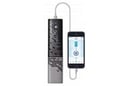
The charger, called an Upp, is an easy-to-carry fuel cell that connects to a small, replaceable cartridge that’s filled with hydrogen. The Upp sells for about $218, plus about $8.70 for a refilled hydrogen canister, which provides about four to five battery charges. Once connected, the Upp plugs into a smartphone via USB and provides a full charge without having to be connected to a power outlet, making it very useful in remote locations. The device is used with an Android or iOS app that can be downloaded for free.
The Upp works via a chemical hydride nanotechnology process, which stores hydrogen in metal hydride particles within the casing of the cartridge so it can then be used to power the device, Julian Hughes, a spokesman for Intelligent Energy, the makers of the system, told eWEEK. The device charges a phone at the same rate as if the user had plugged it into a wall socket.
The company is also working to eventually build such technology into smartphones of the future to provide power when needed, even if a user is not near an electrical outlet, said Hughes. “We do have different consumer electronic devices being tested now,” he added.
“We know there is a definite need going forward with the large amount of devices coming out on the market and because the devices are getting hungrier for power,” said Hughes. “And people want to be more independent and have more freedom from the [electrical] grid.”
In the United Kingdom, refilled hydrogen cartridges can be obtained through Apple stores, Shell gas stations and convenience and other stores, Hughes said. Similar retail networks would have to be assembled to support the product in the United States and other countries. The Upp and its cartridges can even be safely taken aboard commercial airliners.
The arrival of the Upp in the United States is in the works, but it could be somewhere between two to five years for such a system to be integrated into the smartphones of the future, Hughes estimated. The technology could also one day be used in other mobile devices, including laptops, notebooks and tablets.
Fuel cells have been used for years by NASA in its rockets. All I can say is that this is a very cool technology to watch.