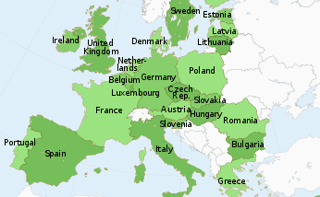

The European Union, which has very strict rules about the physical geographic containment of personal and business data within the boundaries of its 27 member countries, is now pushing hard to work with the United States and Japan to prevent data protection regulations from hindering the growth of cloud computing across the region.
The European Commission, which serves as the law enforcement body of the European Union, on Sept. 27 released a 32-page report entitled “Unleashing the Potential of Cloud Computing in Europe” which lays out its ideas about how the EU can build a “structured collaboration” regarding cloud-service regulation in partnership with the international community.
The reason for all of this political interest in emerging cloud systems? The EC, having completed a major research project on the topic, believes that financial benefits from cloud systems aiding local, regional and international commerce could reach triple figures in the billions by the year 2020. This isn’t to mention creating an estimated 2.5 million new jobs doing all this work.
This all looks mighty promising, considering the huge macro-economic hole out of which EMEA — especially members such as Greece, Italy and Spain — is trying to dig.
Barriers to adoption that include contrasting national legal issues, language problems, portability of contracts and a lack of interoperability standards for cloud computing are currently causing headaches for many enterprises. With its report, the EC is aiming to obtain the attention of all 27 EU nations and get them on the same page in order to promote the refreshment of old data centers into cloud-ready facilities that will help Europe make more money from international customers.
In addition to calling for sharing, charting and analyzing security measures and participating in joint IT development, the EC asked for straightforward legal contracts and clear development standards to help businesses be more effective at cloud deployments. All of these issues, the EC said, cause enterprise to shy away from adopting cloud solutions.
In the report, EC Commissioner Neelie Kroes wrote: “Cloud computing is a game-changer for our economy. Without EU action, we will stay stuck in national fortresses and miss out on billions in economic gains. We must achieve critical mass and a single set of rules across Europe. We must tackle the perceived risks of cloud computing head-on.”
The EC report also said cloud providers and their customers need clear-cut rules in cloud-service service-level agreements, including the ability to move stored data and active software between different cloud providers as contracts end as well as how to resolve legal disputes.
“Europe needs to think big,” wrote EU Justice Commissioner Viviane Reding. “The cloud strategy will enhance trust in innovative computing solutions and boost a competitive digital single market where Europeans feel safe. That means a swift adoption of the new data protection framework, which the EC proposed earlier this year, and the development of safe and fair contract terms and conditions.”
Kroes is quite familiar with the IT community, as it is with her. The hard-nosed German administrator served as the commission’s Competition Commissioner from 2005 to 2010 and was a key player in the EC’s decision to sanction Oracle’s $7.4 billion acquisition of Sun on Jan. 27, 2010, so Oracle could continue to do business in Europe. That did not happen without a protracted antitrust battle, however, and Oracle ended up spending a lot of money on lawyers to win its case.




In dieser Folge von eSpeaks spricht Jennifer Margles, Director of Product Management bei BMC Software, über den Übergang von der herkömmlichen Jobplanung zum Zeitalter des autonomen Unternehmens.

eSpeaks’ Corey Noles spricht mit Rob Israch, President of Tipalti, darüber, was es bedeutet, Global-First Finance zum Leitprinzip zu machen, und wie Unternehmen in einer zunehmend unsicheren Welt skalierbare, regelkonforme Abläufe aufbauen können. Sie untersuchen, wie Automatisierung, KI und integrierte Plattformen Finanzteams dabei helfen, die größten Herausforderungen von heute zu bewältigen – von grenzüberschreitender Compliance und Wechselkursvolatilität bis hin zu […]

„Hier spricht Corey Noles mit Teradas Global AI Lead Dr. Chris Hillman, der erklärt, dass offene Daten- und Technologieökosysteme für Enterprise-KI unverzichtbar sind, weil sich das Feld zu schnell für geschlossene Ansätze einzelner Anbieter verändert. Hillman hebt Teradatas Interoperabilität mit AWS, Python-in-SQL, minimale Datenbewegungen, offene Tabellenformate, Feature Stores und die Bereitstellung nach dem Prinzip „Bring your own model“ über Formate wie ONNX und PMML hervor […]

-
Aktuelle Nachrichten - Ressourcen Ressourcen-HubsAusgewählte RessourcenLink to The Real AI Power Play: Who Controls Your Enterprise Data Layer? The Real AI Power Play: Who Controls Your Enterprise Data Layer?IT and data teams were promised that AI would make work easier. Instead, it's created new layers of complexity.Link to Building the Backbone of Agentic AI with Trusted, Context-Rich Data Building the Backbone of Agentic AI with Trusted, Context-Rich DataIn this 10-minute take video, Reltio Principal Solutions Consultant Guy Vorster explains how organizations can overcome fragmented data challenges to power AI agents.Link to IHG scales real-time, trusted data across global brands IHG scales real-time, trusted data across global brandsAccelerating time to value while powering data-driven engagementLink to Jennifer Margules von BMC über intelligente Orchestrierung von UnternehmenJennifer Margules von BMC über intelligente Orchestrierung von Unternehmen
In dieser Folge von eSpeaks spricht Jennifer Margles, Director of Product Management bei BMC Software, über den Übergang von der herkömmlichen Jobplanung zum Zeitalter des autonomen Unternehmens.
Link to Global-First Finance: Skalierbare, regelkonforme Abläufe in einer unsicheren Welt aufbauenGlobal-First Finance: Skalierbare, regelkonforme Abläufe in einer unsicheren Welt aufbaueneSpeaks’ Corey Noles spricht mit Rob Israch, President of Tipalti, darüber, was es bedeutet, Global-First Finance zum Leitprinzip zu machen, und wie Unternehmen in einer zunehmend unsicheren Welt skalierbare, regelkonforme Abläufe aufbauen können. Sie untersuchen, wie Automatisierung, KI und integrierte Plattformen Finanzteams dabei helfen, die größten Herausforderungen von heute zu bewältigen – von grenzüberschreitender Compliance und Wechselkursvolatilität bis hin zu […]
Link to eSpeaks: BYOM with Teradata’s Dr. Chris HillmaneSpeaks: BYOM with Teradata’s Dr. Chris Hillman„Hier spricht Corey Noles mit Teradas Global AI Lead Dr. Chris Hillman, der erklärt, dass offene Daten- und Technologieökosysteme für Enterprise-KI unverzichtbar sind, weil sich das Feld zu schnell für geschlossene Ansätze einzelner Anbieter verändert. Hillman hebt Teradatas Interoperabilität mit AWS, Python-in-SQL, minimale Datenbewegungen, offene Tabellenformate, Feature Stores und die Bereitstellung nach dem Prinzip „Bring your own model“ über Formate wie ONNX und PMML hervor […]
-
Künstliche Intelligenz -
Video -
Big Data & Analytik -
Cloud -
Netzwerk - Cybersicherheit Cybersicherheit
- Anwendungen Anwendungen
- IT-Verwaltung IT-Verwaltung
- Speicherung Speicherung
- Mobil Mobil
- Kleine Unternehmen Kleine Unternehmen
- Entwicklung Entwicklung
- Datenbank Datenbank
- Server Server
- Android Android
- Apple Apple
- Innovation Innovation
- PC-Hardware PC-Hardware
- Bewertungen Bewertungen
- Suchmaschinen Suchmaschinen
- Virtualisierung Virtualisierung
-
- Blogs Blogs
- Ereignisse Ereignisse