






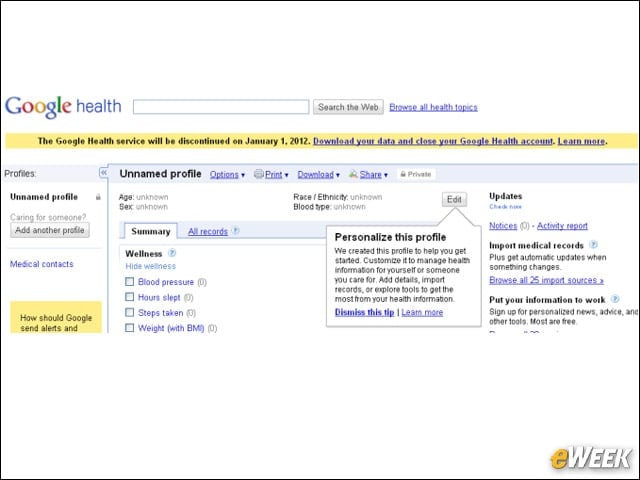

Google Health
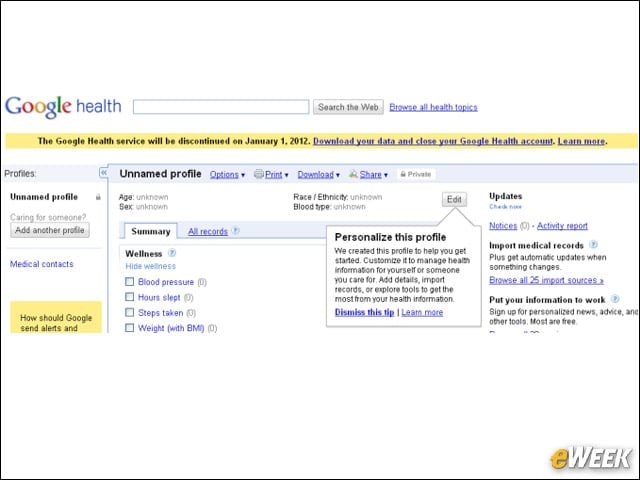
Health will be sunsetted by Jan. 1, 2012, leaving users plenty of time to remove their personal health records from the Website. The service simply never caught on among consumers, who aren’t ready to put their health history online.
PowerMeter
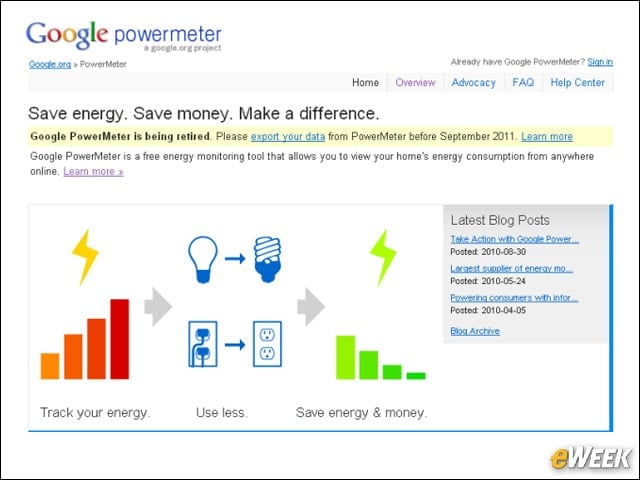
PowerMeter could have been a great green tool-if enough people cared about how much power they consume. We think power consumption, combined with global warming conversations, creates cognitive dissonance for most folks. People are unsettled by the idea that their power consumption impacts the environment. They certainly don’t want to keep track of how much power they use. Plus, it involved having a smart meter installed in the home. The service will be closed Sept. 16, 2011.
Google Wave
When Wave was introduced at Google I/O in May 2009, the presentation blew some peoples’ minds, prompting effusive applause. People saw something they’ve never seen before in a mashup of email, instant messaging, live editing, photo and video sharing. Google punted Wave to open source.
GOOG-411
Shuttered last November, GOOG-411 was the first speech recognition service from Google, recording callers voices to use for later products available on smartphones. These include Voice Search, Voice Input and Voice Actions. Voice Search was recently ported to the desktop.
Lively
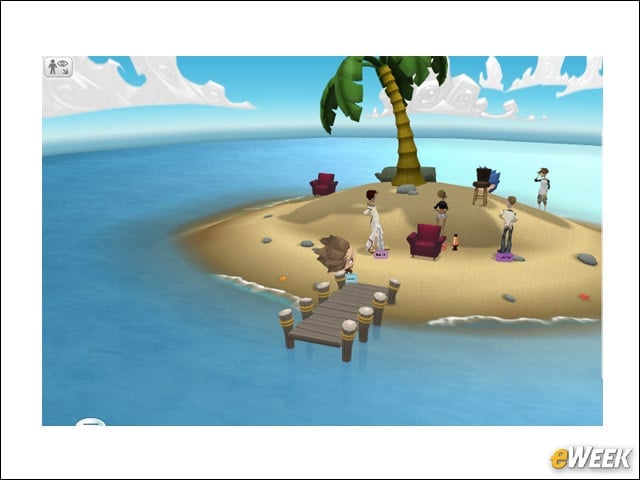
A virtual reality application akin to Second Life, Google Lively was abandoned in November 2008 after Google looked to shed some weight amid the recession.
Google Video
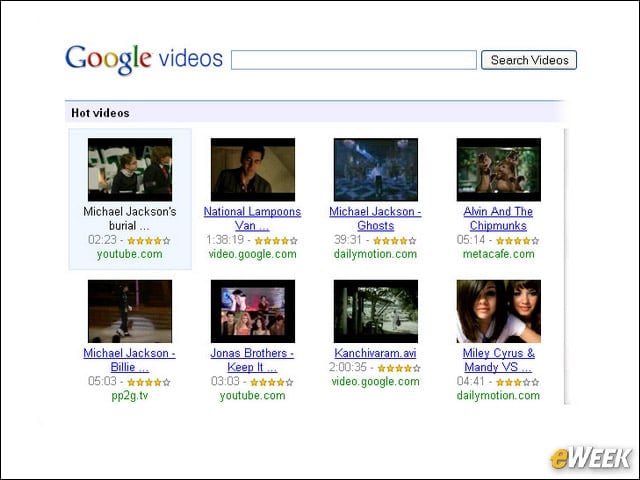
This video-sharing service never had a shot once Google acquired YouTube. Believe it or not, while the site no longer accepts downloads, the company is still encouraging users to save and move their content.
Dodgeball
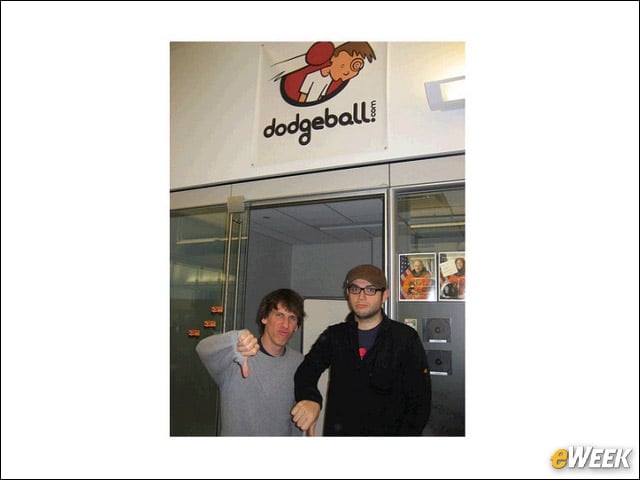
Dodgeball is the mobile, social, local Foursquare precursor Google bought in 2005 and closed up in 2008. Google would go on to fall behind Facebook in social.
Google Tags
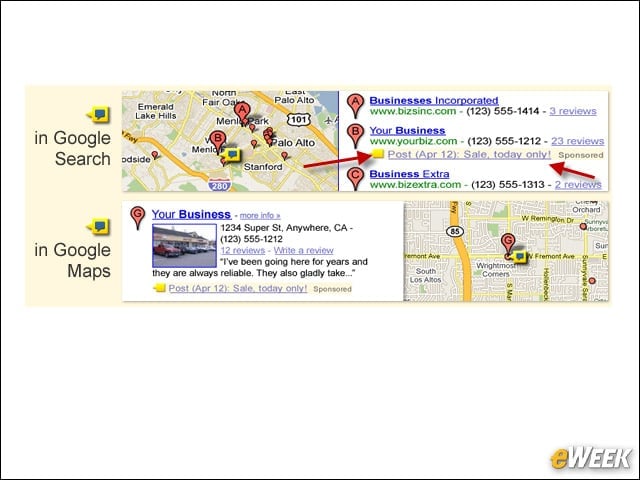
Google Tags is another Google product recently shelved, but this was a local ad experiment that gave way to Google Boost. Tags let businesses post callouts in their Place Pages listings for $25 per user per month. Google explained Tags thus: “Tags provide business owners with an opportunity to showcase an aspect of their Place Page that they think best reflects what they have to offer their customers. They can do this by highlighting a link to point customers directly to photos, videos, Website, coupons, directions, menu or reservations signup.” Google Boost, a do-it-yourself ad platform, provides more value to local businesses.
Print Ads
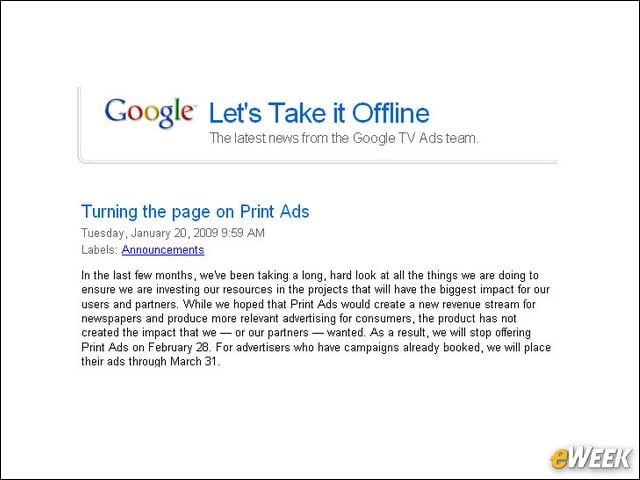
The Tags service wasn’t the only failed Google ad effort. Print ads by an Internet company didn’t go over well. These were shuttered in 2009.
Radio Ads
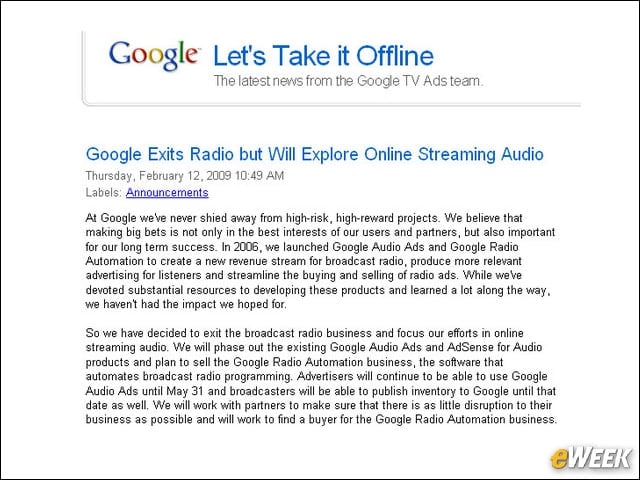
Also closed up in 2009 was the Google Audio Ads, or broadcast radio ads. Again, Google was new to radio. Perhaps the product was ahead of its time.