






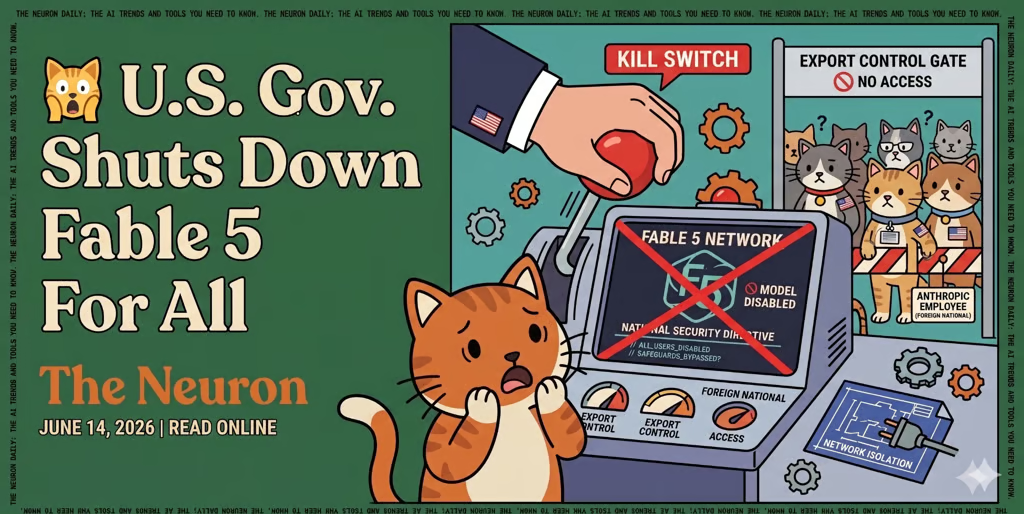


On Tuesday, Anthropic released a new AI model called Fable 5, which was the first “Mythos-class” model normal Claude users could touch. For background on Mythos, it was the big scary model that Anthropic held back from regular people (but released to select partners) due to its cybersecurity capabilities.
Well, over the weekend, the government seems to have switched the power on that.
Anthropic said the US government issued an export-control directive (a rule that restricts who can access sensitive technology) blocking any foreign national from using Fable 5 or Mythos 5. That includes foreign nationals inside the US and even Anthropic’s own foreign-national employees.
Because Anthropic says it cannot separate users by nationality in real time, it disabled both models for all customers.
Here's what happened
- Anthropic received the directive at 5:21 p.m. ET on Friday (June 12).
- The order cited national security but did not give specific details, Anthropic said.
- Anthropic believes the concern is a narrow Fable 5 jailbreak, meaning a way to bypass safeguards.
- The company says the demo found known, minor software flaws that other models can also identify.
- WSJ reported Amazon researchers flagged the issue to US officials.
For the government’s POV on this, David Sacks’ tweet is a good TL;DR recap.
Why this matters
This moves the AI governance landscape from “companies decide what to ship” to “the government can pull a frontier model after launch now”, and it’s more or less the first time the US government has blocked a model from release (that we know of, anyway). That changes the operating environment for customers, developers, and every global team building on US AI.
The practical headache is huge. If access to this model depends on nationality (or “favorable” nationality, let’s say), AI providers may now need identity checks, employee-access controls, and country-by-country model gates. For a remote team, “who can use the best model?” is now a very real concern. Luckily, World ID has a privacy-friendly solution that could be used for this… but it’s still not an ideal situation for anyone involved.
This Reddit thread captured buyer anxiety pretty well: if a model can disappear overnight, procurement teams must now consider the geopolitics of its origin.
Our take
Anthropic kinda asked for this? They’ve been asking for the government to regulate the industry and block unsafe deployments like this.
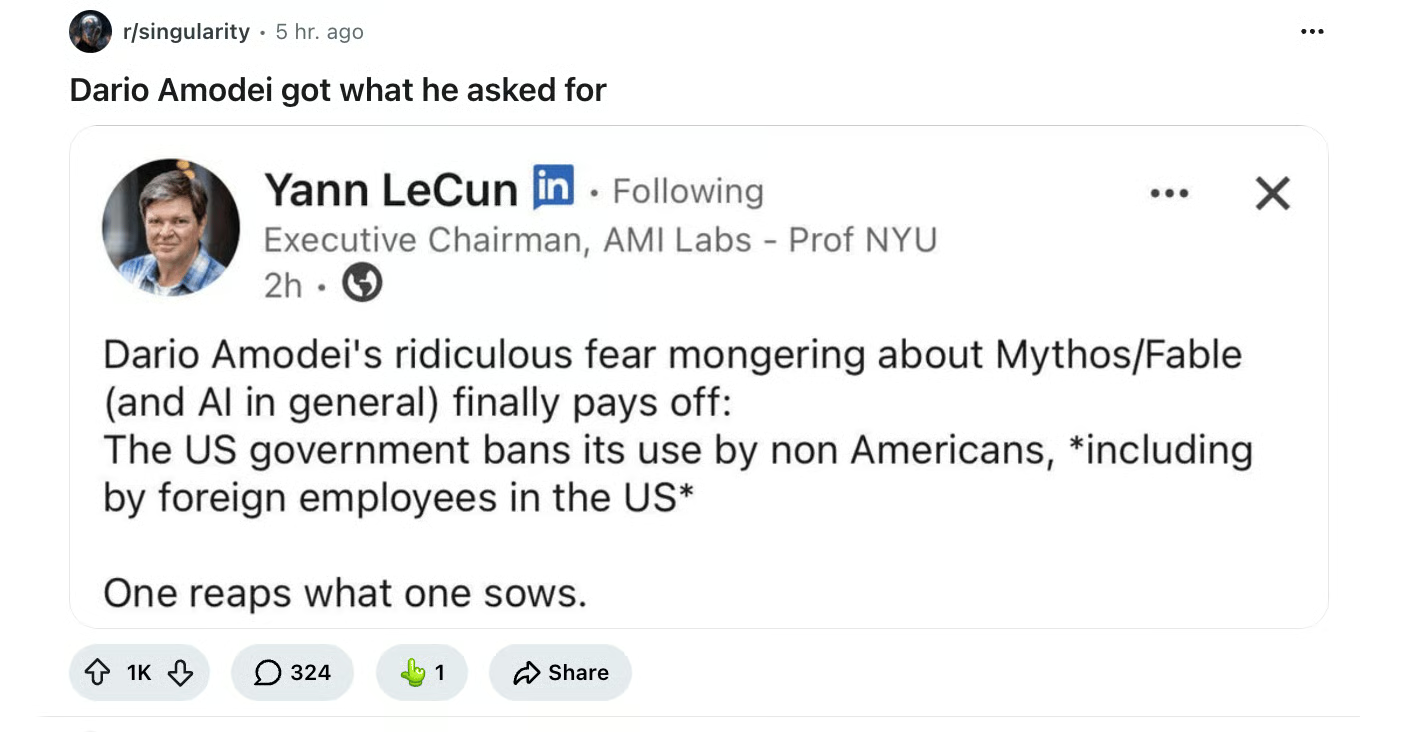
Interestingly, now it is arguing that this block skipped the transparent, technical process such power needs. Putting the heavy irony aside, that’s a good argument… probably better to do a longer review cycle and stop things before they go public to avoid the headache this just caused. Anyway, Yann LeCun didn’t mince words about this:
We can also see where a government kill switch may be necessary for truly dangerous models, especially if cyber or bio capabilities cross a real line.
The fact that Amazon flagged it is interesting; did they get data breached, for example? But to do it once a model is public is all kinds of messy. Basically, companies need clear rules they can comply with, rather than building businesses on top of models that can vanish with a single, seemingly reactive directive.
The larger issue
If we’re going to now start blocking AI model access on a country-by-country basis, what’s to stop China from doing the same?
That could mean US companies will no longer have access to frontier open-weight models (meaning models whose “weights” anyone can copy and run on their own servers) that help keep AI pricing competitive and prevent US companies from overcharging businesses that rely on these models for their engineering and automation work. And that would be pretty bad for everyone in the AI ecosystem besides OpenAI and Anthropic, TBH.
Editor’s note: This article originally appeared on our sister publication, The Neuron.