






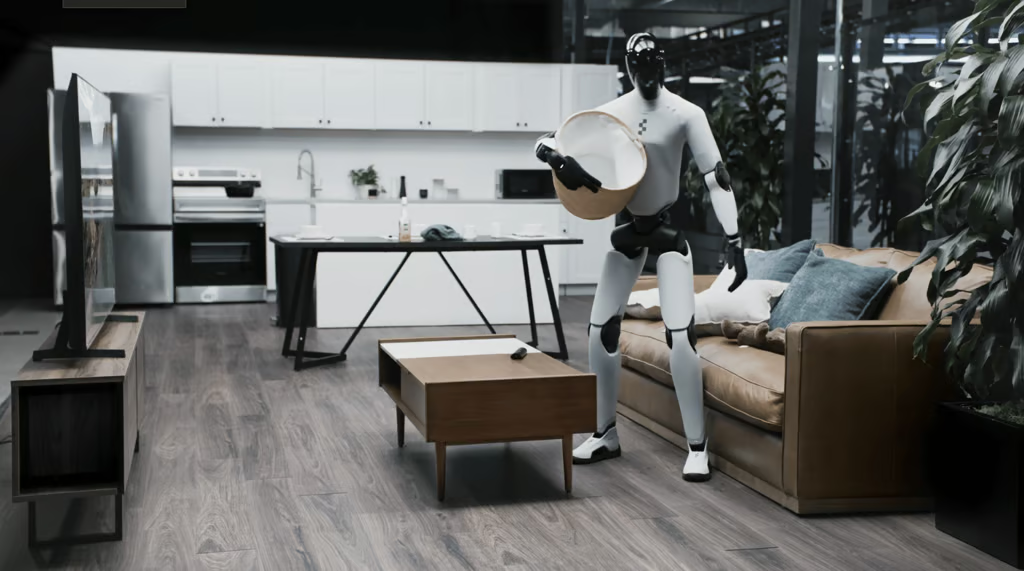


A messy living room might frustrate most people, but for robotics engineers, it represents a serious technical challenge. Now, robotics startup Figure AI says its latest system can handle the job.
The California-based company has released a new demonstration showing its humanoid robot cleaning and organizing a living room using its latest AI system, Helix 02. The demo highlights how a single neural model can guide a robot through a full-room cleanup without special programming for each action.
According to the company, the system enables a robot to combine walking, tool use, and object handling while navigating a constantly changing environment.
In the new demonstration, Figure’s humanoid robot moves through a cluttered living room picking up items, sorting objects, and tidying surfaces.
The robot sprays water onto a surface and wipes it clean with a towel. It also picks up containers with both hands and collects scattered toys and blocks before placing them inside. At one point, it tosses a pillow back onto a couch and even presses the correct button on a TV remote after adjusting it in its hand.
The system also uses practical strategies while working. For example, the robot temporarily tucks a container under one arm to free both hands, or stows a towel on its arm while transitioning between tasks.
Figure described the challenge in detail. “If you could give a home robot one job, ‘tidy the living room’ would be near the top of the list. But from a robotics perspective, this task is incredibly difficult,” the company said.
The robot must deal with different types of objects and actions at the same time, walking through the room while holding tools, picking up toys, and organizing items.
“Unlike more structured commercial tasks, a living room changes constantly. Objects are scattered unpredictably,” Figure explained.
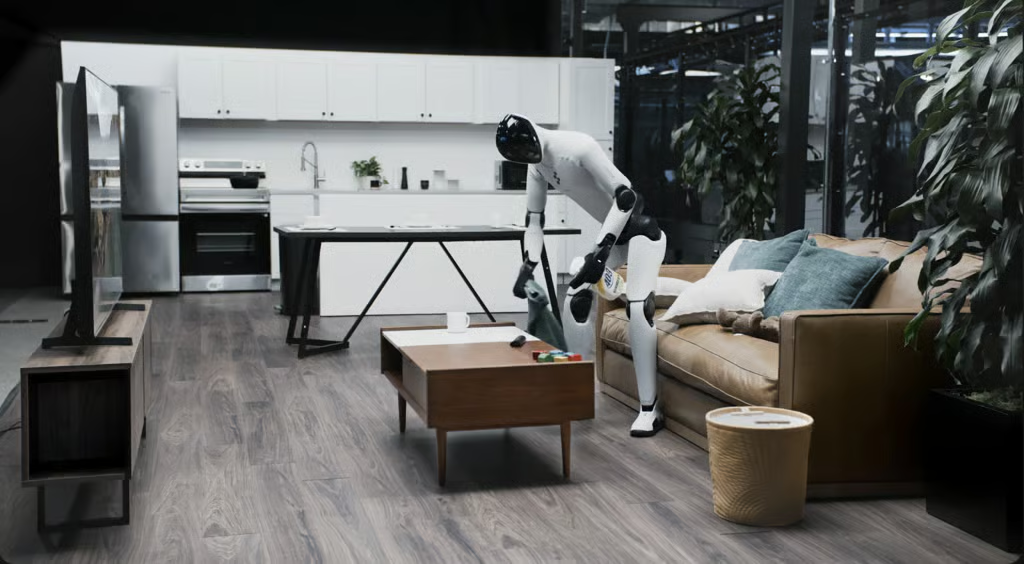
Image: Screenshot via Figure/YouTube
Learning new skills from data
One of the key points behind the demonstration is how the system learns. According to Figure, Helix 02 did not require new algorithms or specialized programming for the task.
“Helix 02 continues to learn new tasks that demand the full integration of locomotion, dexterity, and sensing just by adding new data,” the company said.
Rather than building separate controllers for each behavior, the model learns strategies from examples and applies them across different situations. This approach allows the system to perform actions such as coordinated cleaning, tool handling, and precise navigation through tight spaces without switching between separate programs.
A step toward home robots
The demonstration suggests how humanoid robots could eventually perform a range of everyday household tasks.
Figure believes the approach could help create robots capable of learning new abilities simply by observing more real-world examples.
“As more tasks are added, Helix continues to expand its repertoire — building toward a future where a single humanoid system can perform the wide range of everyday work required in homes and workplaces,” the company said.
Figure is not working in isolation. The humanoid robotics space has grown crowded and competitive in a short time. Samsung has announced plans to bring humanoids into its manufacturing facilities. Honor showed off a moonwalking robot at the 2026 Mobile World Congress. XPeng drew attention — and some skepticism — with a robot demo that prompted audience members to wonder whether a human was inside the suit.
Against that backdrop, Figure’s living room video lands as a statement of direction. The company believes a single humanoid system can eventually handle the full range of tasks required in homes and workplaces, learning new skills simply by observing more of the world.
Also read: Texas Instruments and Nvidia are teaming up to give humanoid robots better vision in complex real-world environments.