








- Jim Rapoza Names the Worst Tech-Related Bills of All Time
- Jim Rapoza Names the Worst Tech-Related Bills of All Time – DMCA
- Jim Rapoza Names the Worst Tech-Related Bills of All Time – SuperDMCAs
- Jim Rapoza Names the Worst Tech-Related Bills of All Time – CAN-SPAM
- Jim Rapoza Names the Worst Tech-Related Bills of All Time – Consumer Broadband and Digital Television Promotion Act
- Jim Rapoza Names the Worst Tech-Related Bills of All Time – COPA
- Jim Rapoza Names the Worst Tech-Related Bills of All Time – Sarbanes-Oxley
- Jim Rapoza Names the Worst Tech-Related Bills of All Time – The Induce Act
- Jim Rapoza Names the Worst Tech-Related Bills of All Time – The Patriot Act
- Jim Rapoza Names the Worst Tech-Related Bills of All Time – Broadcast Flag
- Jim Rapoza Names the Worst Tech-Related Bills of All Time – UCITA
Jim Rapoza Names the Worst Tech-Related Bills of All Time
Sen. Ted Stevens (R-Ala.) recently reintroduced his Deleting Online Predators Act. The bill is designed to protect children in social networks such as MySpace, but it is so poorly and broadly conceived that it could apply to any site that includes user fe
Jim Rapoza Names the Worst Tech-Related Bills of All Time – DMCA
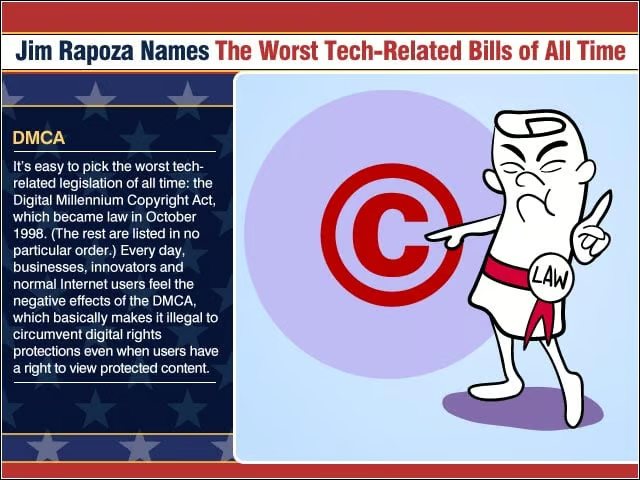
Its easy to pick the worst tech-related legislation of all time: the Digital Millennium Copyright Act, which became law in October 1998. (The rest are listed in no particular order.) Every day, businesses, innovators and normal Internet users feel the ne
Jim Rapoza Names the Worst Tech-Related Bills of All Time – SuperDMCAs
While the federal DMCA is bad enough, the entertainment forces behind it have persuaded some states to pass similar laws that are even worse. The Illinois SuperDMCA law, for example, led to the removal of a popular security application from the Web.
Jim Rapoza Names the Worst Tech-Related Bills of All Time – CAN-SPAM
CAN-SPAM, or Controlling the Assault of Non-Solicited Pornography and Marketing Act, has worked for–not against–spammers, legitimizing some forms of corporate ‘e-mail marketing.’ CAN-SPAM became law in December 2003.
Jim Rapoza Names the Worst Tech-Related Bills of All Time – Consumer Broadband and Digital Television Promotion Act
The Consumer Broadband and Digital Television Promotion Act, aka the Hollings Bill, never became law. If it had–and DRM was required for all hardware and software–the sheer scope of its negative effects would have made the DMCA seem mild. In short, t
Jim Rapoza Names the Worst Tech-Related Bills of All Time – COPA
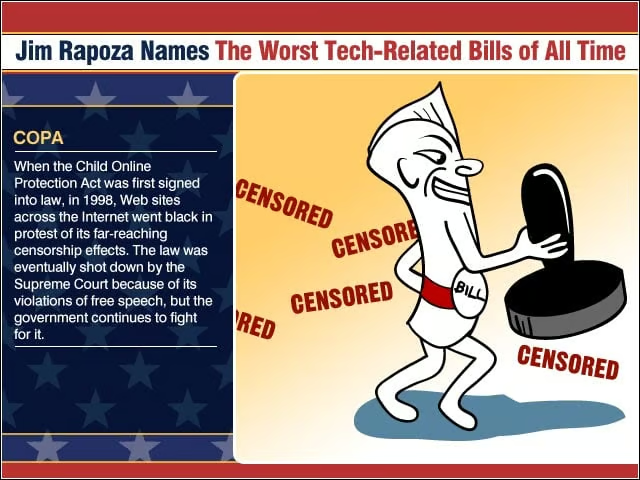
When the Child Online Protection Act was first signed into law, in 1998, Web sites across the Internet went black in protest of its far-reaching censorship effects. The law was eventually shot down by the Supreme Court because of its violations of free sp
Jim Rapoza Names the Worst Tech-Related Bills of All Time – Sarbanes-Oxley
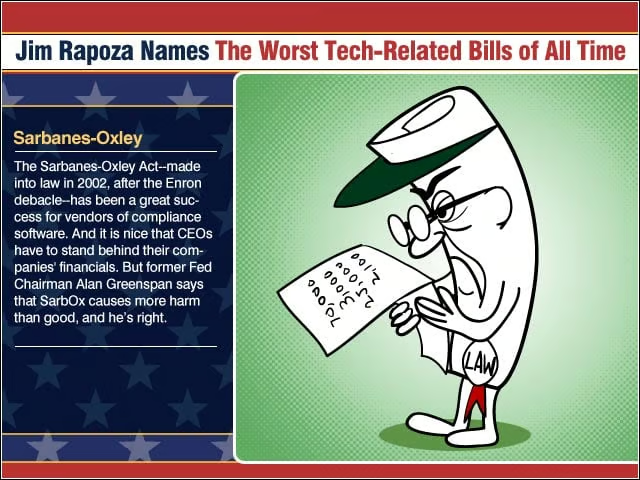
The Sarbanes-Oxley Act–made into law in 2002, after the Enron debacle–has been a great success for vendors of compliance software. And it is nice that CEOs have to stand behind their companies financials. But former Fed Chairman Alan Greenspan says
Jim Rapoza Names the Worst Tech-Related Bills of All Time – The Induce Act
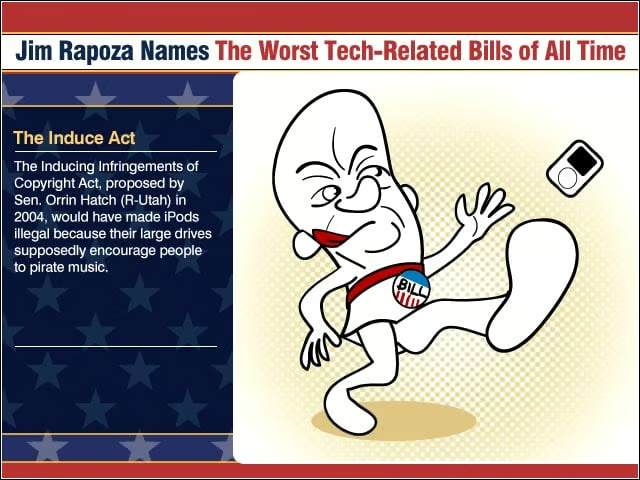
The Inducing Infringements of Copyright Act, proposed by Sen. Orrin Hatch (R-Utah) in 2004, would have made iPods illegal because their large drives supposedly encourage people to pirate music.
Jim Rapoza Names the Worst Tech-Related Bills of All Time – The Patriot Act
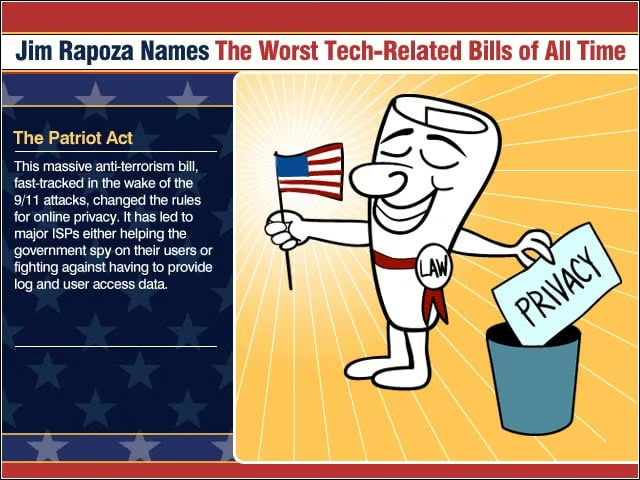
This massive anti-terrorism bill, fast-tracked in the wake of the 9/11 attacks, changed the rules for online privacy. It has led to major ISPs either helping the government spy on their users or fighting against having to provide log and user access da
Jim Rapoza Names the Worst Tech-Related Bills of All Time – Broadcast Flag
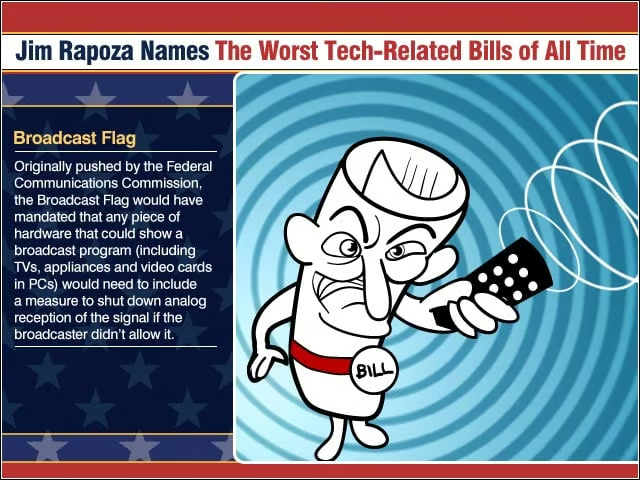
Originally pushed by the Federal Communications Commission, the Broadcast Flag would have mandated that any piece of hardware that could show a broadcast program (including TVs, appliances and video cards in PCs) would need to include a measure to shut
Jim Rapoza Names the Worst Tech-Related Bills of All Time – UCITA
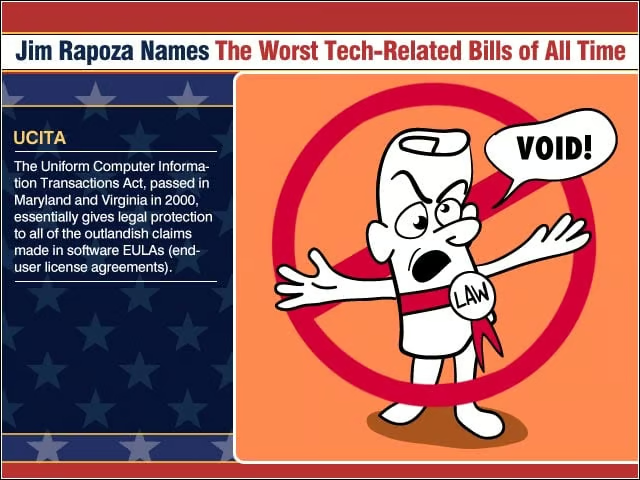
The Uniform Computer Information Transactions Act, passed in Maryland and Virginia in 2000, essentially gives legal protection to all of the outlandish claims made in software EULAs (end-user license agreements).