






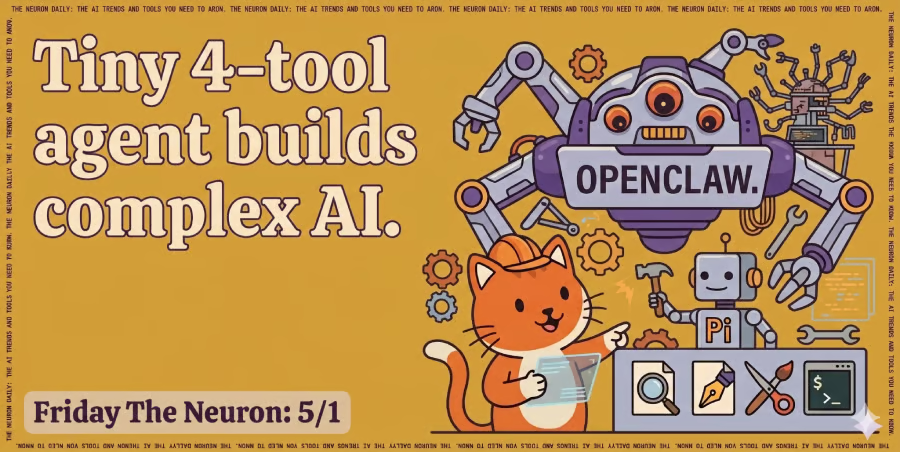


You’ve probably heard of OpenClaw by now, the WhatsApp-based personal AI assistant from Peter Steinberger that exploded over Christmas. What you probably haven’t heard: the whole thing runs on a tiny open-source coding tool called Pi, built by an Austrian developer fed up with bigger AI tools getting weirder with each update.
Pi’s creator Mario Zechner just sat down with The Pragmatic Engineer for 90 minutes of refreshingly grumpy clarity about AI tools. Joining him: Armin Ronacher, creator of the Flask web framework that runs huge chunks of the internet.
Here’s what happened
- Pi is a “coding agent” (an AI pair-programmer for developers) that ships with only four built-in tools: read, write, edit, and bash.
- Anything else (plan mode, integrations, custom interfaces) is built by users who ask Pi to modify Pi itself; non-engineers have done this without coding skills.
- Mario’s recent blog post got standing ovations at AI Engineer Europe; his core argument is that agent armies create complexity their own future selves can’t untangle.
- After interviewing 30+ engineering teams, Armin found code quality has dropped across the industry, with serious projects shipping what he calls “vibe slop.”
Why this matters
Their central argument boils down to one thing: agents don’t feel pain.
Humans hate maintaining bad code, so we eventually clean it up. Agents happily generate 10,000 lines of garbage that future agents can’t fully process (AI has a memory limit; once a codebase is too big, the next agent can’t see all of it). Multiply that by every company racing to “10x productivity with agent swarms,” and you get the brittle, buggy software you’ve already started noticing in apps you use daily.
Our take
The Pi philosophy (“ship a tiny core, let users build what they need”) is a preview of where AI tools are heading for everyone, not just coders. The faster the models get, the more the value shifts to your taste in deciding what NOT to build. Mario’s bet is that in two years, the personalization layer of every AI tool will look more like Pi than like the all-singing, all-dancing platforms we’re using today.
The real question: when your AI tools can rewrite themselves, are you actually in charge, or just delegating one more decision you’ll regret later?
Editor’s note: This content originally ran in the newsletter of our sister publication, The Neuron. To read more from The Neuron, sign up for its newsletter here.