Mind the new frontiers, Tech Insiders. SpaceX wants to send AI compute into orbit, NASA just put the Moon on Hugging Face, and back on Earth, Android malware, industrial-scale model copying, and ChatGPT ads are pushing into new territory. From lunar maps to ad slots, here's what landed. |
|
|
|
Here's what you need to know today: |
|
|
|
SpaceX Targets 2027 for AI Data Centers in Orbit |
Because apparently the cloud needed an actual orbit.
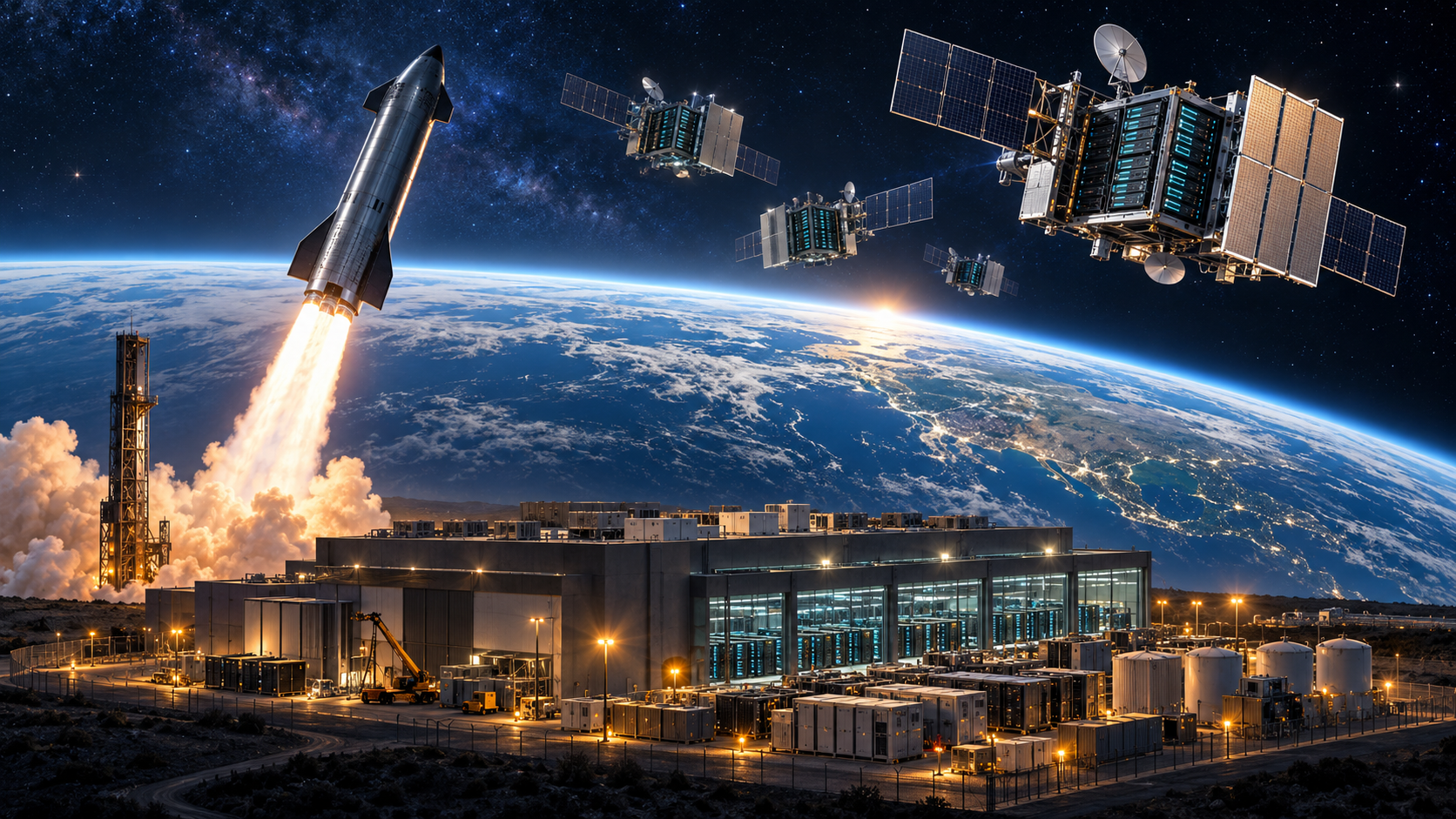
SpaceX aims to deploy its first orbital compute satellites in 2027, with CFO Bret Johnsen telling investors that "huge amounts of compute" could follow in 2028. The company is betting Starship can eventually drive down launch costs until flying servers rival the price of ground-bound ones.
The timing is spicy because SpaceX is simultaneously slowing down on Earth. After outages and reliability problems, rocket engineers have taken over more of the data center operations to prioritize backup power, cooling, and rigorous testing before new capacity goes live. Separately, the NAACP is suing over dozens of temporary gas turbines currently powering the Colossus 2 site in Southaven, Mississippi. All this friction could stretch build timelines after years of treating speed like a core feature.
|
Image created with ChatGPT |
Demand is not the problem. SpaceX just signed an unnamed compute customer for $1.11 billion a month, on top of massive deals with Anthropic and Google. Terrestrial compute is already central to its push toward $100 billion in annual recurring revenue.
But orbit doesn't magically erase data-center physics. As I previously wrote, floating hardware still demands intensive temperature control, networking, radiation shielding, and physical repairs. Latency also makes space better suited to specialized workloads—like processing defense or weather data already generated up there—than your next chatbot prompt.
Why it matters: SpaceX is trying to solve two AI infrastructure problems at once—make Earth-based capacity more reliable now, and prove space can become the next compute layer later. If Starship cuts launch costs enough, orbital AI stops being a sci-fi slide deck. Until then, Earth still gets the power bills, zoning fights, and outages. |
|
|
|
Should AI companies use space to escape Earth's infrastructure limits? |
|
|
|
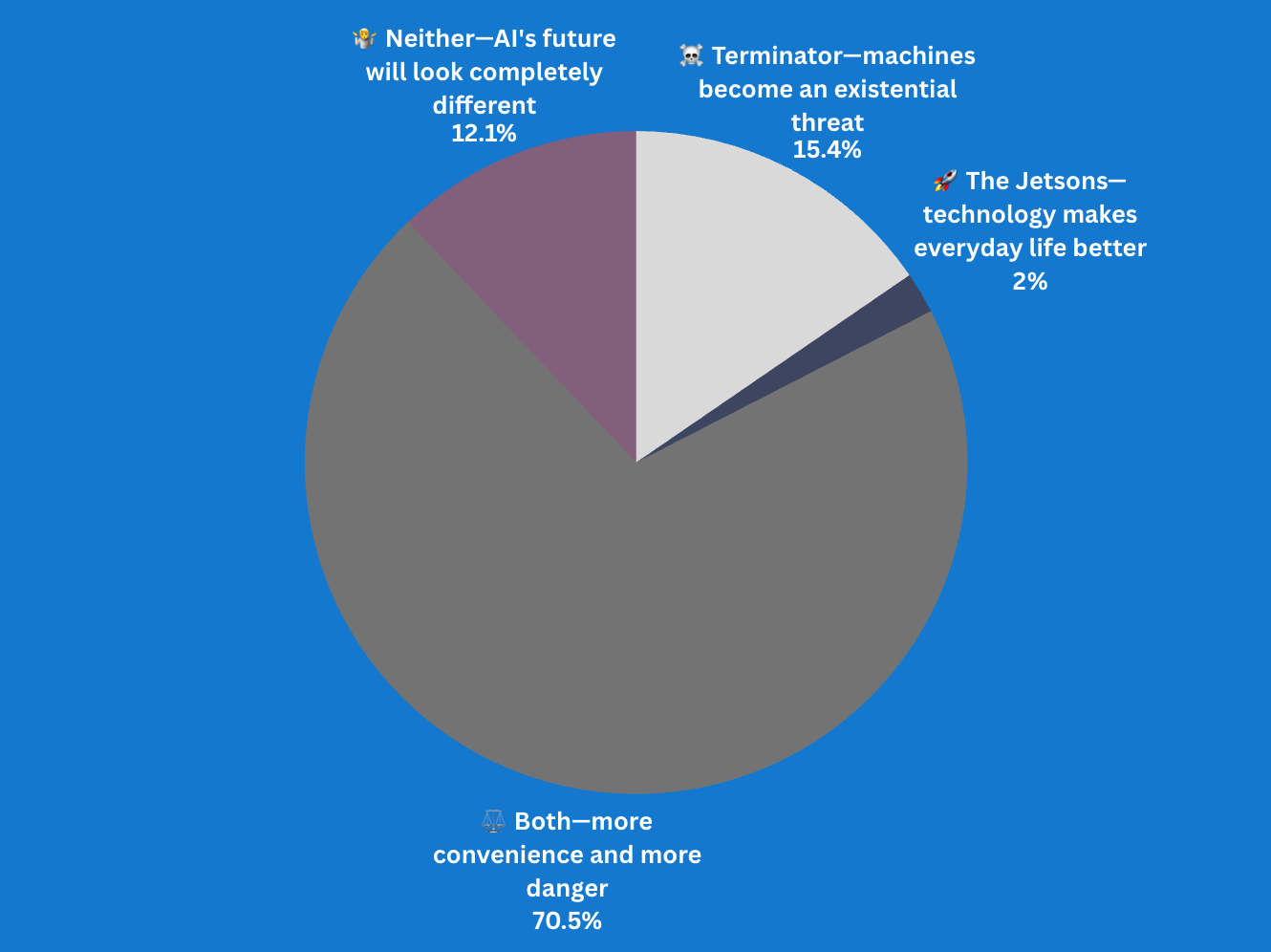
Results from Friday's Pulse Check |
What kind of future will advanced AI create? |
|
|
|
NASA and IBM Open Lunar AI Model to Researchers |
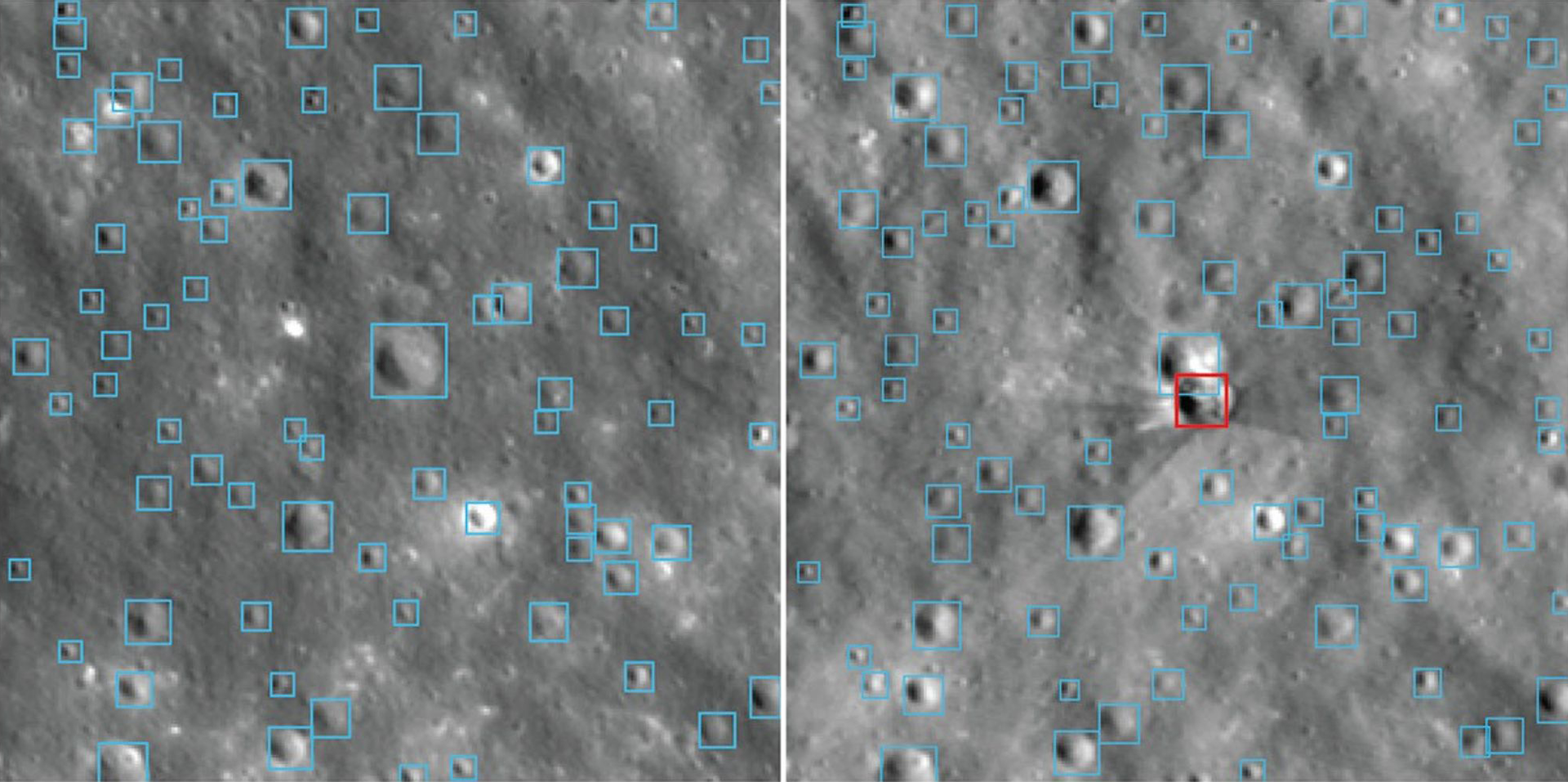
The Moon just got its own foundation model, because apparently Earth already has enough AI. Last week, NASA and IBM dropped an open-source AI trained on decades of orbital data to help boffins chart craters, investigate ancient lava flows, and sniff out hidden ice near the lunar poles.
The system ingested around 2 million image tiles, alongside a massive new companion dataset that stacks multi-instrument observations from four separate space missions into a single unified map. Now, instead of reinventing the algorithmic wheel for every new space project, researchers can just head over to Hugging Face, download the Prithvi-family foundation model, fine-tune it, and start building.
|
Image via NASA/IBM Research |
In early trials, the NASA-IBM creation cut error rates by up to 22% when hunting down potential ice spots, and it topped a standard vision model in crater detection by 19%—all while relying on half the usual training data. Those results still need independent validation.
The fun part? Conventional computer-vision training initially failed badly because lunar craters can look maddeningly alike. To keep the AI from getting confused, researchers had to artificially slice the lunar surface into strictly isolated geographic sectors during training.
But the sleeper release may be the dataset itself. Models get replaced; a standardized, machine-learning-ready lunar archive could fuel entirely new ones as NASA works toward sustained exploration and a 2028 crewed landing. One small step for open source, one giant dataset for moon nerds. |
|
|
|
IRIS is not merely replacing the FIRE portal. It changes how information returns are structured, validated, and transmitted.
On Sept. 24, 2026, at 1:00 p.m. ET, join TechRepublic and Sovos for The IRIS Reality Check: Technical Changes, Common Misconceptions, and What to Do Now. Clarify the technical requirements, uncover readiness gaps, and determine what tax and technology teams must address before mandatory filing begins. |
|
|
Mantax Otax Turns Android Phones Against You |
Mantax Otax is a new Android threat linked to Indonesian operators that merges extortion, espionage, and straight-up harassment after victims sideload malicious APKs.
It can swipe lock-screen PINs, OTPs, texts, web histories, locations, and secretly snap photos. Android 9 and older devices face another problem: It can encrypt files and launch an inescapable, on-screen chat interface for ransom demands. Newer Android versions limit the encryption damage, but not the surveillance. |
Image created with ChatGPT |
Its second iteration introduces app lockouts, invisible touch-absorbing screens, visual jump scares, and attacker-controlled text-to-speech. Steer clear of sketchy APKs, deny weird Accessibility prompts, update your OS, and leave Play Protect on. A phone that starts talking back should not be this literal. |
US Agencies Warn of Industrial-Scale AI Model Distillation Attacks |
The AI race has officially entered its "stop copying my homework" phase.
Federal agencies report a half-dozen Chinese outfits—like Alibaba, DeepSeek, and Moonshot AI—have spent the last two years running massive extraction operations against Claude, GPT, Gemini, and Grok. To siphon off top-tier reasoning and coding skills, these groups allegedly hid behind bogus accounts and gray-market proxy networks.
China dismissed the accusations as "groundless," but a separate Anthropic threat report tracked seven illicit harvesting rings, spotlighting a massive Alibaba-connected effort that fired off 151 million prompts. Meanwhile, DeepSeek and Moonshot reportedly funneled their own customers' queries straight into Claude without uttering a peep.
Y Combinator CEO Garry Tan believes regulators should "do nothing" and preserve open-weight competition, nodding to the rich irony that US frontier labs are complaining about theft while facing their own massive copyright lawsuits. Adding to the irony, Chinese robotics startup JoyIn is now lobbing its own unverified distillation allegations at OpenAI over suspiciously similar tech concepts and web design.
For teams serving up AI via APIs, keep an eye out for around-the-clock bot traffic, pooled credentials, or brand-new accounts instantly maxing out their limits. On the flip side, enterprise buyers need to ensure their vendors aren't quietly degrading model performance in the name of fending off these scraping attacks. |
|
|
|
Amazon Brings Its Ad Machine to ChatGPT |
Amazon now lets chosen US marketers buy ChatGPT ads via its demand-side platform (DSP), offering an established gateway into OpenAI's booming ad ecosystem. Managed by Amazon, this pilot serves promos under chatbot replies via CPC/CPM pricing; Delta Vacations is already testing the waters, presumably to help book an escape from our inevitable AI overlords.
This pivot is deliciously ironic. While Amazon recently blocked AI bots from scraping its catalogs, it paradoxically spent the spring and summer as OpenAI's top retail advertiser. Now, it's hawking access to competitors. Translation: Even the e-commerce apex predator acknowledges that—with ChatGPT boasting over 1 billion weekly active users—buyer intent crystallizes before anyone visits Amazon.com.
|
While Amazon manages budgets and subjective "context hints," OpenAI dictates placement. Advertisers get aggregated metrics, but not granular control; visibility into exactly where individual ads appear remains limited.
The timing suits both titans. OpenAI's ad business recently hit a $1 billion annualized run rate, while Amazon's neared $70 billion. If conversational ads stick, Amazon has found a way to monetize AI shopping intent even when the customer journey starts somewhere else. If you can't beat the chatbot, you can just sell ads inside it. |
|
|
|
| Writer/Editor at TechnologyAdvice |
Justin Meyers is an investigative writer and editor who draws on over a decade of meticulous hands-on research to deliver the full, trustworthy story behind consumer and enterprise tech, including cybersecurity. |
|
|
|
Curious about where AI is really headed? |
The Neuron cuts through the noise to bring you smart, hype-free takes on the latest AI trends, tools, and breakthroughs. Join 700,000+ professionals from top companies like Microsoft, Apple, Salesforce, and more.
|
|
|
|
Advertise in Daily Tech Insider! Daily Tech Insider is a TechnologyAdvice business. © 2026 TechnologyAdvice, LLC. All rights reserved.
TechnologyAdvice, 3343 Perimeter Hill Dr., Suite 215, Nashville, TN 37211, USA. |
|
|
|
|