








- Data Breaches Continue to Be Financially Motivated as Detection Lags
- Breaches Are Financially Motivated
- Breach Volume Varies by Sector
- Detection Time Lags
- Outsiders Are Often Responsible for Breaches
- Most Victims Are Small Businesses
- Databases Are Often the Target
- Malware Doesn’t Hit Organizations Every Day
- Email Is the Top Malware Vector
Data Breaches Continue to Be Financially Motivated as Detection Lags
Verizon released on April 10 the 2018 edition of its Data Breach Investigations Report (DBIR), which analyzed a filtered data set of 53,308 security incidents across multiple industries around the world. Of those security incidents, the 68-page report revealed that 2,216 were confirmed to be breaches. While the report found that there were various reasons for the breaches depending on the industry vertical, the primary motivation behind the attacks remained consistent with prior years, as Verizon once again reported that most are financially motivated. Verizon’s analysis also found that, although breaches are a known risk, 68 percent of them took months for organizations to discover. In this slide show, eWEEK takes a look at some of the highlights of the 2018 Verizon Data Breach Investigations Report.
Breaches Are Financially Motivated
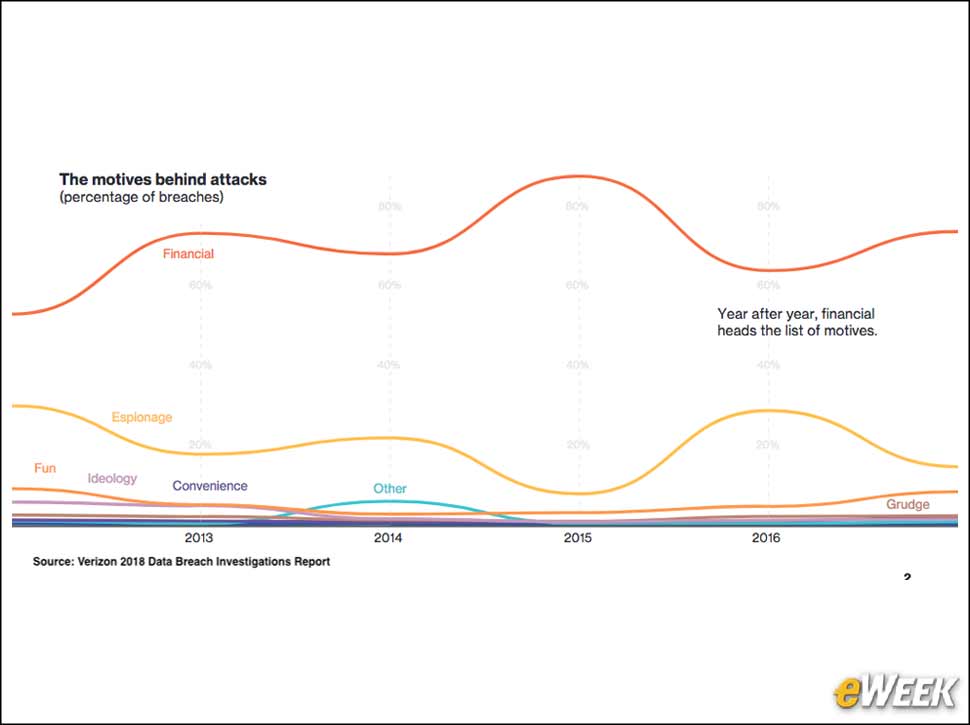
Once again, Verizon found that the primary motive behind breaches was financial.
Breach Volume Varies by Sector
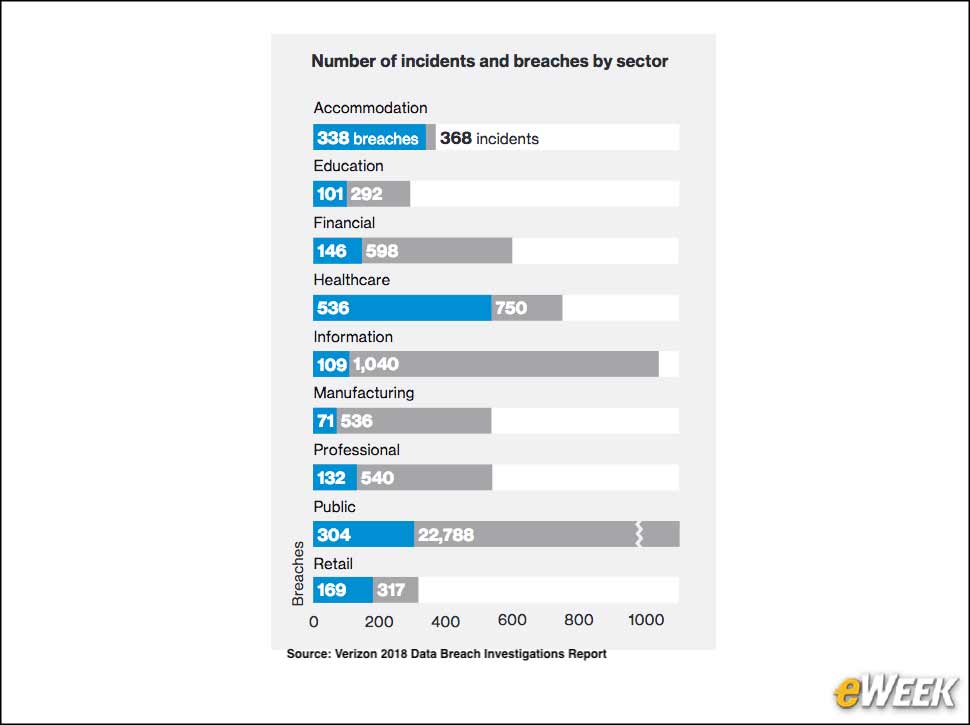
The Verizon report looks at both security incidents and confirmed breaches across multiple industry sectors. For the 2018 report, health care was among the most breached sectors.
Detection Time Lags
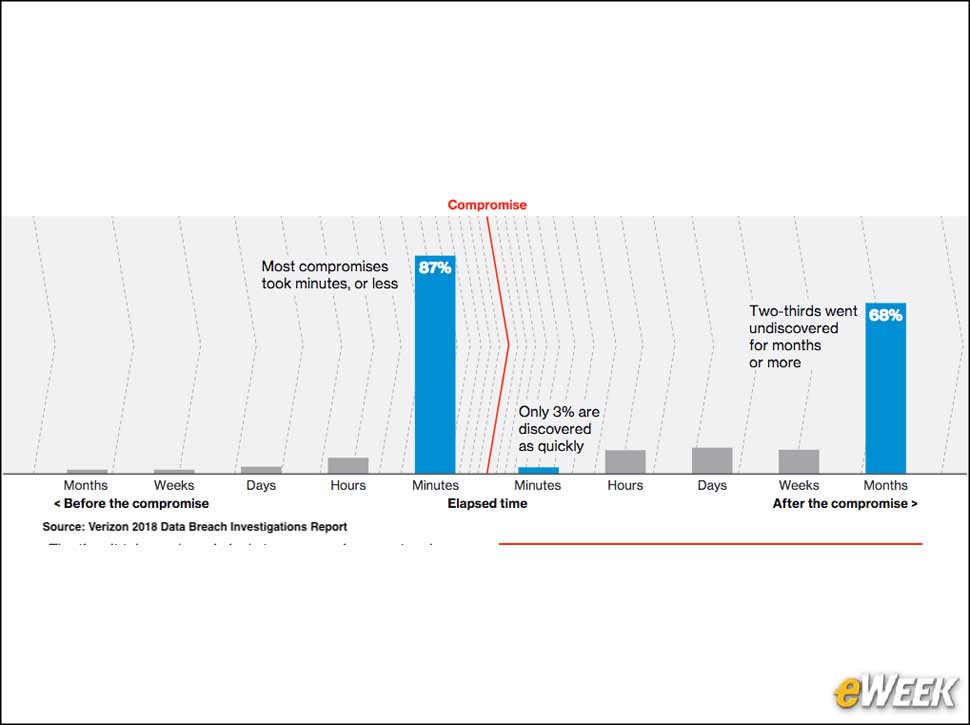
According to Verizon’s analysis, 87 percent of compromises took minutes or less for attackers to gain access. In contrast, only 3 percent of breaches were discovered within minutes, while 68 percent of breaches went undiscovered for months.
Outsiders Are Often Responsible for Breaches
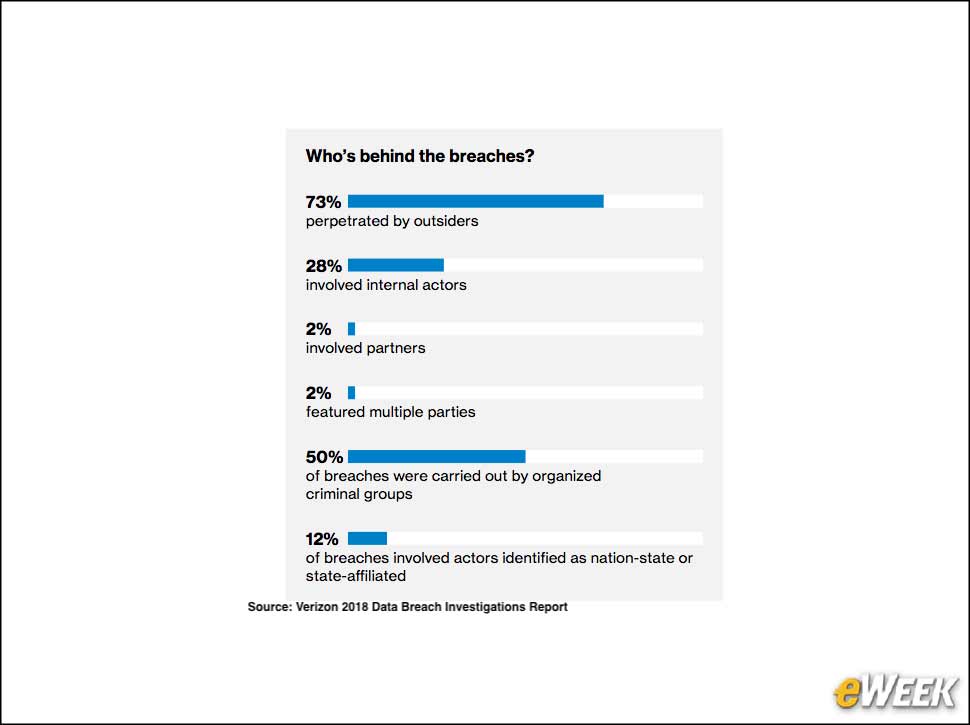
While there are multiple sources for data breaches, Verizon reported that 73 percent of breaches were perpetrated by outsiders.
Most Victims Are Small Businesses
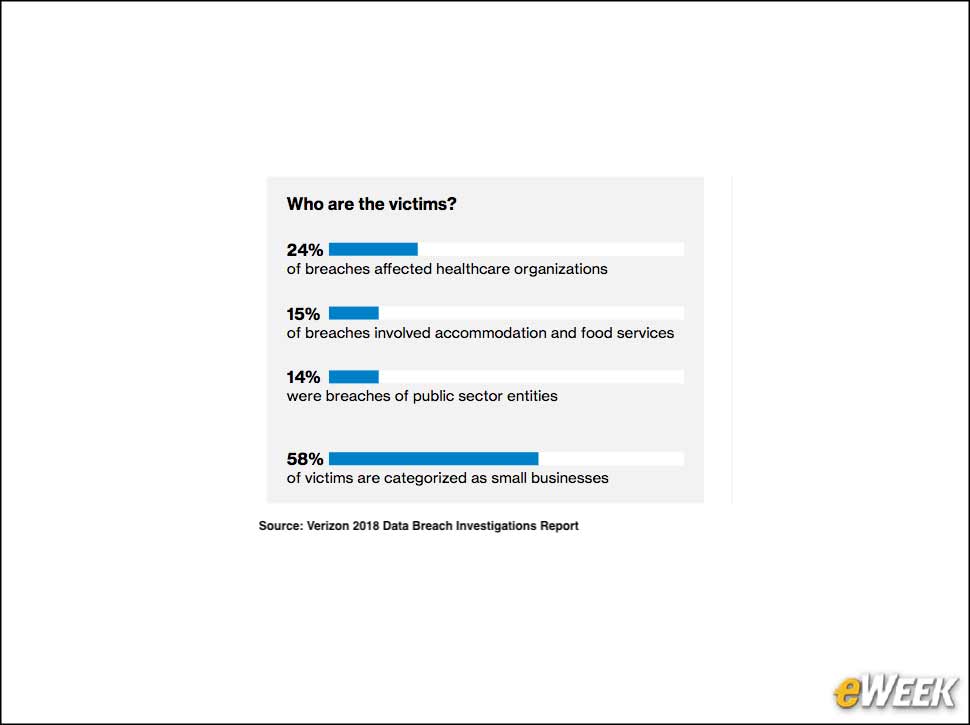
Any sized organization can be a victim of a data breach. However, in its 2018 report, Verizon found that that the majority (58 percent) of victims were categorized as small business.
Databases Are Often the Target
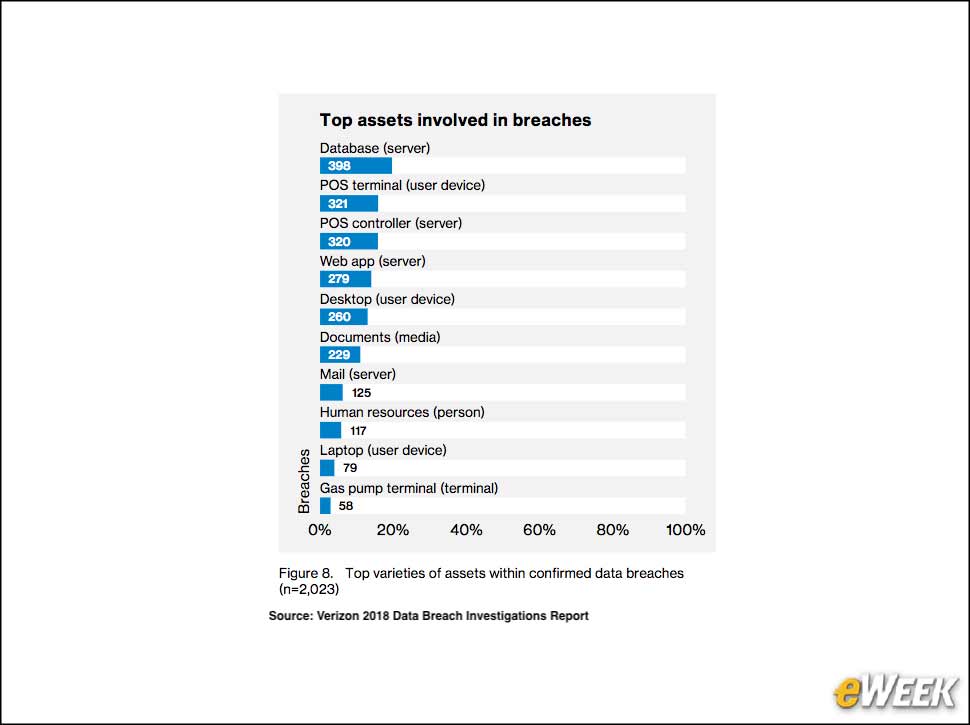
There are multiple things that attackers go after in attacks. Verizon identified databases as one of the top assets involved in data breaches.
Malware Doesn’t Hit Organizations Every Day
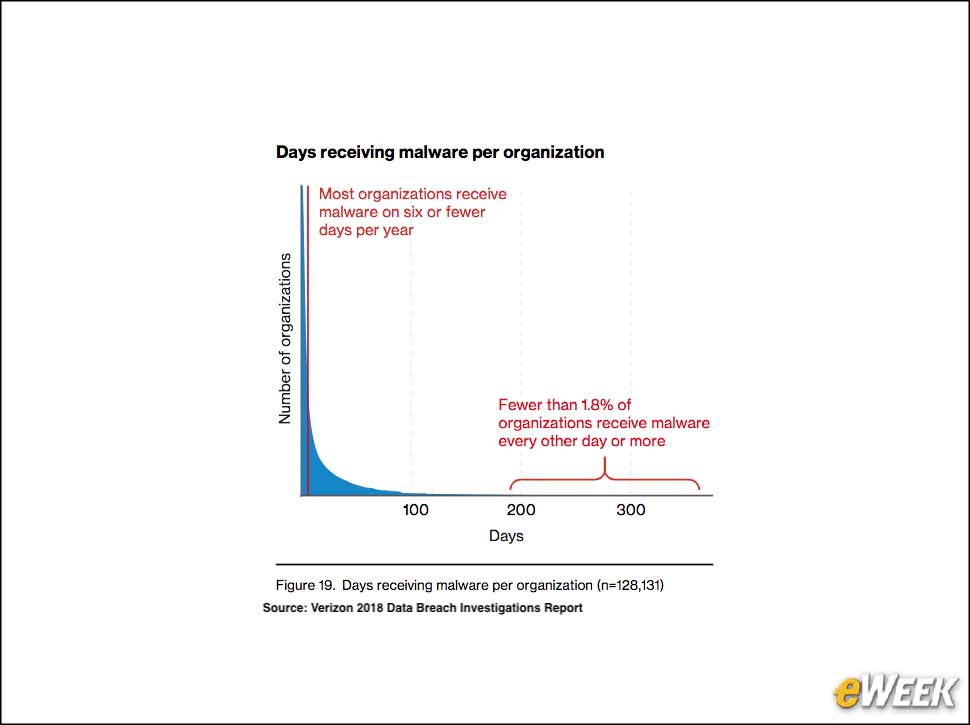
While the volume of security incidents and data breaches continues to be a challenge, malware incidents are not necessarily an everyday occurrence. Verizon reported that most organizations receive malware on six or fewer days per year.
Email Is the Top Malware Vector
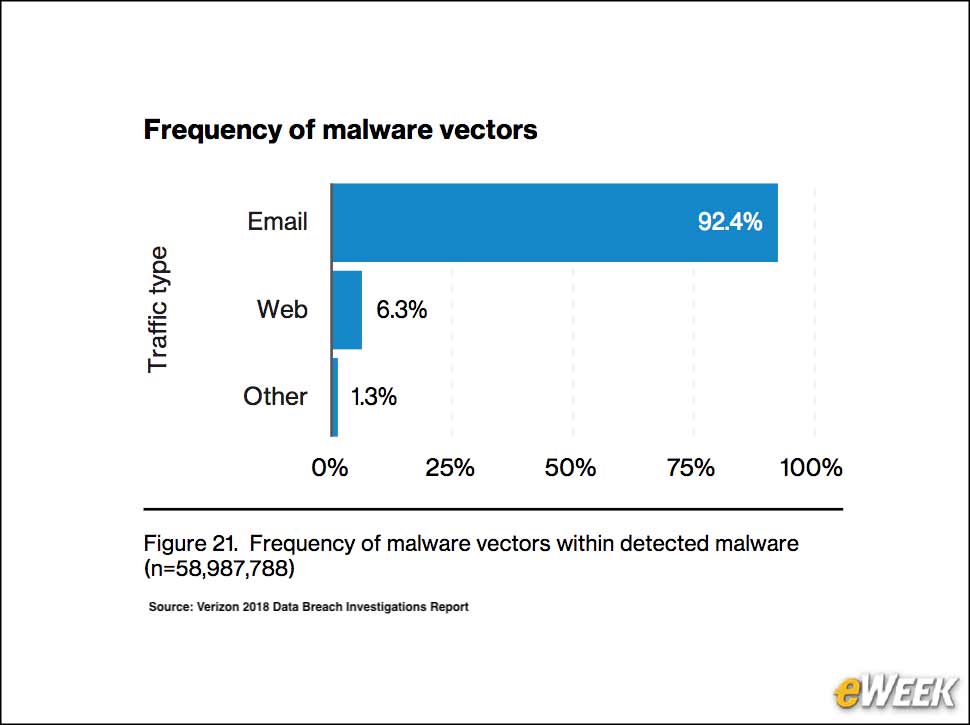
When organizations do encounter malware, more often than not it is delivered via email. Verizon found that email is the most frequently used malware delivery model.