








- Victims of Payment Card Breaches Not Fully PCI DSS Compliant
- More Companies Are Remaining PCI DSS Compliant
- Most Organizations Don’t Use Vendor Defaults
- Security Testing Is Lacking
- Financial Services Organizations Fare Better Than Average
- Hospitality Is Worse Than Average When It Comes to Compliance
- Track Data or Get Breached
- Most Organizations Are Not PCI DSS Compliant When Breached
Victims of Payment Card Breaches Not Fully PCI DSS Compliant
The Payment Card Industry Data Security Standard (PCI DSS) compliance regimen includes 12 key requirements and hundreds of related controls, all designed to keep payment data secure. According to the Verizon, no organization that has been breached in the past seven years was fully PCI DSS compliant at the time of the breach. That’s one of the high-level findings in the 60-page Verizon 2017 Payment Security Report. Another key finding is that only 55.4 percent of all organizations remain fully PCI DSS compliant one year after their initial assessment, although that is an improvement from 2015. Looking at specific industry verticals, Verizon found that nearly 60 percent of financial services organizations are PCI DSS compliant, while only 42.90 percent of those in the hospitality vertical are. In this slide show, eWEEK looks at some of the highlights from the Verizon 2017 Payment Security Report.
More Companies Are Remaining PCI DSS Compliant
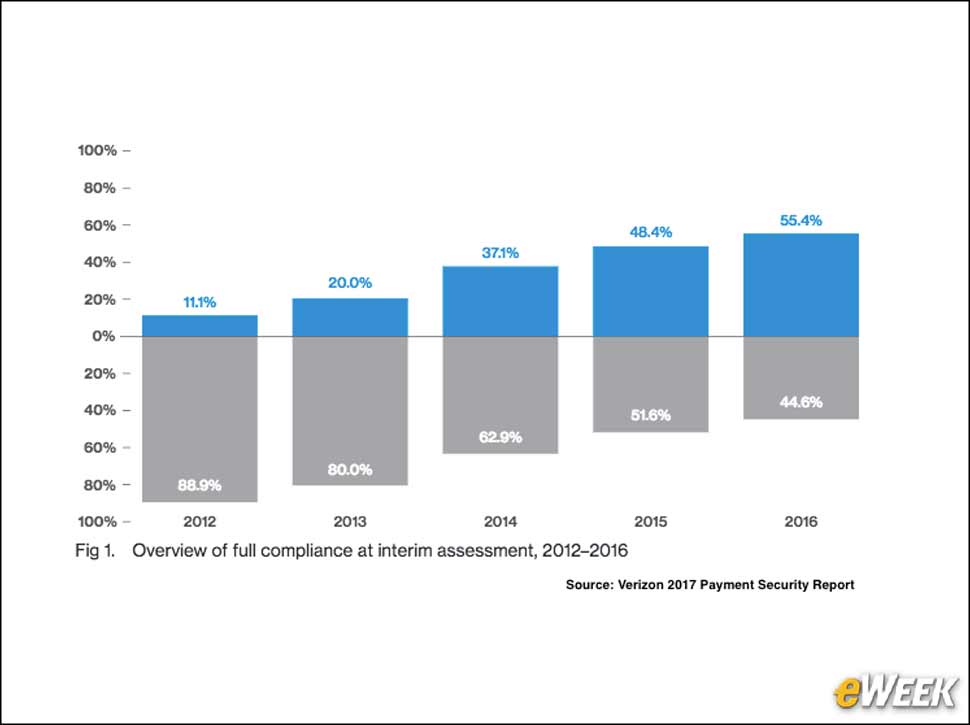
According to Verizon’s report, 55.4 percent of the organizations it analyzed were still PCI DSS compliant one year after their initial assessment. In 2015, Verizon found that only 48.4 percent of organizations remained compliant after one year.
Most Organizations Don’t Use Vendor Defaults
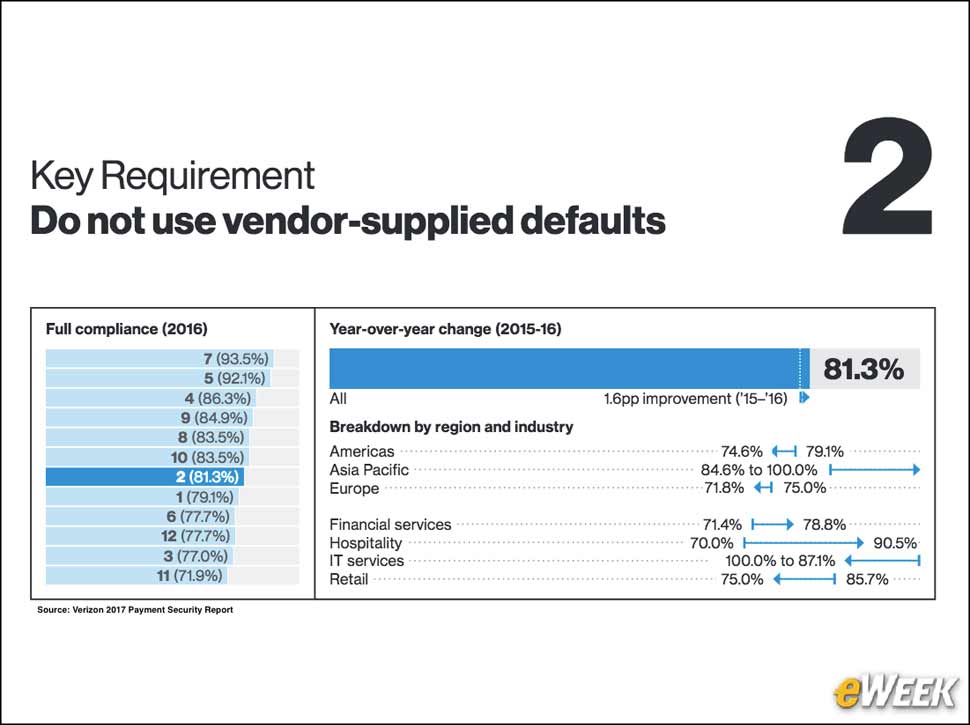
No. 2 on the list of the 12 top-level PCI DSS requirements mandates organizations to not use vendor-supplied defaults for credentials and assess. According to Verizon, 81.3 percent of assessed organizations are compliant with that requirement.
Security Testing Is Lacking
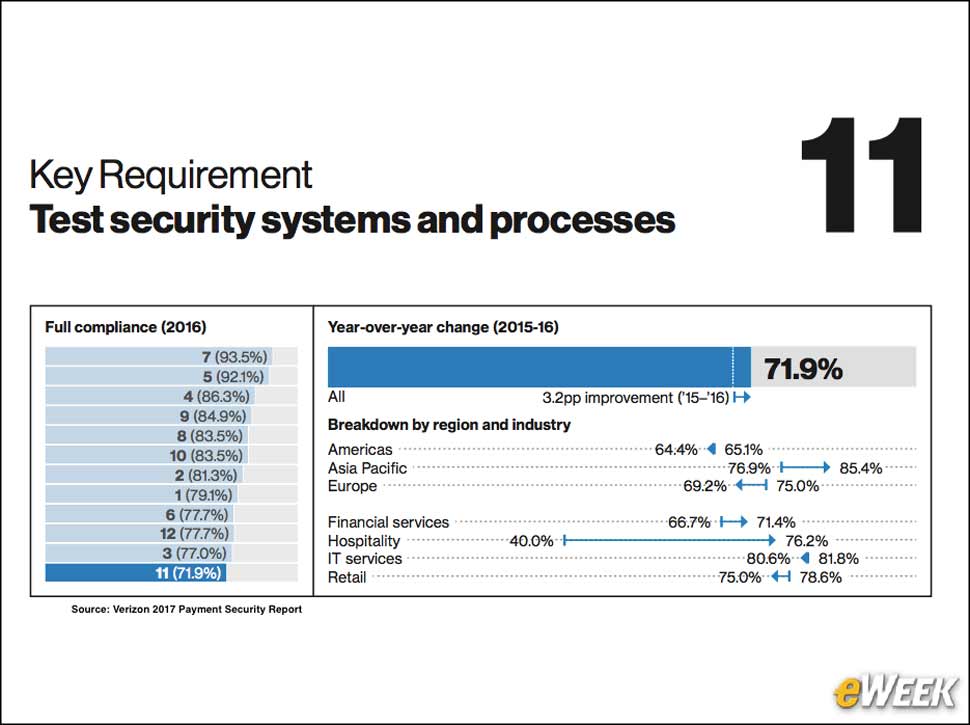
Only 71. 9 percent of organizations are compliant with PCI DSS requirement 11, which requires organizations to test security systems and processes.
Financial Services Organizations Fare Better Than Average
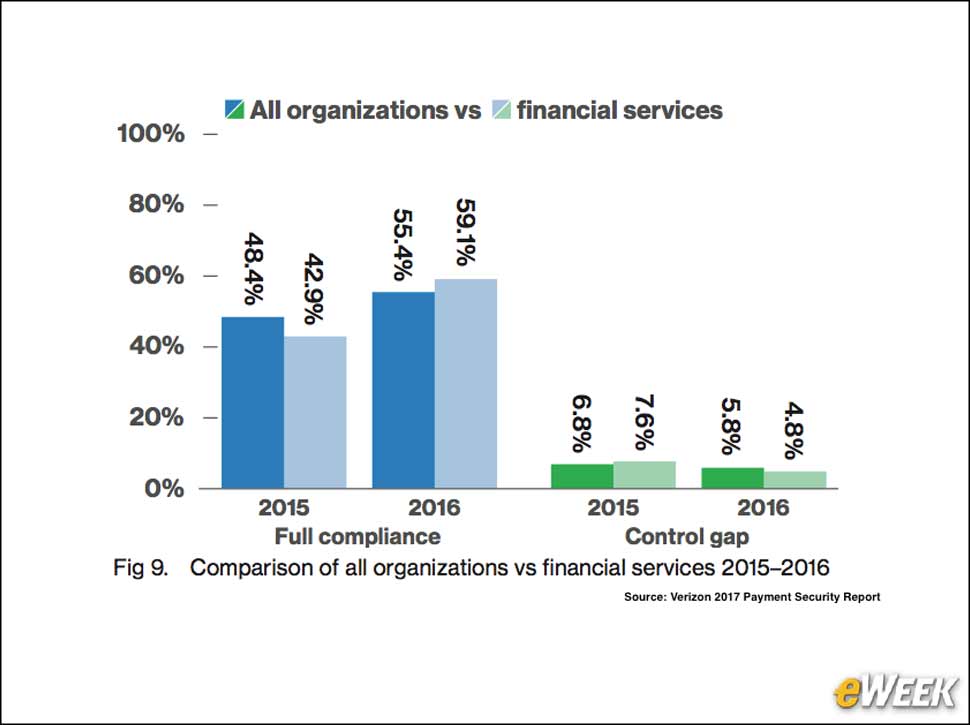
Nearly six out of 10 (59.1 percent) financial services organizations are PCI DSS compliant, outperforming the total industry average of 55.4 percent.
Hospitality Is Worse Than Average When It Comes to Compliance
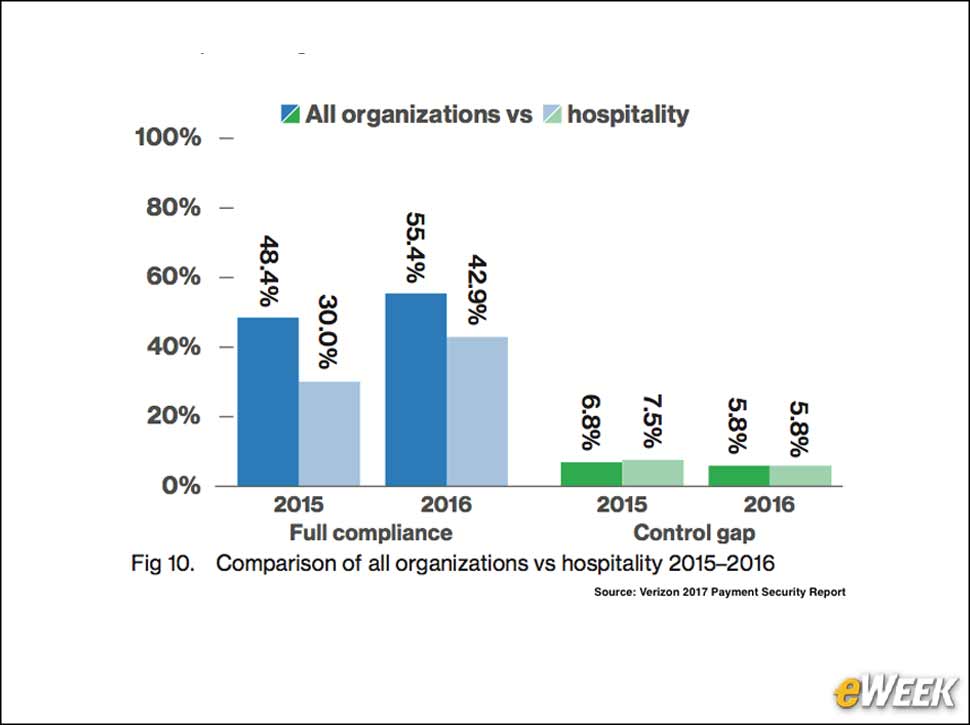
Only 42.9 percent of hospitality organizations—including hotels, restaurants, and travel and tourism companies—are PCI DSS compliant, far below the industry average.
Track Data or Get Breached
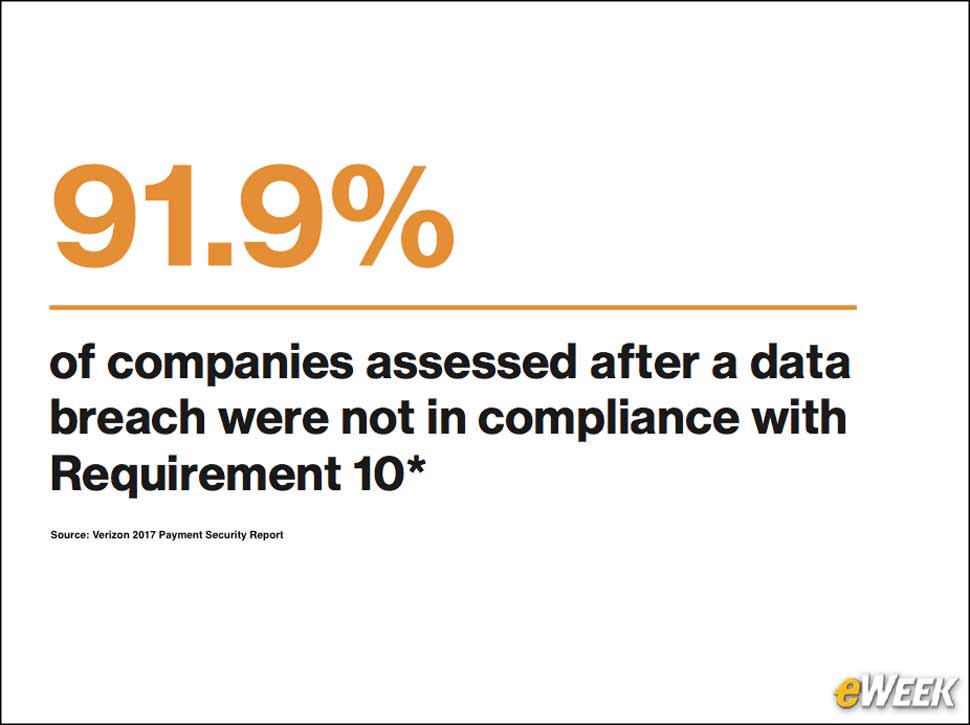
Verizon’s analysis found that 91.9 percent of companies assessed after a data breach were not in compliance with PCI DSS requirement 10 at the time of the breach. Requirement 10 mandates that organizations track and monitor access.
Most Organizations Are Not PCI DSS Compliant When Breached
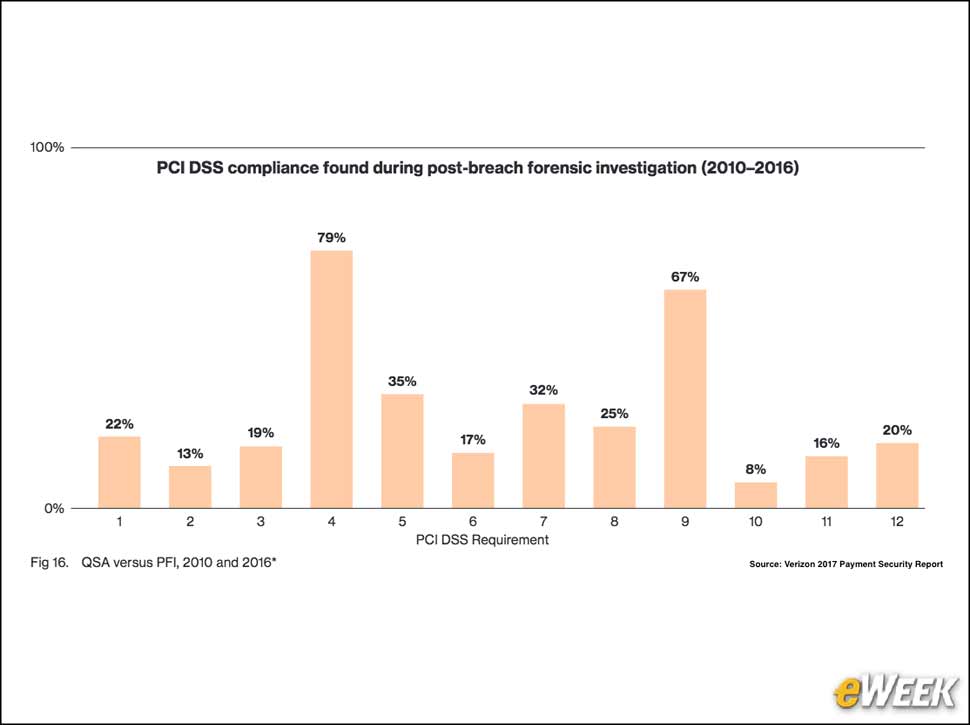
Looking back over post-breach forensic information from 2010-2016, Verizon found that most breached organizations were not compliant with PCI DSS at the time of the breach.