







- 10 Steps Enterprises Can Use to Improve Litigation Readiness
- 1. Know Your Data: Create a Data Map
- 2. Create a Data Retention Policy
- 3. Executive Buy-In Needed
- 4. Know Your End Users
- 5. Build the Litigation Readiness Team
- 6. Automate Policies and Track Decisions Users Make
- 7. Take End Users Out of the Preservation Loop
- 8. Get Started
- 9. Use a Scalable, Flexible Process
- 10. Centralize Management Wherever Possible
10 Steps Enterprises Can Use to Improve Litigation Readiness
edited by Chris Preimesberger
1. Know Your Data: Create a Data Map
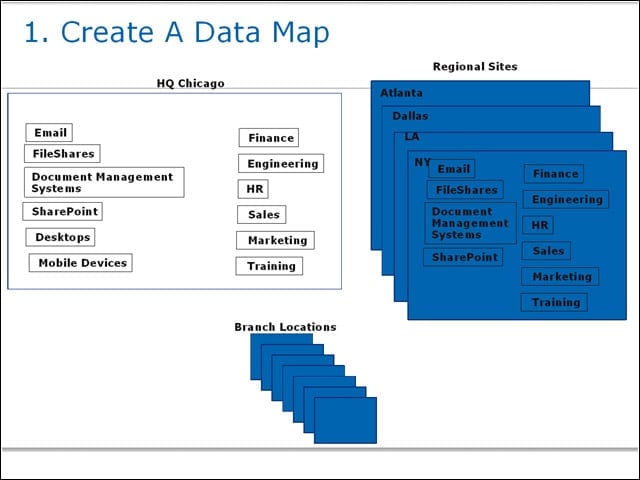
To proactively manage ever-growing piles of e-mail, document/graphics storage and database data, organizations should create a map of where all their documents and data are stored before litigation occurs and keep it up-to-date. This requires an inventory of all relevant sources of information and an IT infrastructure diagram that shows where data stores are located.
2. Create a Data Retention Policy
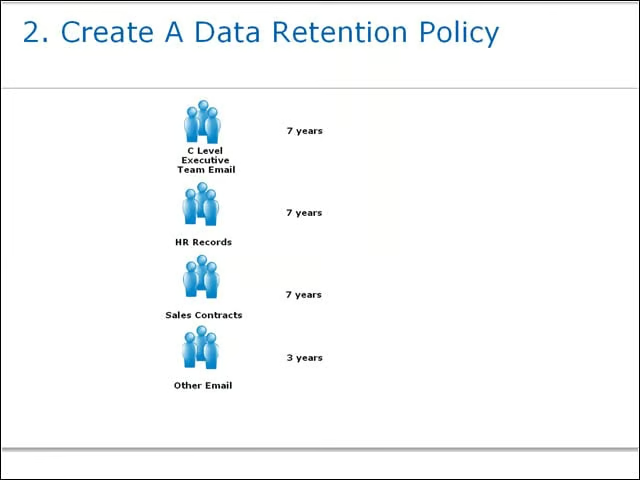
Document retention policies should be instituted that identify which content needs to be managed and that incorporates the organization’s philosophy, responsibilities, procedures and timeframes. The policy should be applied to all content and records across the enterprise-regardless of location and format.
3. Executive Buy-In Needed

Organizations responsible for litigation readiness should have the backing of a C-level executive when developing a litigation readiness process. It’s fundamental to company interests.
4. Know Your End Users

Managers in charge of litigation readiness projects must know the culture of the organization to determine whether the policy has a realistic chance of being followed.
5. Build the Litigation Readiness Team
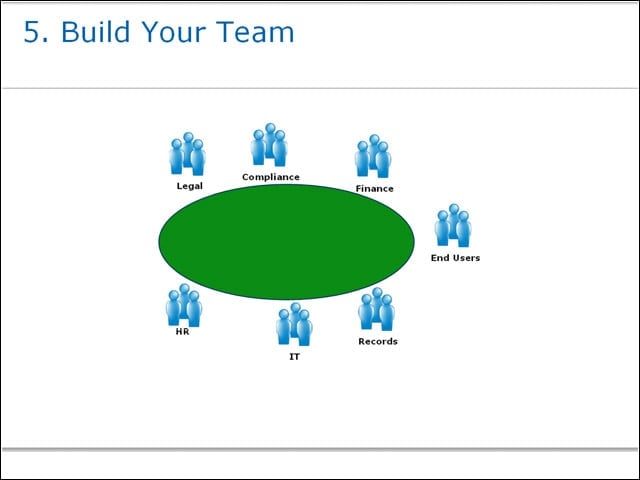
Organizations may need to put in place a team to help produce documents during the discovery process. Suggestion: Involve the internal marketing team to share information across the organization.
6. Automate Policies and Track Decisions Users Make
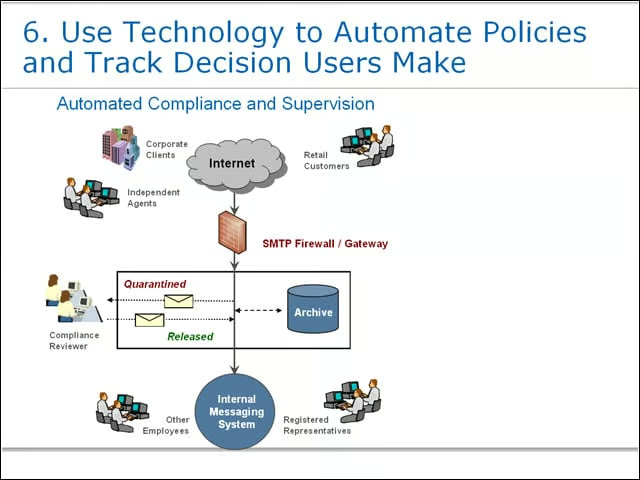
Automated records/e-mail management systems can verify that the policy is followed in a uniform and consistent manner, as well as improve case and legal hold management, case production speed and the ability to purge old messages on the appropriate date.
7. Take End Users Out of the Preservation Loop
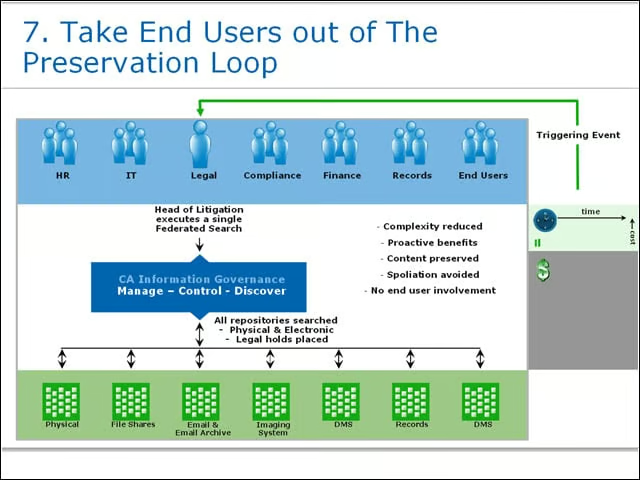
Organizations often allow employees and contractors to make decisions about what e-mail or other electronically stored information to keep. This reduces the likelihood of overall compliance with data-preservation obligations. Automated e-discovery systems are more efficient for this requirement.
8. Get Started

Organizations are better off deploying a starter policy/process today and improving it over time, instead of spending time trying to make a “perfect” policy. Courts and regulators generally expect reasonable efforts, not perfection. The best way for an organization to minimize risk is to create a policy, publish it, train to it, demonstrate that the policy has been followed and adjust it over time.
9. Use a Scalable, Flexible Process
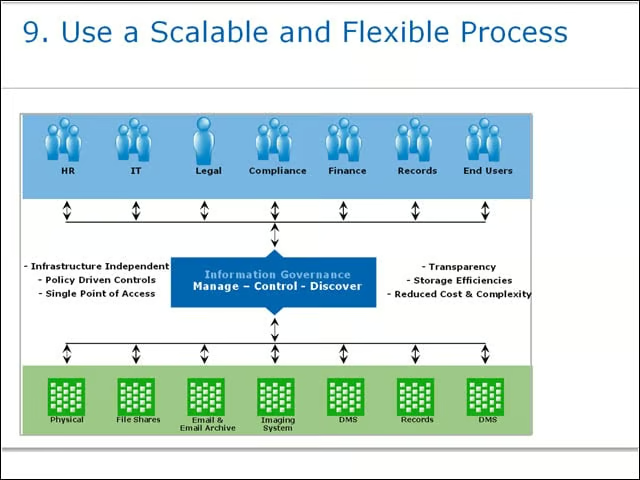
Even with the best-designed policy, litigation hold and data destruction processes can go out of date as regulations change. Companies should periodically review and audit their policies and processes. An automated auditing capability can help validate that the policy or process is being consistently followed.
10. Centralize Management Wherever Possible
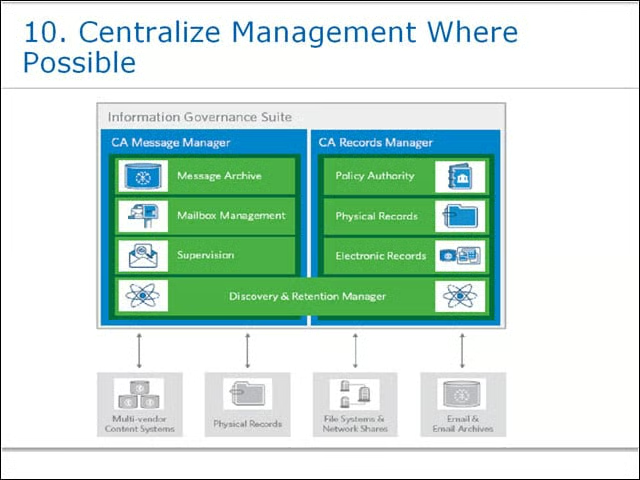
The key complications involving litigation readiness is that information is scattered across a wide range of disparate systems. Implementing an information governance system with a single interface that can search, collect and preserve data as if the content resided in the same physical location, without having to physically move the content to a centralized repository, can lower the cost/complexity to obtain accurate e-discovery results.