






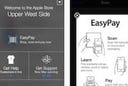

Apple will begin using its iBeacon technology in 254 of its U.S. retail stores Dec. 6, the Associated Press reported the same day. The technology will enable customers who download the Apple Store app and agree to be tracked to receive very location-specific offers.
Someone standing beside an iPhone table might receive an offer to trade in an old phone, for example, or a discount on a new one. The technology is based on Bluetooth, so it works within a small area, though various beacons can be dialed up or back—to cover a whole store, say, or just one aisle.
The technology can also be used by shoppers to more easily navigate around a store, to request sales help or to expedite a purchase.
At Apple’s busy Fifth Avenue store in New York City, said the AP report, 20 iBeacon transmitters are being used, some of them via iPhones and iPads that include the technology within their iOS 7 operating system. Apple introduced OS 7 in September, and while it didn’t discuss iBeacon directly, it flashed its name during the presentation, listing it as a feature within its software development kit (SDK) for developers. (GigaOm caught a snap from the event.)
Given that device users agree to have their exact locations known, developers can use the technology to do things like offer information about the painting a person is standing in front of in a museum, say when the next bus will arrive at the stop one is waiting at or, of course, offer specific coupons to a person already in a store—or holding an item.
In October, Swirl, which has launched micro-location–based pilot programs with retailers, including Kenneth Cole and Timberland, received $8 million in funding from a group of investors that includes Hearst Ventures.
“Many of our advertisers and partners are looking for new and effective ways to deliver personalized messages to consumers at the moment of purchase,” Heart Ventures Managing Director Scott English said in a statement announcing the funding.
In November, Shopkick, another micro-location–based company, began testing an iBeacon app called ShopBeacon at two Macy’s locations.
“ShopBeacon can welcome a shopper when she enters a store and show her location-specific deals, discounts, recommendations and rewards, without her having to remember to open the app,” Shopkick said in an Nov. 20 blog post. “It can also tie at-home browsing to in-store benefits—if she ‘likes’ a specific product in the app, shopBeacon can remind her when she enters the store that sells it. It can also deliver department-specific offers … so the boots she liked show up at the most useful time—in the shoe department.”
In 2013, more than 250 million Bluetooth Smart accessories are expected to have shipped, and that figure will surpass 1 billion by 2016, according to a November report on the “proximity revolution” from IndoorLBS.
“iBeacons are not hype!” said the report. “The silent revolution has already [begun].”