






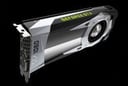

Nvidia has rolled out its latest graphics card that is designed to bring similar speed and performance capabilities as the company’s GeForce GTX 1080 and 1070 GPUs launched in May but with a more competitive price.
The GPU maker on June 7 introduced the GTX 1060, which officials said is designed for speed and—with a starting price of $249—performance-per-watt. It complements the other graphics cards in Nvidia’s Pascal family of GPUs aimed at gaming and virtual reality (VR) applications, and comes a week after rival Advanced Micro Devices unveiled its powerful and affordable Radeon RX 480, which also is designed to bring high-performance gaming and VR to a wider audience.
Gaming has long been an area of competition for GPUs makers, and now VR is quickly emerging as another arena. Both Nvidia and AMD have targeted gaming and immersive computing—including VR—as key growth areas, and VR itself will increasingly see uses beyond gaming and other consumer applications, including various commercials areas.
In addition, officials with both vendors are looking to drive a wider adoption of VR by offering high-performance graphics cards at affordable prices. AMD is doing this through its new Polaris architecture, with its new Radeon RX GPUs, while Nvidia is leveraging its Pascal architecture with its GeForce GTX chips. Both the AMD Radeon RX 480 and Nvidia GTX 1060 can support such VR headsets as Oculus’ Rift and HTC Hive.
The GTX 1060 is manufactured on a FinFET 16-nanometer process, which is designed to bring greater performance and power efficiency. According to Nvidia officials, it includes 1,280 CUDA cores—fewer than the 1,920 in the GTX 1070—as well as 6GB of GDDR5 memory and a clock speed of 1.7GHz that can be overclocked to 2GHz when more performance is needed. It consumes 120 watts of power.
The chip offers performance levels equal to that of the last-generation and more expensive GTX 980, and is on average 15 percent faster and more than 75 percent more power efficient than competitive products, officials said.
GTX 1060 custom boards will be available starting July 19 from a range of Nvidia GeForce partners, including Asus, Gigabyte, MSI, PNY and Zotac, and more than 30 gaming titles are in development, officials said.
The chip also supports Nvidia’s VRWorks software development kit that enables programmers to create technologies to accelerate and enhance the VR experience.