






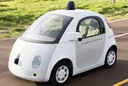

A recent Google patent application suggests that the company may indeed be considering the use of autonomous vehicles in the ride-sharing space as some have speculated in recent months.
The patent application published on Dec 22, 2016 is titled “Determining Pickup and Destination Locations for Autonomous Vehicles”. It describes a system for determining if a passenger pickup location or destination is accessible or safe for a self-driven vehicle and to suggest alternate locations as needed.
The technology, according to the patent application, is required because self-driving vehicles may not always be able to operate everywhere a human driver would.
For instance, construction activity or the presence of emergency vehicles at a particular location could hamper the ability of an autonomous vehicle to safely pickup, wait for or drop off a passenger. In addition, road conditions, like speed limits that are too high for an autonomous vehicle make it necessary for a system capable of determining if a received pickup location or destination address is in fact reachable.
In such situations, the technology for which Google has filed a patent would suggest alternate locations that are in relatively close proximity to the original pickup or drop off location.
“The technology relates to an autonomous vehicle service for maneuvering a user or passenger to a destination, for example taking a trip, autonomously,” the patent application noted. “In order to do so, the user may provide a pickup location and one or more destination locations for the trip to a centralized dispatching system via a client computing device, such as a mobile phone” and the system will then identify the most efficient way to fulfill the user’s request.
Google, like many other companies routinely files patent applications for technologies that it may or may not end up using. In this case, though, the proposed system appears to be consistent with the company’s reported plans to enter the ride-sharing space with autonomous vehicles.
Back in 2015, Bloomberg News had reported on Google’s plan to launch a car-hailing service similar to Uber’s that would operate using a fleet of autonomous vehicles.
Last year, the company began testing a carpooling service in California that would give office workers a way to connect with commuters willing to share rides to their work place and back in return for splitting the costs of the trip. The company has been testing a similar service in Israel as well and is reportedly planning on launching it in major cities around the world.
So far though, Google has yet to launch or test a ride-sharing service involving the use of autonomous vehicles like Uber has been doing in Pittsburgh for the past several months.
Earlier this week, John Krafcik, CEO of Google’s newly spun-out autonomous car venture Waymo, announced the company’s plans to roll-out a fleet of self-driving Chrysler Pacifica minivans in California and Arizona by the end of this month. There’s no indication yet of how exactly the vehicles will be used or by whom.
Patent Yogi reported on Google’s new patent application first.