






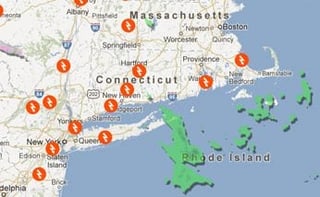

Google is testing out an “experimental feature” of its Flight Search service that aims to give travelers more information about travel options all in one screen.
The new service, Flight Explorer, builds off Google’s existing Google Flights offering, which gave prospective travelers a place to easily search for flights from point A to point B.
Flight Explorer takes the approach a bit farther, allowing travelers for the first time to “consider multiple destinations and multiple days at once, all using live prices, quickly,” according to a Google spokesperson who asked to remain anonymous. The feature is “experimental” so far, the spokesperson said. Previously, travelers could only search for one destination and trip length at a time. That meant that searches would take longer and have to be done separately, making the process unwieldy.
The Flight Explorer search page automatically determines the user’s location, and then the destination can be entered. The page starts a search by allowing the user to choose the approximate trip length for flexibility, starting with a default of three to five days. The user can change the trip length as needed using a slider on the screen.
One thing to note: Users must select a starting airport that is in the Flight Explorer database to get things started. If your local airport isn’t in the database, you have to enter another location that is served using Flight Explorer. A query brings up the prospective trips with a photograph of the destination and other information. Once a user clicks on the destination, they are taken to the Google Flights page where the flights are listed.
Flight Explorer also lets users select flexible options, such as number of stops on the trip, airlines, trip duration and flight times.
The new Flight Explorer feature, which is certainly a work in progress, was first reported on in a Dec. 13 story by TheNextWeb.
Google’s Flight search services were launched in September 2011 to help users search for airline flights and fares without leaving the Google Search pages.
The service was made possible by Google’s April 2011 $700 million acquisition and integration of ITA Software, a flight data provider, after a protracted antitrust investigation by the Justice Department. The service competes with popular travel search products from Microsoft Bing, Orbitz and others.
Most vendors in the online travel industry use ITA’s QPX software, and they didn’t take too kindly to the idea that Google would hold sway over the data they use as the lifeblood of their travel search endeavors.
Expedia, Kayak and others had formed the FairSearch.org coalition in 2010 to oppose Google’s acquisition of ITA as being anti-competitive. These companies, which were later joined by Microsoft Bing, argued that Google would cut off their access to the ITA data firehose. Google vowed to honor ITA’s existing contracts, which was one of the conditions imposed on it by the Department of Justice, the regulator that eventually blessed the deal.
Google has been working hard to improve its travel services for users. In early December, Google expanded its Google Now service to give travelers even more up-to-date travel information instantly and automatically, without their having to push a single button for updates on their Android mobile devices. The Now service is being broadened beyond simple up-to-the-minute weather alerts and upcoming appointments in a user’s current location to bring them helpful information on the weather and things to do in the city of their destination as they travel.
Google Now presents its information through a series of flip-through “cards” that are visible on the screen of Android mobile devices, providing a different piece of information on each card. The “cards” appear on Android mobile devices at the moment they are needed by users, such as the train schedule card appearing when they are heading to the local train station. Presently, the service is available for devices running Android 4.1 Jelly Bean or higher.
Users of Google Now set their own preferences for what information cards appear on their mobile devices. The cards include details such as flight information, traffic reports, sports scores, appointments, weather, hotels, events, restaurant reservations and more.