







Google Waves Failure: 10 Reasons Why
by Clint Boulton
Learning Curve
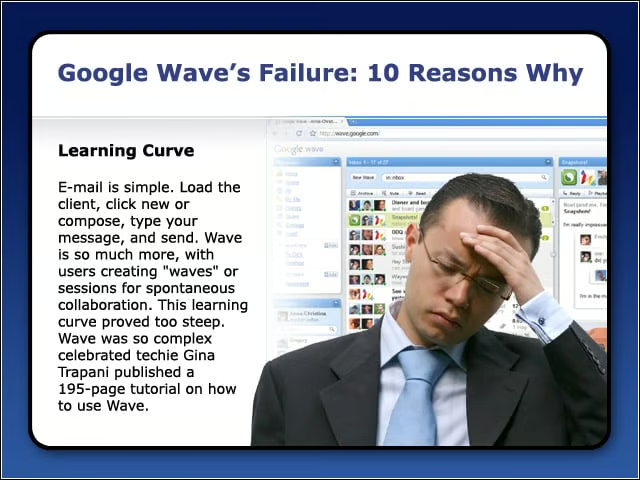
E-mail is simple. Load the client, click new or compose, type your message, and send. Wave is so much more, with users creating “waves” or sessions for spontaneous collaboration. This learning curve proved too steep. Wave was so complex celebrated techie Gina Trapani published a 195-page tutorial on how to use Wave.
Management?
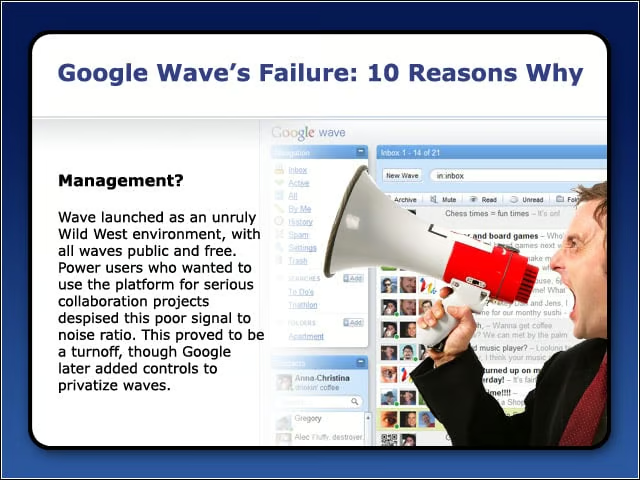
Wave launched as an unruly Wild West environment, with all waves public and free. Power users who wanted to use the platform for serious collaboration projects despised this poor signal to noise ratio. This proved to be a turnoff, though Google later added controls to privatize waves.
Limited Consumer Appeal
Even for users who mastered Wave, its use was limited to workgroup collaborations. Someone who wants to chat with friends and family online wouldn’t launch a wave to do so. That someone would use an IM client, or most likely today, Facebook.
Failure to Launch
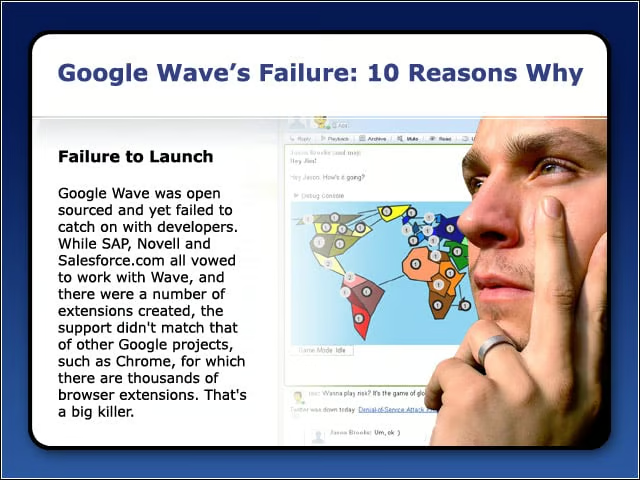
Google Wave was open sourced and yet failed to catch on with developers. While SAP, Novell and Salesforce.com all vowed to work with Wave, and there were a number of extensions created, the support didn’t match that of other Google projects, such as Chrome, for which there are thousands of browser extensions. That’s a big killer.
Too Much Competition
In the consumer sphere, Wave was no match for e-mail, IM and Facebook. Moreover, tools such as Salesforce.com’s Chatter, Novell’s Pulse and SAP’s StreamWork provided ample competition for group collaboration.
No Marketing
Aside from sporadic feature updates, including e-mail notifications and a “WaveThis” button, Google did virtually nothing to market the platform.
Hype Led to the Crash
While Google didn’t market Wave, media and bloggers did! We wrote scores of stories on how cool Wave was. Then people finally got their Wave invites and discovered, “gee this is a bear to use. My friends are all on Facebook—I can chat with them there.” So even people who finally got invites didn’t use Wave. Another point of failure.
Not Enough Power Users
Sometimes influential bloggers or programmers can carry a service. Robert Scoble championed FriendFeed. While Trapani championed Wave, her enthusiasm wasn’t enough to thrust Wave into the consumer consciousness.
No Integration with Google Apps
Google proudly displayed Wave as its own entity. It would have been better served attached to Google Apps similar to the way Google Buzz was tied to Gmail, with Google suggesting users try it out for certain collaboration functions in Google Docs or Sites. There are ways to do this without negating user privacy. Now it seems that Wave features, such as the live editing, will be added to Google Apps. That should have been the approach from the start.
Too Much, Too Soon
The bottom line is Wave was ahead of its time. Aside from bleeding-edge techies, the bulk of today’s connected computer users aren’t ready to handle e-mail, instant messaging and social networking in a real-time platform.