







COPENHAGEN, Denmark—The term “multi-cloud” is often heard at IT conferences today, but what does it really mean and is it a future state or something that is real today?
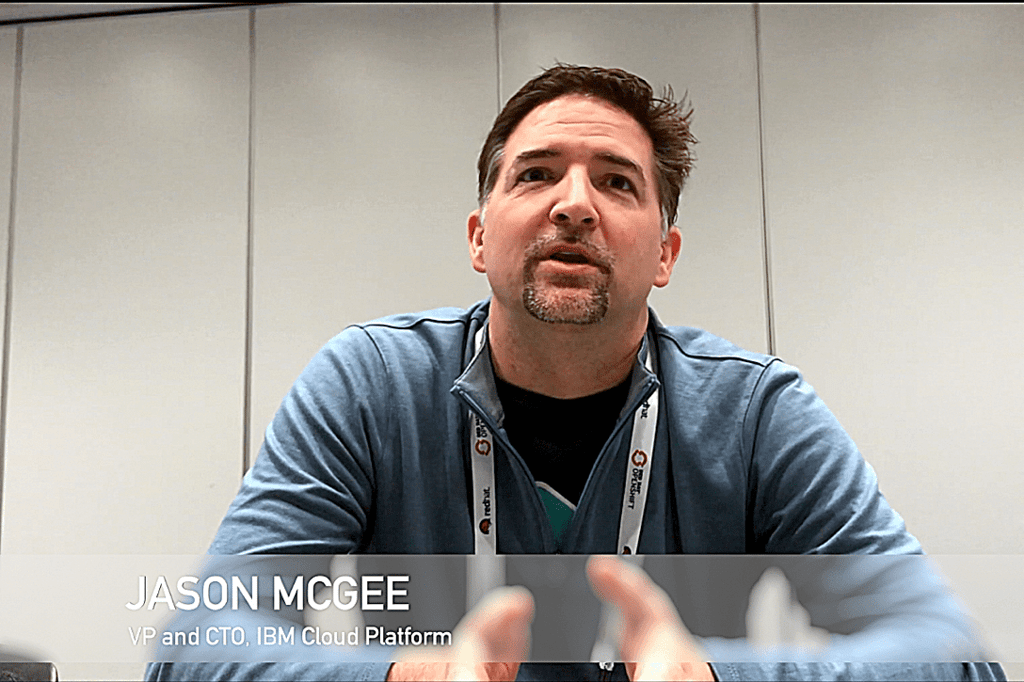
In a video interview with eWEEK at the KubeCon and CloudNativeCon Europe 2018 event here, Jason McGee, vice president and CTO of IBM Cloud Platform, detailed the modern reality of multi-cloud and how Kubernetes fits in.
“Multi-cloud is real and it’s here today, from the standpoint that most large organizations already have multiple cloud destinations that they are using,” McGee said.
McGee added that today multi-cloud is made up of disconnected environments, with different teams using different destinations. In his view, there is a need to have a unified view with tools that span clouds where organizations can look at workloads in different places.
In the on-premises world of VMware virtual machines, there has long been a capability to live-migrate workloads with a technology known as vMotion. McGee said there really is no such capability for multi-cloud today for moving container workloads. That said, thanks to Kubernetes, a different type of workload portability is now possible.
“I do think Kubernetes in particular has driven a level of consistency across the industry that we’ve never seen,” McGee said. “You literally can go to any public cloud now and all the on-premises environments and have a pretty high success rate at taking a workload and running it in another place.”
While the workload movement that Kubernetes enables is not a live migration, that’s not necessarily what every organization needs or wants. What Kubernetes and the container ecosystem provide is a standard application packaging approach, though other things are still needed to fully enable portability, according to McGee.
McGee said that for cross-Kubernetes application portability, there needs to be consistency on network policy and a registry that allows organizations to store all the components of an application in a consistent way. In addition, he said, organizations need common constructs around how to do routing and expose endpoints.
“Workload movement is real,” he said.
Watch the full video interview with Jason McGee above.
Sean Michael Kerner is a senior editor at eWEEK and InternetNews.com. Follow him on Twitter @TechJournalist.