








5 Ways Cognitive Computing Is Advancing Health Care
The health care industry is getting a much-needed shot in the arm from cognitive computing, providing services that before were impossible with current technology.
Hill Physicians

Today, health care providers rely on risk adjustment methods to receive payments for the services they provide to patients. This is incredibly difficult because much of the relevant risk adjustment data is unstructured and, therefore, difficult to access and extract from electronic health records (EHRs). To ensure correct billing for its risk adjustment, Hill Physicians reviews nearly 11,000 patient charts each year. Previously, the group relied on the traditional, tedious hand-read of charts, which not only drained resources, but also sacrificed accuracy. Apixio’s cognitive computing platform allows Hill Physicians to mine its EHR and scanned chart data for valid, risk-adjusting conditions for faster, more accurate coding that helps ensure more efficient and effective care.
UCLA

A few years ago, researchers at UCLA began to mine thousands of electronic health records for a more accurate and less expensive way to identify people with Type 2 diabetes. In addition to developing an algorithm to detect Type 2 diabetes, the researchers accidentally uncovered several previously unknown risk factors for all forms of diabetes. Using a computerized approach to mining doctor notes and health care records, this group was able to find previously unknown disease patterns, greatly improving diabetes diagnoses and care. The team has applied similar techniques to predict other diseases, including epilepsy.
Dartmouth-Hickcock Medical Center

Dartmouth-Hitchcock Medical Center in New Hampshire uses Microsoft’s cognitive offerings to predict medical emergencies for patients while they’re still at home. Microsoft’s machines access data from a patient’s at-home scale and personal blood pressure reader, and can even listen to calls between nurses and patients to gauge a person’s emotional state. This software parses various patient data points with the intent to change the way people interact with the health care system. Dartmouth hopes this technology eventually will put patients at the center of their own care—ultimately changing the way we think about health completely.
American Cancer Society
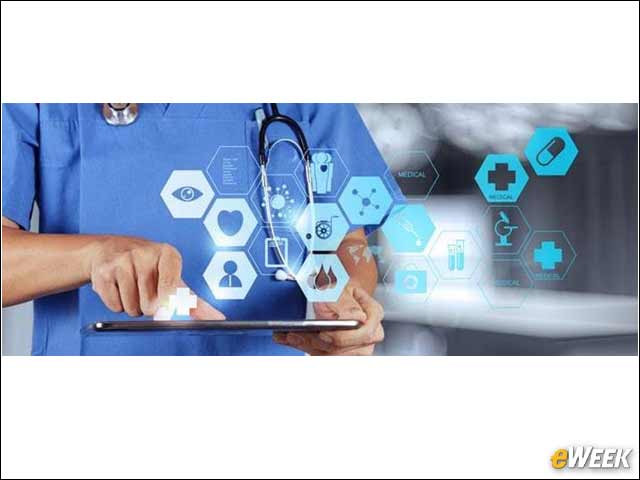
The American Cancer Society leverages the IBM Watson supercomputer to filter websites and data sources that deliver personalized treatments for oncology patients. At least 16 oncology practices are already working with the cognitive computing platform to help doctors translate DNA insights into personalized treatment options for patients. Eventually, the American Cancer Society and IBM plan to integrate their tool with IBM’s existing Watson for Oncology offering for doctors, a clinical decision-support tool to offer patients an engaging and personalized treatment plan.
Google DeepMind
Google DeepMind and the National Healthcare System in the UK have teamed to build a smart machine that they hope eventually will be able to recognize eye disease from just a digital scan. While the project is still very young, this smart machine eventually will use millions of eye scans to train an algorithm to quickly detect early signs of severe eye conditions and ultimately prevent blindness, the organizations hope. The larger goal of this project is to investigate how machine learning could help analyze these scans efficiently and effectively, leading to earlier detection and intervention for patients and reducing the number of cases of patient deterioration.