








- IEEE Picks Top 23 Technologies for 2022
- Security Cross-Cutting Issues
- Open Intellectual Property Movement
- Sustainability
- Massive Open Online Courses
- Quantum Computing
- Device and Nanotechnology
- 3D Integrated Circuits
- Universal Memory
- Multicore
- Photonics
- Networking and Interconnectivity
- Software-Defined Networks
- High-Performance Computing
- Cloud Computing
- The Internet of Things
- Natural User Interfaces
- 3D Printing
- Big Data and Analytics
- Machine Learning and Intelligent Systems
- Computer Vision and Pattern Recognition
- Life Sciences
- Computational Biology and Bioinformatics
- Medical Robotics
IEEE Picks Top 23 Technologies for 2022
by Darryl K. Taft
Security Cross-Cutting Issues

The growth of large data repositories and the emergence of data analytics have combined with intrusions by bad actors, governments and corporations to open a Pandora’s box of issues. Powerful forces are converging that are of great concern to individuals and private and public entities. These powerful forces will cause people, businesses and groups to pause before releasing certain information to the government, merchants and even other citizens.
Open Intellectual Property Movement

From open-source software and standards to open-access publishing, the open IP movement is upon us. Open IP is rapidly expanding into areas where property was traditionally proprietary, such as hardware design. Continued growth of the open IP movement will generate significant benefits.
Sustainability
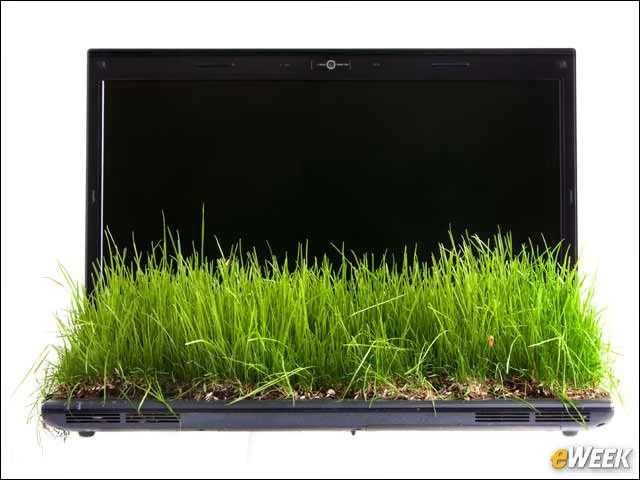
Can electronic cars, LED lighting, new types of batteries and chips, and increasing use of renewables combat rising energy use and an explosion in the uptake of computing? Sustainability in computer science is defined as a means of maintaining/preserving resources in IT service delivery to users.
Massive Open Online Courses
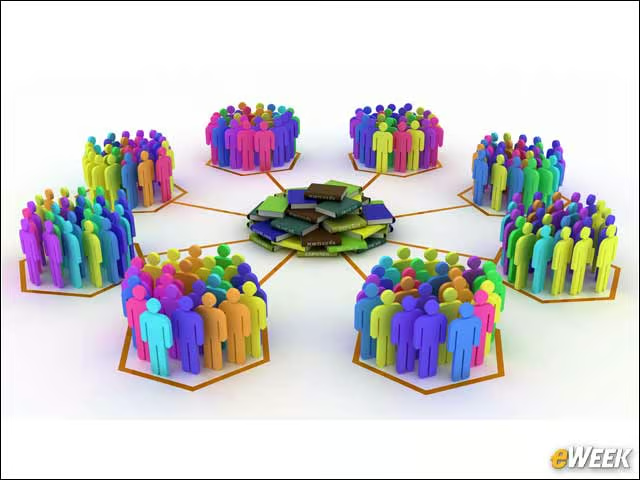
Massive open online courses (MOOCs) have the potential to transform the higher-education landscape, siphoning students from traditional universities and altering faculty and student roles. Often drawing tens of thousands of students to a single section, MOOCs offer free, high-quality university course content to anyone with Internet access.
Quantum Computing
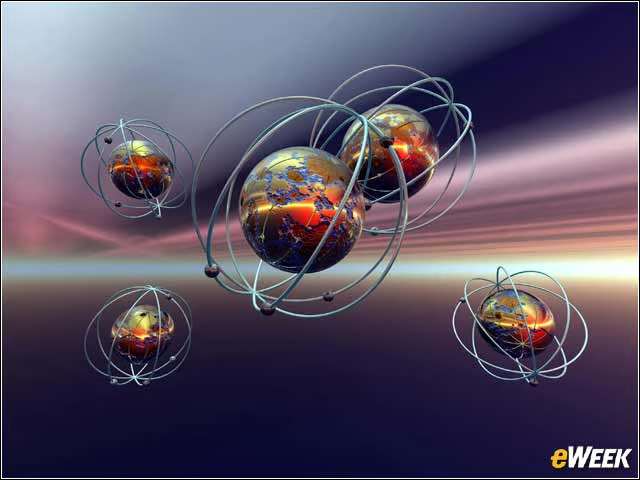
Constrained only by the laws of physics, quantum computing will potentially extend Moore’s Law into the next decade. As commercial quantum computing comes within reach, new breakthroughs are occurring at an accelerating pace. QC is based on the idea of using quantum mechanical phenomena to execute computations instead of classical Newtonian physics.
Device and Nanotechnology
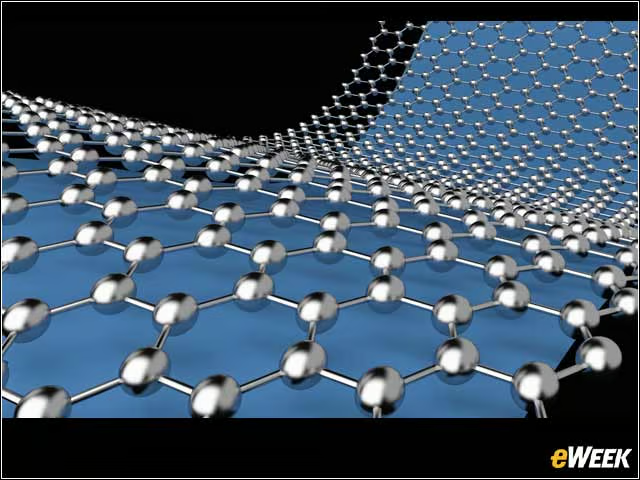
It’s clear that Microelectromechanical systems (MEMS) devices, nanoparticles and their use in applications are here to stay. Nanotechnology has already been useful in manufacturing sunscreen, tires and medical devices that can be swallowed. A wide range of science and engineering fields pursue nanotechnology, including biology and medicine, physics, chemistry, materials science and other engineering disciplines.
3D Integrated Circuits
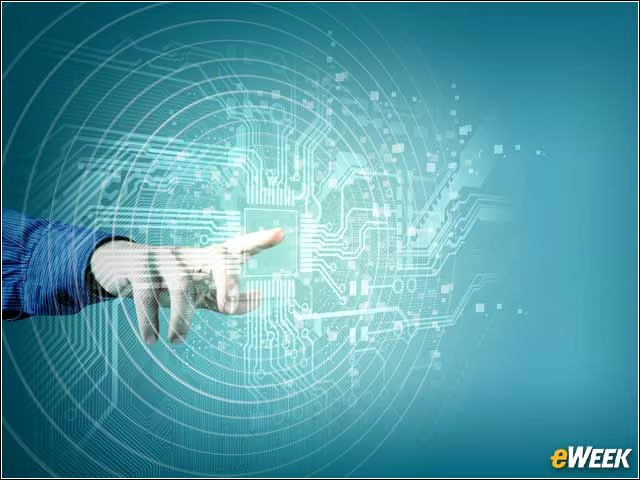
The transition from printed circuit boards to 3D-ICs is already under way in the mobile arena and will eventually spread across the entire spectrum of IT products. The desire to overcome the memory bottleneck caused by pin issues in planar circuits, along with the skyrocketing foundry costs of leading-edge process designs, has fueled the development of stacked 2.5D and 3D chips over the last few years.
Universal Memory

Universal memory replacements for DRAM will cause a tectonic shift in architectures and software. “Between now and 2022, we expect that a new form of nonvolatile ‘universal’ memory (NVM) will replace DRAM,” the report said.
Multicore
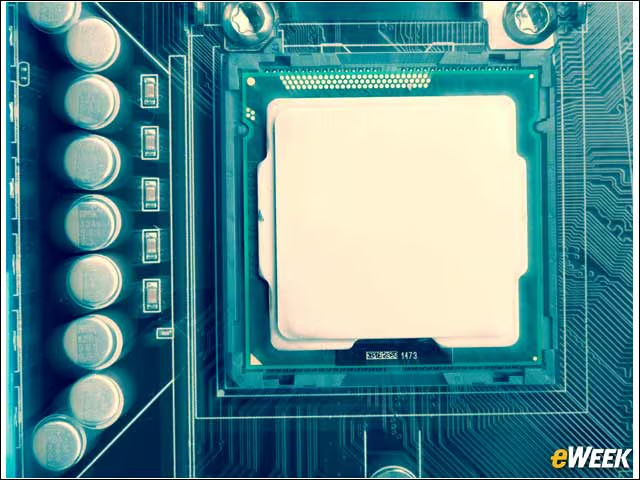
By 2022, multicore will be everywhere, from wearable systems and smartphones to cameras, games, automobiles, cloud servers and exascale supercomputers for super-low-power, high-performance computation. Other uses will be medical systems such as drinkable inner-cameras for health diagnosis, cancer treatment systems that use carbon ions or protons, and solar-powered cloud servers.
Photonics

Silicon photonics will be a fundamental technology to address the bandwidth, latency and energy challenges in the fabric of high-end systems. Bringing photonics inside chips has another effect: It gets rid of distance constraints, which in turns leads to flatter networks. A full photonics-based network is nothing but a giant supercomputer, where processing units are distributed geographically, the report said.
Networking and Interconnectivity
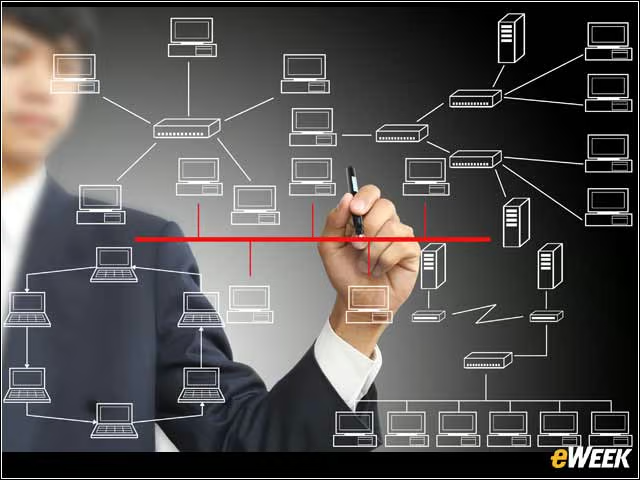
Developments at all levels of the network stack will continue to drive research and the Internet economy. Communications and interconnects are seeing new opportunities, open issues and potential disruptions from new technologies (silicon photonics), new use cases (online data mining), new challenges (the increasingly high energy costs of moving data) and infrastructure investments (like those in developing countries).
Software-Defined Networks
OpenFlow and software-defined networks (SDN) will make networks more secure, transparent, flexible and functional. OpenFlow and SDN are the greatest advances in networking in a generation and will change the fundamental activity from configuring the network to programming it.
High-Performance Computing
While some governments are focused on reaching exascale, some researchers are intent on moving high-performance computing (HPC) to the cloud. HPC is still leading the advances in computing, but it is also being commoditized. Power bottlenecks are becoming the biggest challenge for advancing the state of the art.
Cloud Computing
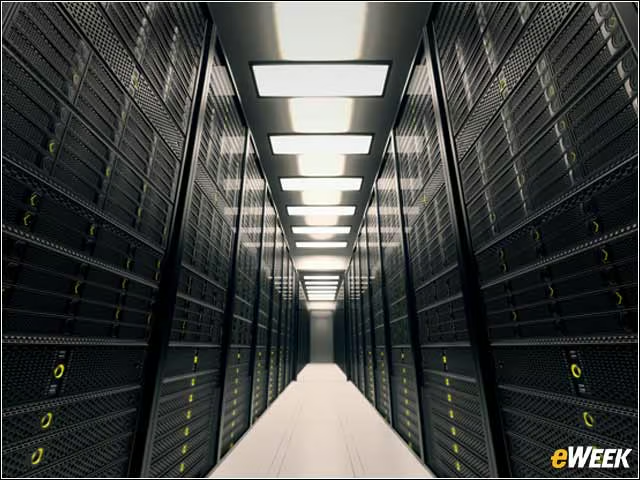
By 2022, cloud will be more entrenched and more computing workloads will run on the cloud. The real promise of cloud computing is the way that it changes the game for software development. IT administrators and developers will have the ability to create true virtual data center infrastructure substrates, where resources are connected virtually across clouds and premises, and developers are able to tap into APIs of services to mash up applications and middleware from different providers.
The Internet of Things
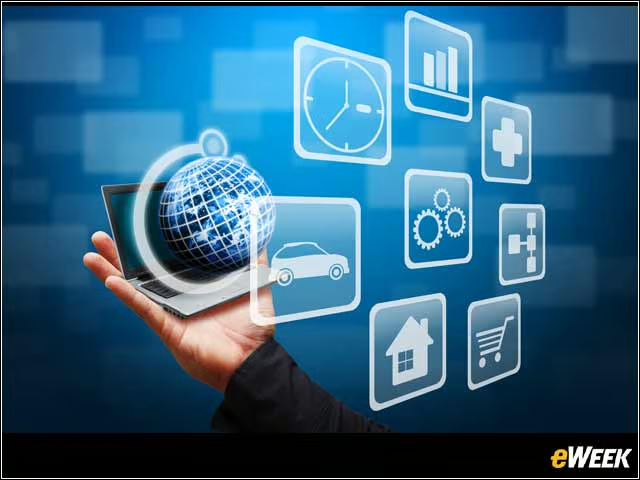
From clothes that monitor our movements to smart homes and cities, the Internet of things (IoT) knows no bounds, except for our concerns about ensuring privacy amid such convenience. The IoT is here to stay, driven by, among others, device technology advances, the opportunities created by the billions of smartphones with their rich built-in sensors, Internet connectivity to fixed facilities, increased mobile connectivity, the new functionalities it enables and business reasons, such as the desire to reduce cost through automation, reduced loss/wastage and shorter durations for supply chains, the report said.
Natural User Interfaces
The long-held dreams of computers that can interface with us through touch, gesture and speech are finally coming true, with more radical interfaces on the horizon. Interactions between humans and machines become more natural and intuitive when people can use touch, gesture and speak to interact with their computing devices. The software that runs these technologies is the result of years of research into computer vision, machine learning, big data, user interfaces, and speech recognition and natural language processing.
3D Printing

3D printing promises a revolution in fabrication, with many opportunities to produce designs that otherwise would be prohibitively expensive. “As the printing hardware and design software improve, we expect that a wide variety of products will be manufactured mostly or even entirely using 3D printers in a manufacturing plant, at local printing services, or in the consumer’s home,” the report said.
Big Data and Analytics
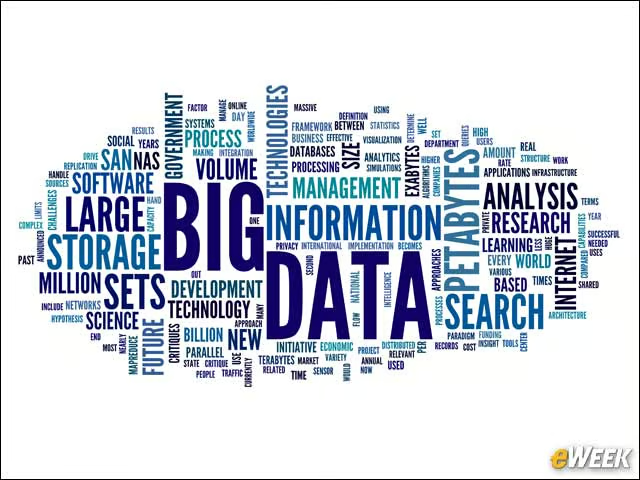
The growing availability of data and demand for its insights holds great potential to improve many data-driven decisions. Big data is exploding, with no signs of slowing down. The growth is manifest on two separate axes: More data is collected, and more data is shared.
Machine Learning and Intelligent Systems
Machine learning plays an increasingly important role in our lives, whether it’s ranking search results, recommending products or building better models of the environment. The development of more efficient and powerful tools to support the engineering practices of machine learning is strongly needed. Tools and methods that let non-experts do a great job with their own predictive modeling are needed to truly empower users with machines that learn.
Computer Vision and Pattern Recognition
Unlocking information in pictures and videos has had a major impact on consumers, and more significant advances are in the pipeline. Computer vision and pattern recognition seek to unlock information in pictures, video, ranger data and allied signals.
Life Sciences
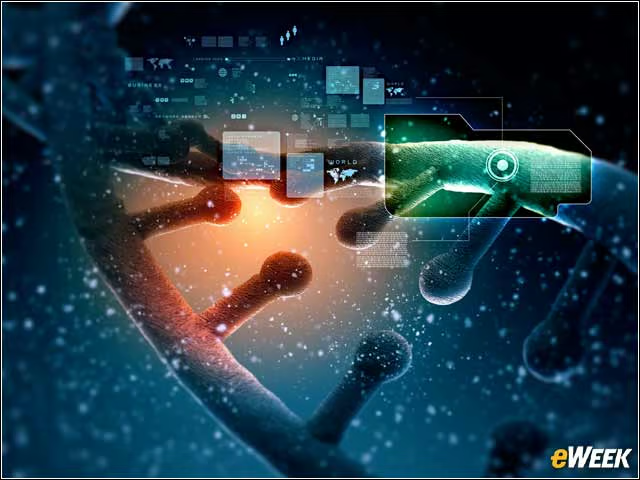
Technology has been pivotal in improving human and animal health and addressing threats to the environment. The life sciences industry is experiencing a large growth in the 21st century, surpassing most other sectors. Most of the growth is in addressing new needs with new solutions. These solutions were created with the help of new computational technologies and the technologists who are comfortable and effective in cross-disciplinary teams.
Computational Biology and Bioinformatics
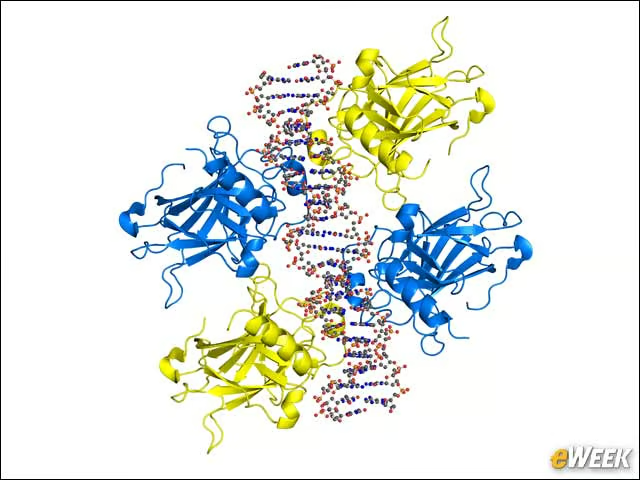
Vast amounts of data are enabling the improvement of human health and unraveling the mysteries of life. Much as mathematics, particularly group theory and topology, played a critical role in the development of 20th century physics, computation and machine learning are playing an analogous role in the development of 21st century biology.
Medical Robotics
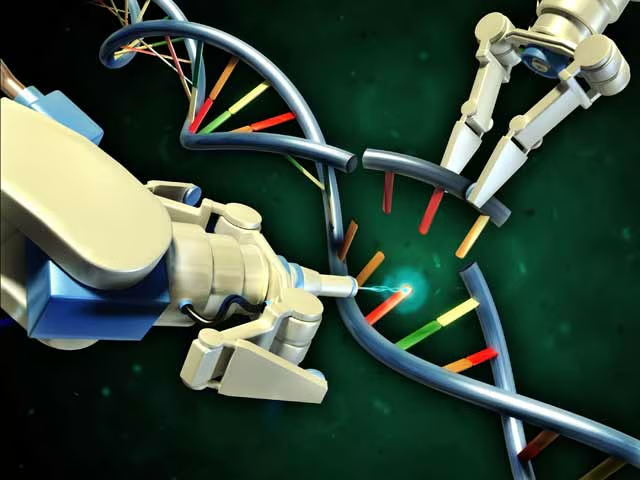
From autonomous delivery of hospital supplies to telemedicine and advanced prostheses, medical robotics has led to many life-saving innovations. If widely available, medical robotics could dramatically decrease mortality rates and improve the quality of life for millions worldwide.