







eWEEK Labs Looks Back at 40 Years of Unix
by Jim Rapoza
Unix First Edition
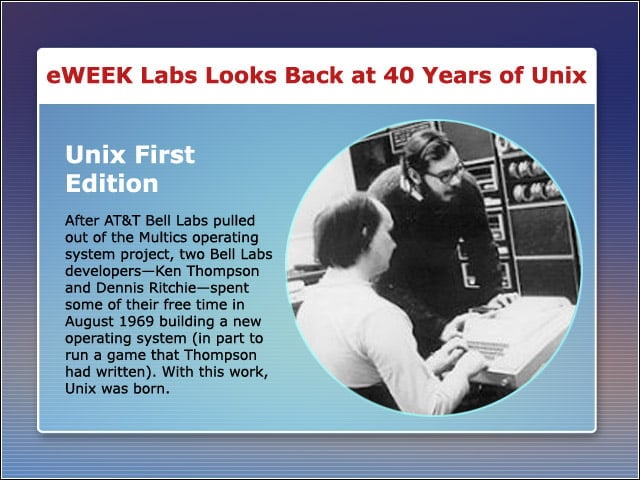
After AT&T Bell Labs pulled out of the Multics operating system project, two Bell Labs developers—Ken Thompson and Dennis Ritchie—spent some of their free time in August 1969 building a new operating system (in part to run a game that Thompson had written). With this work, Unix was born.
BSD
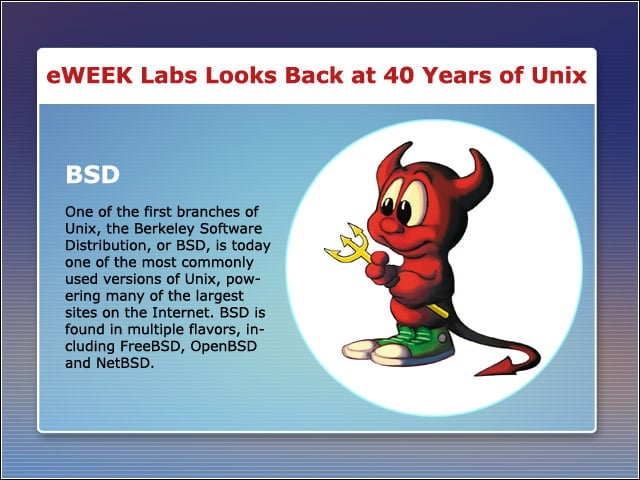
One of the first branches of Unix, the Berkeley Software Distribution, or BSD, is today one of the most commonly used versions of Unix, powering many of the largest sites on the Internet. BSD is found in multiple flavors, including FreeBSD, OpenBSD and NetBSD.
SunOS
One of the developers of BSD at Berkeley was Bill Joy, who went on to co-found Sun Microsystems. So it was no surprise that the Unix operating system created at Sun, SunOS, was based on BSD. SunOS ran most of the earliest Sun systems.
Unix System V
Designed to address the problem of diverging Unix systems, Unix System V was built to combine many of the characteristics of the different Unix flavors. System V became one of the most successful versions of Unix and was the OS of choice for running big iron hardware.
HP-UX
As Unix grew in popularity for big enterprises, most of the major hardware vendors felt it necessary to have their own distinct versions of Unix (pretty much defeating some of the earlier unification efforts). Hewlett-Packard’s HP-UX, based on Unix System V and still in use today, was designed to run HP’s mainframes and large server systems.
SGI Irix
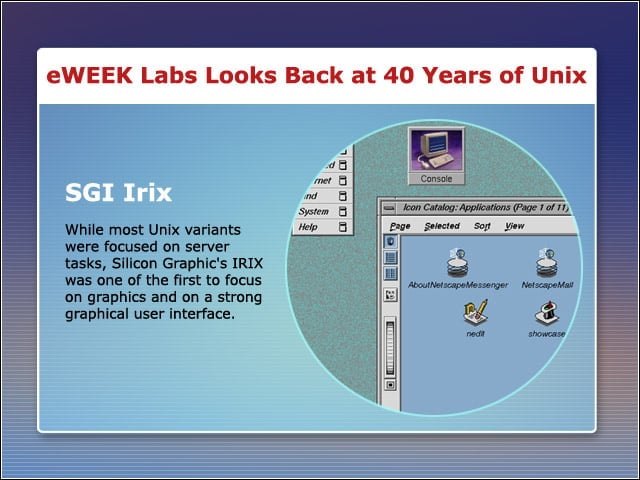
While most Unix variants were focused on server tasks, Silicon Graphic’s IRIX was one of the first to focus on graphics and on a strong graphical user interface.
NextStep
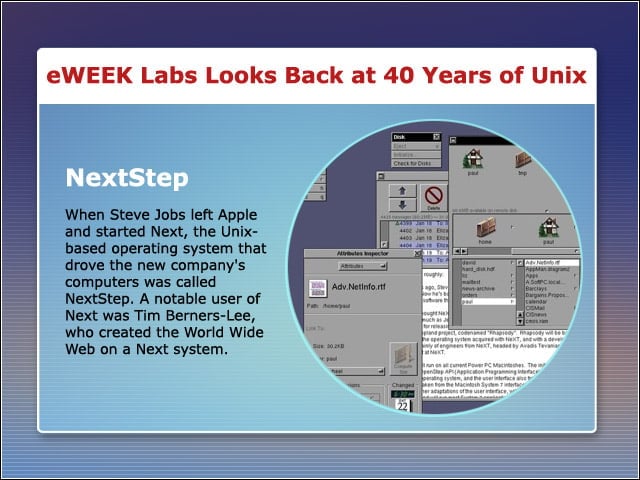
When Steve Jobs left Apple and started Next, the Unix-based operating system that drove the new company’s computers was called NextStep. A notable user of Next was Tim Berners-Lee, who created the World Wide Web on a Next system.
Solaris
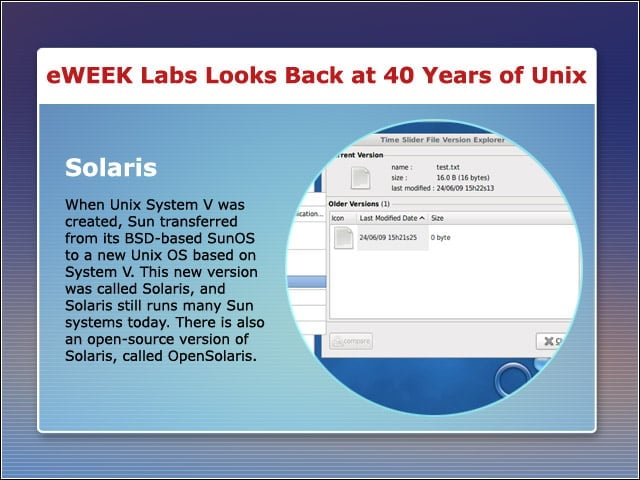
When Unix System V was created, Sun transferred from its BSD-based SunOS to a new Unix OS based on System V. This new version was called Solaris, and Solaris still runs many Sun systems today. There is also an open-source version of Solaris, called OpenSolaris.
IBM AIX
Like most other big-iron Unix systems, IBM’s AIX is based on Unix System V. At least to IBM customers, AIX has become synonymous with mainframes.
Xenix
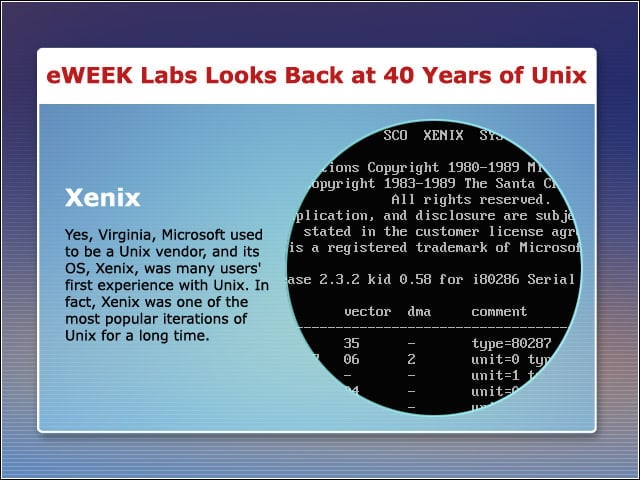
Yes, Virginia, Microsoft used to be a Unix vendor, and its OS, Xenix, was many users’ first experience with Unix. In fact, Xenix was one of the most popular iterations of Unix for a long time.
Linux
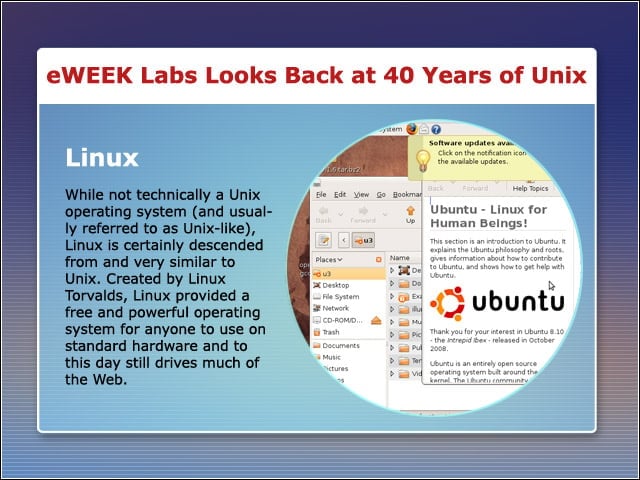
While not technically a Unix operating system (and usually referred to as Unix-like), Linux is certainly descended from and very similar to Unix. Created by Linux Torvalds, Linux provided a free and powerful operating system for anyone to use on standard hardware and to this day still drives much of the Web.
Mac OS X
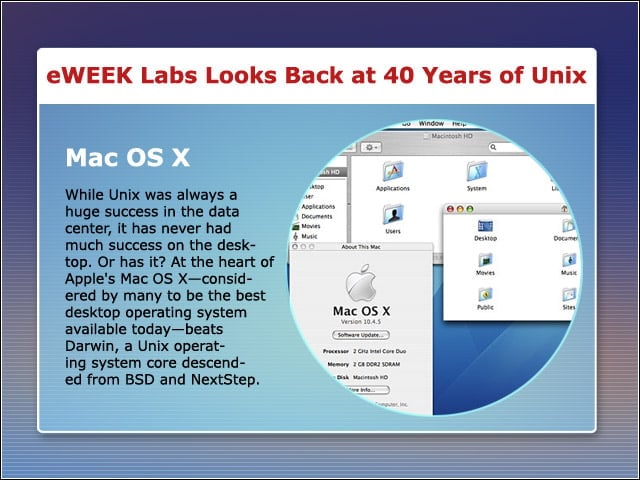
While Unix was always a huge success in the data center, it has never had much success on the desktop. Or has it? At the heart of Apple’s Mac OS X—considered by many to be the best desktop operating system available today—beats Darwin, a Unix operating system core descended from BSD and NextStep.