







- Partners Found Software Development Laboratories
- First Client: The CIA
- Nascent Company Releases the First Commercial SQL RDMS
- Third Time a Charm: Its Now Called Oracle Systems
- Oracle DB Now Runs on Any PC
- Oracle Goes Public
- Early on the Client-Server Curve
- From Dumb Terminals, to Client-Server, to the Net
- Internet Strategy in Place
- A Database for the Internet Age
- The Unbreakable Database
- A Pre-Cloud DB
- PeopleSoft Acquisition Signals Consolidation Trend
- Sun Microsystems Acquisition
- Engineering the Hardware and Software Together
- Oracle Now an All-Purpose IT Products/Services Supplier
Partners Found Software Development Laboratories
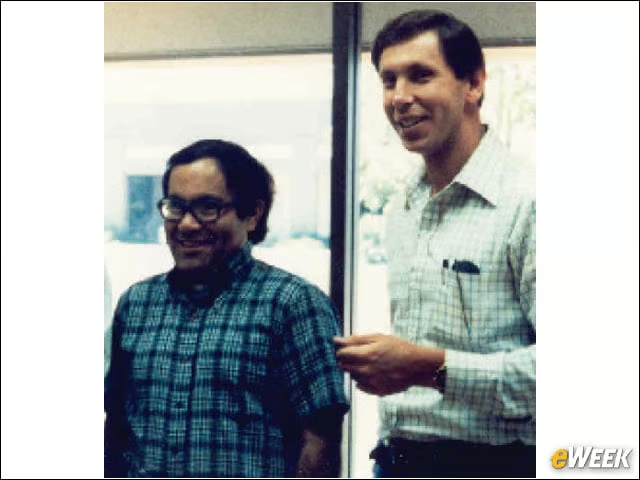
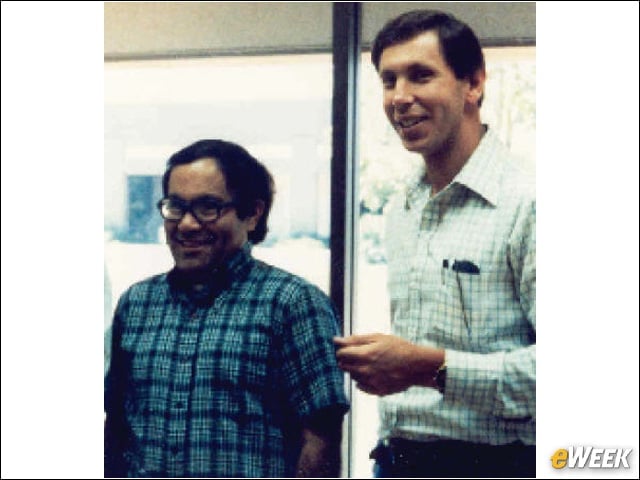
Software Development Laboratories, the precursor to Oracle, is founded in 1977 by Larry Ellison (right), Bob Miner (left) and Ed Oates. A more generic name for an IT company would have been hard to find.
First Client: The CIA
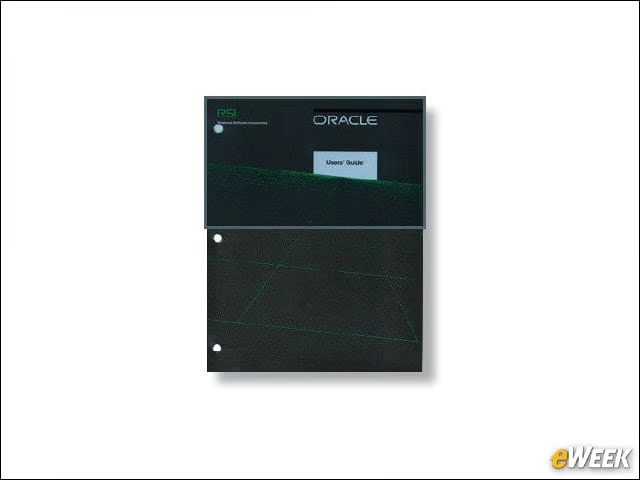
The company signed its first client, the U.S. Central Intelligence Agency. The job, code-named Project Oracle, involved developing a special database. The company made a name for itself by finishing the CIA’s Project Oracle a year ahead of schedule. This gave the company the reputation it needed to land its second government client, the National Security Agency.
Nascent Company Releases the First Commercial SQL RDMS
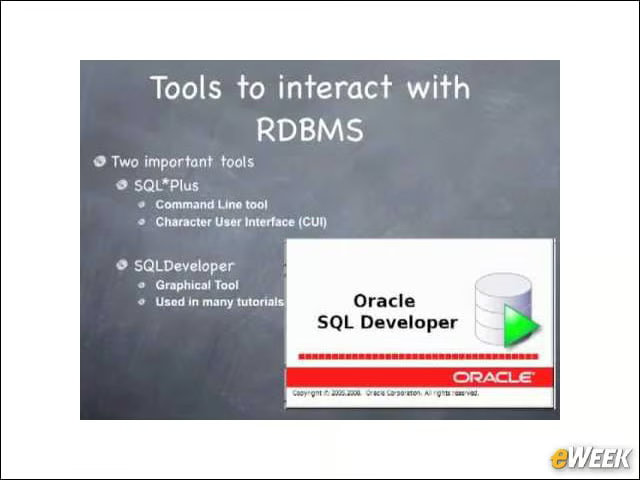
Finishing the CIA’s project early also freed up the time and resources to start developing the first commercial relational database management system inspired by a technical article in an IBM journal. In 1979, the company, now named Relational Software Inc. (RSI) releases Oracle 2, the first relational database management system.
Third Time a Charm: Its Now Called Oracle Systems
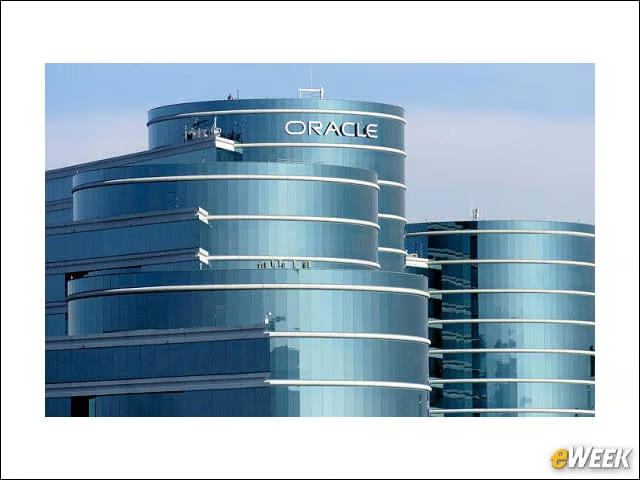
In 1982, Relational Software Inc. gets a new and final name—Oracle Systems, after the company’s primary database product named after that groundbreaking CIA project. Oracle also hosts the first of a long line of increasingly larger user conferences in San Francisco.
Oracle DB Now Runs on Any PC
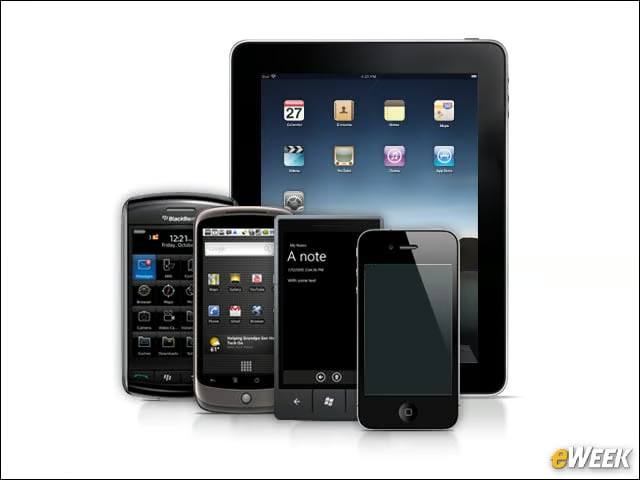
In 1983, Oracle Version 3, built on the C programming language, is the first RDBMS to run on mainframes, minicomputers and PCs—giving customers the ability to use the software in almost any enterprise computing environment.
Oracle Goes Public
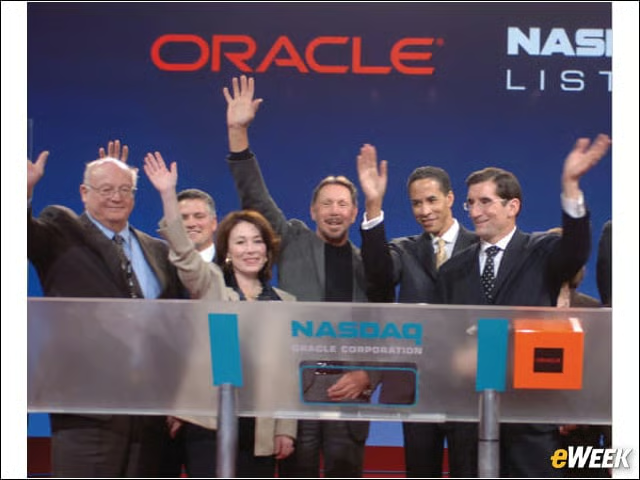
On March 15, 1986, nearly a decade after the founding of the company, Oracle made an initial public stock offering of 2.1 million shares on the NASDAQ exchange. At the time, the company had 450 employees and annual revenue of $55 million. Twenty-six years later, Oracle has a market cap of $135 billion, a global full-time workforce of 108,000 and annual revenue of $37 billion. In October 2006, CEO Larry Ellison and Presidents Charles Phillips and Safra Catz joined senior NASDAQ executives in San Francisco to celebrate a 20-year partnership on the exchange—a partnership that has paid off well for both Oracle and investors.
Early on the Client-Server Curve
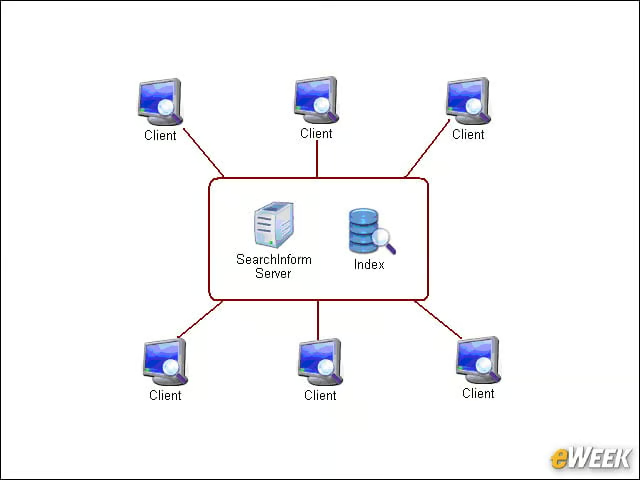
After a highly successful decade of growth, Oracle management was in a position to invest heavily in innovation. Those investments began to pay dividends in the early 1990s, as Oracle achieved significant technological advances in each new product version. Oracle championed client/server computing at the beginning of the decade, as customer requirements began to outpace the limits of terminal computing.
From Dumb Terminals, to Client-Server, to the Net

In 1993, Oracle was the first software company to rewrite business applications to run in client/server environments and automating business processes from a centralized data center.
Internet Strategy in Place
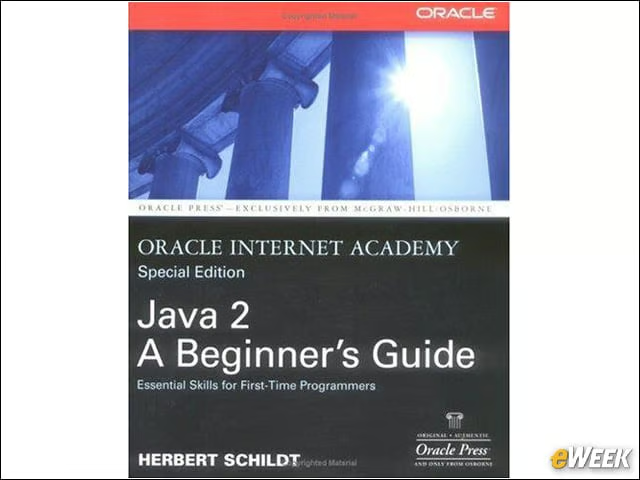
In 1995, Oracle became the first major enterprise software company to announce a comprehensive Internet strategy. With Oracle 7 Release 7.3 in 1996, Oracle delivered Universal Server, allowing customers to use Oracle to manage any type of data—text, video, maps, sound or images.
A Database for the Internet Age
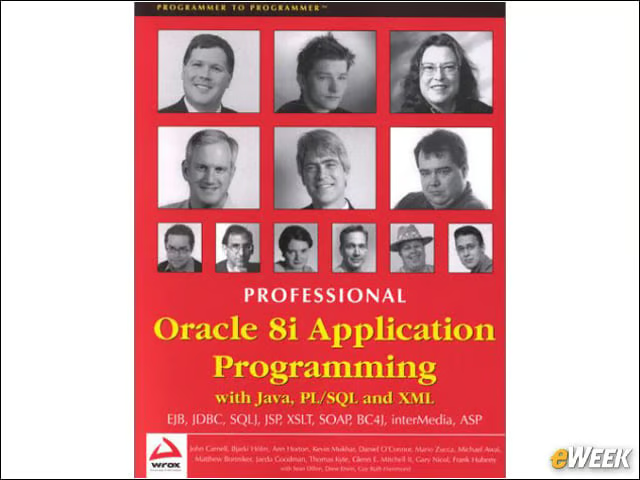
With the Oracle8 database and Oracle Applications 10.7 in 1998, Oracle became the first enterprise computing company to embrace the Java programming language. Only four years after Oracle announced a Web strategy, Internet capabilities saturated every Oracle offering, from support for open standard technologies such as XML and Linux to the latest versions of Oracle product lines, such as Oracle Applications 11i and Oracle8i Database. “If the Internet turns out not to be the future of computing, we’re toast. But if it is, we’re golden,” Ellison said.
The Unbreakable Database
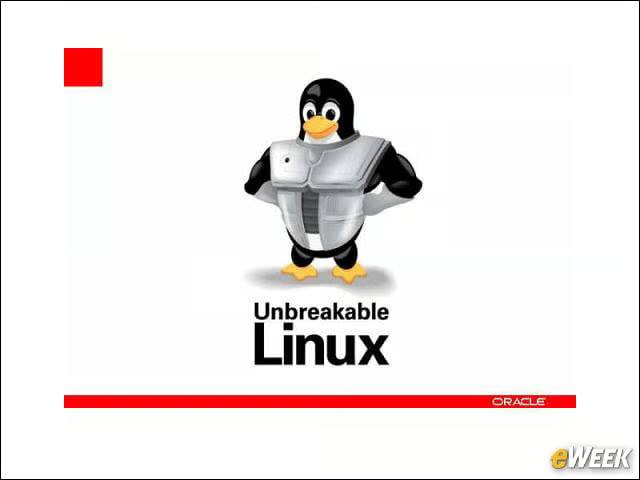
Oracle launches the “Unbreakable” marketing campaign in 2002 to mark the unprecedented 15 independent evaluations that gave the Oracle Database high marks for security.
A Pre-Cloud DB
In 2003, before the term “cloud computing” came into common use, Oracle launched Oracle Database 10g, the first grid computing database available for the enterprise. Oracle Grid Computing serves computing power across the enterprise as a utility, automatically shifting processing loads based on demand.
PeopleSoft Acquisition Signals Consolidation Trend
In 2005 Oracle completes the acquisition of rival enterprise applications company PeopleSoft after a drawn out investor proxy battle and a federal court trial in which the U.S. Department of Justice failed to block the deal on antitrust grounds. It also announces its intention to acquire Siebel Systems. The deals—just two among the dozens of companies Oracle purchased in the mid-2000s—signal the beginning of an era of consolidation in the software industry.
Sun Microsystems Acquisition
Oracle added data center hardware to its core business catalog when it bought failing Sun Microsystems for $7.4 billion in 2009, with the deal closing in January 2010. Subsequently, Oracle began to drop, modify and in some cases, litigate OEM agreements with companies such as Hewlett-Packard, IBM, Cisco and others, because it now had its own machines in house to run the software stack.
Engineering the Hardware and Software Together
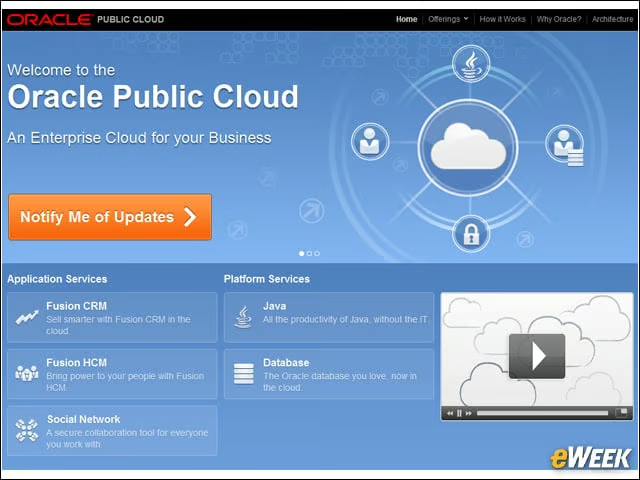
By adding Sun, Oracle claimed to be the only vendor to offer a complete technology stack in which every layer is integrated to work together as a single system. The Oracle software stack as it stands today includes Oracle Enterprise Linux, Oracle VM, Oracle Fusion Middleware, and a broad set of vertical industry and business applications software. With the addition of Sun server, storage, operating system and virtualization technology, the Oracle stack is complete. As of June 6, 2012, it’s now all in the new Oracle Cloud.
Oracle Now an All-Purpose IT Products/Services Supplier

Starting with its relational database, Oracle has increased its influence each year by building the database and assembling the business applications enterprises use to run their operations. In 2012, Oracle now offers a complete IT stack, including storage equipment, servers, operating systems, virtualization software, middleware, a host of applications, and of course the seminal Oracle Database. Then there are the Sun-designed servers, storage arrays, networking switches and special-purpose appliances to run it all in a new-generation data center. Finally, Larry Ellison—pilot, sailor and world traveler—is able to fly above it all in the Oracle biplane.