






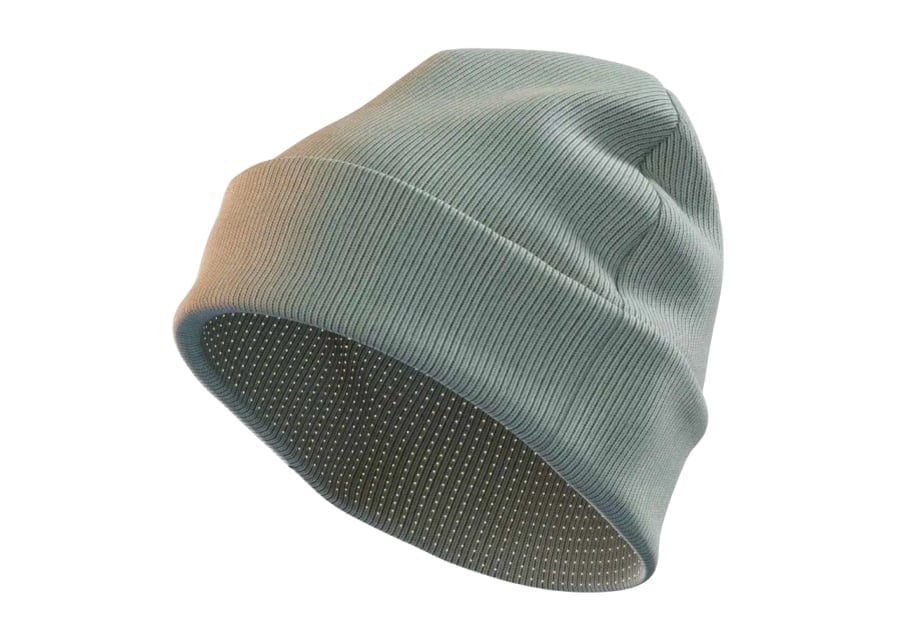


Your next keyboard might be a beanie.
A Silicon Valley startup has introduced a brain-reading wearable designed to turn thoughts into text, allowing users to type without speaking or touching the device.
The company, Sabi, is developing a noninvasive brain-computer interface that decodes internal speech using sensors embedded in the cap. The approach offers an alternative to surgically implanted chips and could broaden access to the technology.
A wearable alternative to implanted brain chips
According to Wired, Sabi’s device uses electroencephalography, or EEG, to capture electrical brain signals through the scalp. Unlike implant-based systems, the wearable avoids surgery, making it easier to adopt at scale.
The beanie includes between 70,000 and 100,000 sensors, far more than conventional EEG systems, to improve signal accuracy despite interference from bone and tissue. Wired emphasized that the company aims to translate internal speech into text at roughly 30 words per minute in its first version, with performance expected to improve as users adapt.
“The biggest and baddest application of BCI is if you can talk to your computer by thinking about it,” investor Vinod Khosla told Wired.
TheFutureParty also noted that avoiding surgical implants could make wearable BCIs more practical for mainstream users.
AI models trained on brain data
Decoding thoughts into usable commands remains a technical challenge. Brain signals vary widely among individuals and can shift with focus and fatigue, making consistent interpretation difficult.
To address this, Sabi is building what it calls a “brain foundation model,” trained on large volumes of neural data. Wired stated that the company has collected around 100,000 hours of brain recordings from volunteers to train its system.
Sabi’s official website outlines a multi-step approach that combines custom neuroimaging sensors, large-scale brain data collection, and AI models that map brain signals to intended speech.
Digit said the device could launch by the end of the year, though it remains in development.
Privacy, usability, and adoption challenges
Despite the promise, several hurdles remain. Experts say consumer brain-computer interfaces must be reliable and should work without a complex setup.
“They’re going to have to be ready to go out of the box,” neurotech consultant JoJo Platt told Wired, emphasizing the need for ease of use.
Privacy is another concern, as neural data is highly sensitive, and misuse could expose deeply personal information. If those challenges are addressed, wearable brain-computer platforms could bring smoother, hands-free computing.
Read more: Apple’s next breakout device could be AI smart glasses launching sooner than expected.