








Stumbling Blocks That Keep Firms From Fully Utilizing Financial Data

Financial data fuels (or should fuel) critical business initiatives, but at many companies, financial management systems make it difficult to surface, analyze, secure or even validate data. What’s getting in the way? In this eWEEK slide show, Betsy Bland, vice president of financial management products at Workday, describes seven key roadblocks that are keeping companies from most effectively using the power of financial data. Bland is responsible for financial management product strategy and product management.
Siloed Systems
In many companies, finance pros must work across multiple systems for accounting, reporting and planning. Collating that information often requires that a request be made to IT to create a data warehouse, a process that is time-consuming, expensive and error-prone. By the time finance pros get access to the data, it is very likely outdated or worse, incorrect. Looking at things from a slightly higher perspective, financial information itself is often isolated from other, relevant data stores (such as HR) and from the people who could benefit from access to it.
Different Data Structures

It is not uncommon for organizations to maintain multiple copies of financial data to support both the processing and analysis of that data. In this model, transactional information is described in a particular on-disk representation that optimizes for high volumes of OLTP (online transaction processing). To run analytics on transactional data, it has to be extracted and batch uploaded into a different on-disk format so the right analytic questions can then be asked of that data, or OLAP (online analytical processing). This migration from transactional to analytical formats can be costly and complex.
Misguided Workflows
When companies grow and move into new markets, they need to make modifications or harmonization to core business processes. This is a good problem to have, but a problem nonetheless. Companies need a way to effectively develop and continuously adapt workflows so they accurately reflect the current roles and processes. This requires a close, and ongoing, collaboration between business and IT.
On-Premises Problems
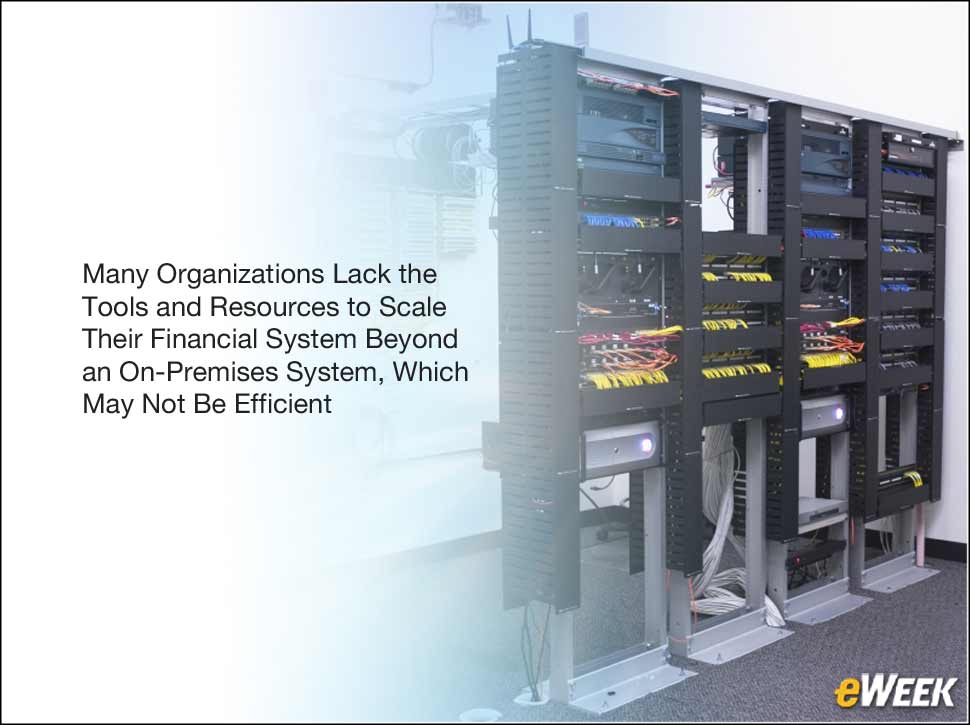
On-premises systems are getting harder to manage and maintain. Yes, companies can run financial software on premises, but is that where it can be run most efficiently and effectively? As companies grow and change, so do data storage, processing and analysis needs. However, many companies do not have the resources—be it hardware, software, time or skill sets—needed to scale accordingly.
Accessibility and Security Are Not Balanced

When it comes to data—especially sensitive financial data—companies have a big challenge: providing the right access to the right people, while ensuring data security and privacy and protecting against data loss. It’s critical to ensure that any system you use can authenticate against existing data stores while enabling smooth, efficient and secure single-sign on.
Sticking With the Old
Even when companies do decide to update their financial management platforms, they don’t take full advantage. Most organizations have myriad methods of reporting financial information, including an array of spreadsheets living outside their core financial systems of record. Even when new systems with robust reporting capabilities are put into place, it’s common for organizations to try to re-engineer their old reports for the new system. At best, companies are leaving functionality on the table; at worst, they may be compromising the integrity of data.
Lack of Agility

Evolving market conditions, regulation, growth and many other factors are forcing organizations to be more agile. If you don’t have a flexible system that can quickly adapt to changes and provide the insights you need at your fingertips, then you’re at a disadvantage from a financial decision-making perspective. Finance teams are also looking to empower other business leaders with access to real-time finance data and insights that help them react at the speed of business. With greater insight into current performance, leaders are able to continuously strategize and course correct when needed.