






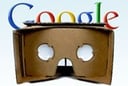

Google has created a Google Cardboard Camera app for Android that allows users to view their personal photographs with new virtual-reality capabilities, adding new life to once-static images.
The new app was announced in a Dec. 3 post by Carlos Hernandez, a software engineer for the cardboard camera project, on the Google Official Blog.
“With Google Cardboard, you can take amazing trips to faraway places and feel like you’re actually there,” wrote Hernandez. “But what if you could also use Cardboard to go back in time—to step inside personal moments like your favorite vacation or a holiday dinner with family? Now you can with the new Cardboard Camera app for Android.”
Google Cardboard is a handheld virtual-reality (VR) viewer that wraps around a compatible smartphone so a user can view various Google services such as Google Earth, YouTube and more for amazing VR experiences. A Cardboard user can build the device using basic plans from Google and then download an Android app that is used with the viewer.
The new app “turns the smartphone in your pocket into a virtual-reality camera,” Hernandez wrote. “It’s simple to take a photo: just hold out your phone and move it around you in a circle. Later, when you place your phone inside a Google Cardboard viewer, you’ll get to experience something new: a VR photo.”
The VR photos displayed in the viewer “are three-dimensional panoramas, with slightly different views for each eye, so near things look near and far things look far,” wrote Hernandez. “You can look around to explore the image in all directions, and even record sound with your photo to hear the moment exactly as it happened.”
The app lets users turn any photo they have taken into a personal VR experience, he wrote. “So revisit the mountaintop that took hours to hike, or the zoo where you saw (and heard) the monkeys, or your birthday party with the cake out and candles still lit. Capture the moments that matter to you and relive them anytime, from anywhere.”
The Cardboard Camera app for Android is available in 17 languages on Google Play.
The Google Cardboard viewer is made by cutting and folding cardboard until it is shaped into a boxy-looking VR attachment. Several other parts also are needed, including some Velcro, a rubber band, two small magnets and some aftermarket lenses, which can be purchased online. Several companies also sell pre-cut and packaged kits of parts.
The first Cardboard device was dreamed up and built by Googlers David Coz and Damien Henry in 2014 at the Google Cultural Institute in Paris as part of a 20 percent project, where Google employees can use up to 20 percent of their work time to engage in projects that are interesting to them, according to an earlier eWEEK report.
In October, The New York Times partnered with Google Cardboard to distribute free Google Cardboard virtual-reality viewers to more than 1 million print newspaper home delivery subscribers as part of a special VR content and advertising promotion. The promotion allowed home subscribers to use their Google Cardboard viewers to dive deeper into New York Times video content by seeing it using VR tools for a more immersive visual effect.
The first content under The New York Times VR program was a film produced by the paper’s Magazine staff, called “The Displaced,” which “captures the resilience of three extraordinary children uprooted by war, all through the lens of virtual reality. The New York Times Magazine, in collaboration with Chris Milk and his virtual-reality company Vrse, created the film to enable readers to experience what it means to be a child caught in the global refugee crisis. The film examines the daily lives of three children from South Sudan, eastern Ukraine and Syria.