






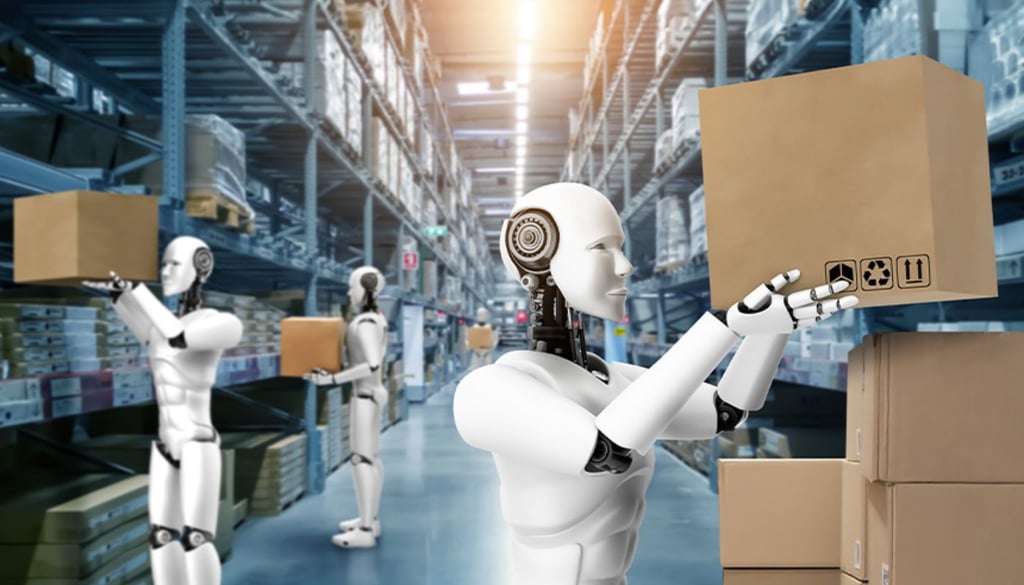


Humanoid robots have spent years starring in demos. They are now auditioning for industrial work.
Companies including BMW, GXO, Agility, Figure, Apptronik, Boston Dynamics, Tesla, and Nvidia are pushing humanoid robots toward factories, warehouses, and industrial workflows. The pitch is simple: give robots a human-shaped body, connect them to increasingly capable AI models, and let them work in spaces built for people.
The reality is more complicated. Humanoid robots may eventually become useful general-purpose machines, but today’s enterprise deployments still depend on narrow tasks, controlled environments, safety planning, data pipelines, and a clear-eyed view of what “autonomous” actually means.
Here are seven things enterprises should know before hiring humanoid robots.
- 1. They are arriving first in warehouses and factories
- 2. The vendor landscape is already crowded
- 3. ‘Humanoid’ does not mean fully autonomous
- 4. ROI depends on boring tasks, not sci-fi versatility
- 5. Safety is the real deployment gate
- 6. Data is becoming the new robot fuel
- 7. Integration will matter more than the robot body
- Bottom line
1. They are arriving first in warehouses and factories
The first serious wave of humanoid robot adoption is not happening in homes, hospitals, or office hallways. It is happening in places where physical work is repetitive, structured, and expensive to staff.
That means warehouses, logistics hubs, manufacturing plants, and automotive facilities.
BMW has tested Figure’s humanoid robots at its Spartanburg, South Carolina, plant, and the automaker has also moved forward with humanoid robot testing in Leipzig. GXO has piloted humanoid robots in warehouse settings, including Agility’s Digit, Apptronik’s Apollo, and other systems. Apptronik has also partnered with Jabil to test Apollo robots for industrial tasks such as inspection, sorting, lineside delivery, and fixture placement.
That matters because factories and warehouses give humanoid robots a clearer starting point. The environment is still complex, but it is more predictable than a home. Workflows can be measured. Tasks can be repeated. Safety zones can be defined. ROI can be tested against existing labor, downtime, throughput, and automation costs.
For enterprises, the early lesson is blunt: if the use case depends on a robot improvising across an open-ended environment, it is probably too early. If the use case involves a repeatable task in a structured facility, it may be worth watching now.
2. The vendor landscape is already crowded
The humanoid robot market is filling up quickly.
Figure is targeting industrial and eventually general-purpose work. Agility is focused on warehouse automation with Digit. Apptronik is positioning Apollo for logistics and manufacturing. Boston Dynamics is moving its electric Atlas toward industrial applications. Tesla is developing Optimus. Unitree, AgiBot, 1X, Persona AI, Fourier Intelligence, and other companies are also pushing into the category.
Nvidia is not building a humanoid robot fleet in the same way, but it may become one of the most important companies in the market. Its Isaac GR00T work, Jetson Thor computing, simulation tools, and robotics reference designs could make Nvidia a platform supplier for many robot builders.
That crowded field is good for innovation, but it creates procurement risk. Buyers will need to separate polished demos from deployable systems and ask hard questions about service models, spare parts, fleet management, financing, software updates, and long-term vendor viability.
Purchasing a humanoid robot is not just a hardware decision. It is a bet on a robotics stack.
3. ‘Humanoid’ does not mean fully autonomous
The word “humanoid” can smuggle in a lot of assumptions. A robot may have two legs, two arms, cameras, hands, and a conversational interface, but that does not mean it can independently perform any human task.
Some systems rely on teleoperation during training, testing, or edge cases. Some can perform a limited set of tasks in a prepared environment. Some demos show impressive manipulation, but not necessarily reliable production-scale autonomy. Even strong autonomy claims need context:
What task? What environment? What failure rate? What human oversight? What happens when the object is moved, the lighting changes, or the workflow breaks?
Companies should ask vendors to define autonomy in operational terms. A useful checklist includes:
- What tasks can the robot perform without human intervention?
- How often does it require remote assistance?
- What data is captured during operation?
- How are failures logged and reviewed?
- Can the robot recover safely when it encounters an unfamiliar situation?
- Does performance hold up across shifts, facilities, and real-world messiness?
The practical question is not whether the robot looks human. It is whether it can complete a specific workflow safely and repeatedly.
4. ROI depends on boring tasks, not sci-fi versatility
The strongest near-term business case for humanoid robots will probably come from boring work. That includes moving totes, sorting items, tending machines, inspecting parts, carrying materials, placing fixtures, and handling repetitive logistics tasks. These are not cinematic use cases, but they are the ones enterprises can measure.
A humanoid form factor may help when companies want automation that can work around stairs, doors, shelves, carts, tools, and spaces designed for human workers. In theory, a humanoid robot could reduce the need to redesign an entire facility around fixed automation.
But that advantage only matters if the robot can perform the task at a cost, speed, and reliability level that beats the alternatives. In many cases, a traditional robot arm, an autonomous mobile robot, a conveyor system, or a purpose-built machine may still be cheaper and more dependable.
That is why enterprises should treat humanoid robots as one automation option, not the default answer. The ROI case should compare humanoids against existing robotics and process changes, not against an imaginary future in which a single robot can do everything.
5. Safety is the real deployment gate
Humanoid robots bring AI into physical space. That changes the risk profile.
A chatbot error can be embarrassing or expensive. A robot error can hit a person, drop a load, block an emergency route, damage equipment, or create a workplace hazard. Enterprises will need safety procedures that cover not only mechanical reliability but also AI decision-making, human-robot interaction, cybersecurity, and operational governance.
The safety challenge is especially important because humanoid robots are designed to work in environments built for people. That makes them more flexible, but it also means they may operate near human workers, vehicles, machinery, and inventory.
Enterprises should expect to evaluate:
- Physical force limits and collision avoidance
- Emergency stop procedures
- Fall behavior and load handling
- Human proximity detection
- Remote monitoring and intervention
- Cybersecurity controls
- Audit trails for decisions and failures
- Compliance with workplace safety requirements
Research around embodied AI increasingly treats safety, trust, and lifecycle governance as central deployment issues, not afterthoughts. That is the right framing for enterprise buyers. The robot is not just a device. It is a moving AI system inside the business.
6. Data is becoming the new robot fuel
Humanoid robots are becoming an AI data problem as much as a hardware problem.
Nvidia’s GR00T N1 work points to where the market is heading: robot foundation models trained on a mix of real robot trajectories, human videos, and synthetic data. Figure’s Helix model and other vision-language-action systems point in the same direction. The goal is to help robots interpret scenes, understand instructions, and translate those signals into physical movement.
That shift matters for enterprises because deployment will involve more than buying machines. Companies may need to think about data rights, facility mapping, video capture, task demonstrations, simulation environments, model updates, and feedback loops.
The robot’s performance may improve over time, but that improvement will depend on what it can learn from. Enterprises should ask vendors what data is collected, where it is stored, whether it is used to train shared models, and how sensitive operational information is protected.
This is where humanoid robots start to look less like forklifts and more like AI platforms with arms.
7. Integration will matter more than the robot body
The body gets the attention. The integration will decide the outcome.
A humanoid robot that can pick up a tote is interesting. A humanoid robot that can be scheduled, monitored, secured, maintained, updated, insured, audited, and connected to warehouse or manufacturing systems is much more useful.
Enterprises will need to understand how humanoid robots fit into existing operations. That includes workforce training, facility layout, IT and OT systems, security policies, maintenance teams, procurement cycles, and incident response. It also includes softer but important questions: Do workers understand what the robot is supposed to do? Who is responsible when it fails? How does management communicate the role of automation without turning the rollout into a morale crater?
The most successful early adopters will likely be companies that treat humanoid robots as operational programs rather than gadget pilots. The robot itself is only one piece. The process around it may matter more.
Bottom line
Humanoid robots are moving from viral videos toward enterprise pilots, but they are not ready to be treated as plug-and-play workers.
For now, the best enterprise opportunities are narrow, measurable, and grounded in physical workflows that already strain human labor or existing automation. The biggest risks are also clear: unclear autonomy, weak safety planning, immature vendor ecosystems, fuzzy ROI, and underestimating integration work.
The companies that benefit first will not be the ones most dazzled by human-shaped machines. They will be the ones that ask the dull questions early: What task? What cost? What failure mode? What data? What safety case? What happens on the night shift when nobody from the demo team is in the building?
That is where humanoid robots stop being a spectacle and start becoming infrastructure.
For a glimpse of how automation is already reshaping logistics at scale, read how China Post deployed robot sorters to process millions of parcels across its delivery network.