






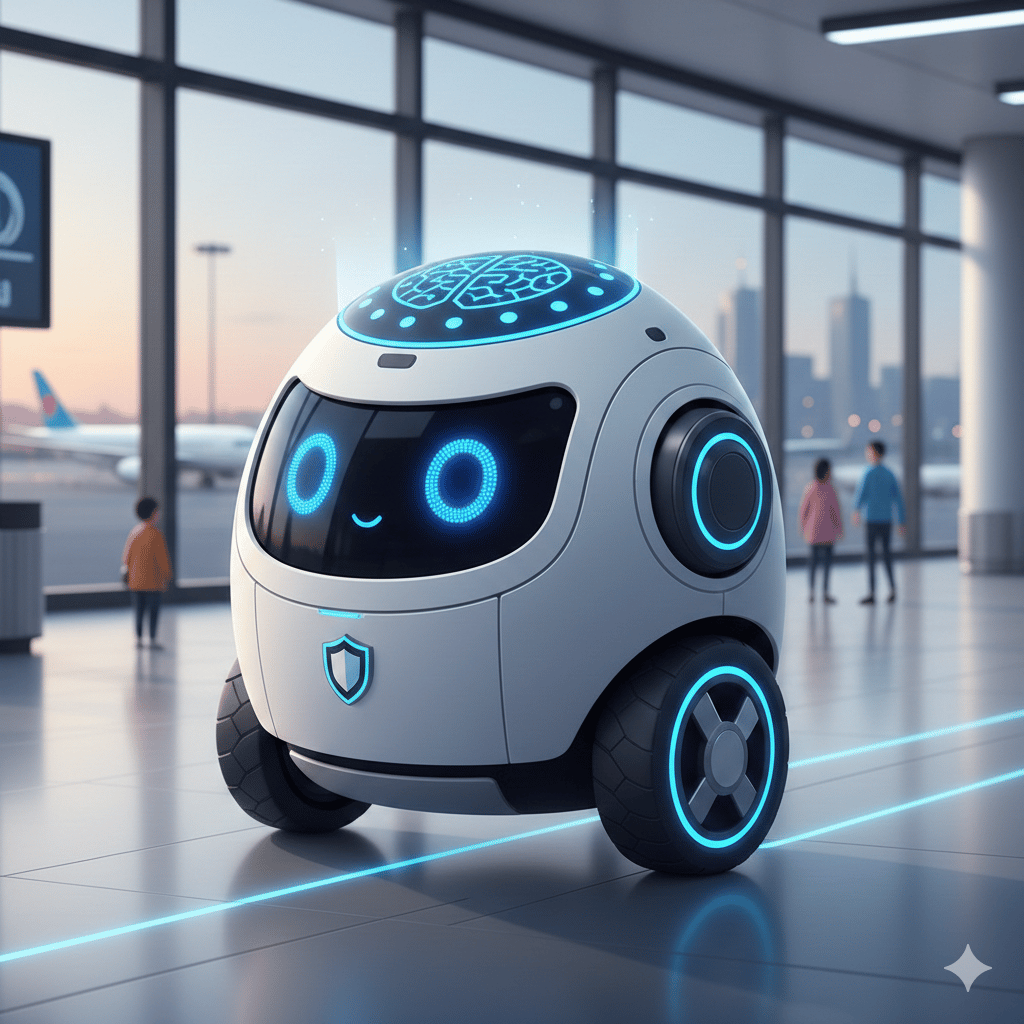


Certis just hired a new kind of guard.
And it runs on wheels, sensors, and an AI “brain.”
Certis Group and FieldAI announced they formed a strategic partnership to deploy autonomous robots in real-world security operations, pairing FieldAI’s autonomy software with Certis’ command-and-control platforms and operational workflows. The companies said the goal is scalable deployments across large, multi-site security environments, with robots operating alongside human teams.
What the partnership is actually shipping
Certis said its Mozart™ orchestration platform will coordinate robots, human teams, workflows, and command systems in live environments. On the FieldAI side, the announcement centers on Field Foundation Models™, which the company describes as general-purpose autonomy software that can act as a “brain” for different robot types and operate in complex, dynamic environments without relying on prior maps or pre-set routes.
FieldAI CEO Ali Agha said the approach is designed to handle “uncertainty,” and to keep improving across deployments as the fleet learns from new environments. The release also says FieldAI has opened an office in Singapore to support deployments and integration work with Certis.
If that “robot brain” framing sounds familiar, it’s because more robotics vendors are pitching general-purpose autonomy software rather than single-site scripting.
Why security is a proving ground
According to the announcement, Certis’ President and Group CEO Ng Tian Beng said the security industry “employs more than 30 million workers globally,” and described the environment as increasingly complex and labor-constrained, with reliability, safety, and accountability as “non-negotiable.” The companies are pitching robots as a way to absorb routine tasks while people focus on higher-level analysis and critical response.
The release lists early target applications such as autonomous patrols, real-time incident detection, remote supervision, and coordinated human-robot response. It also says the robots are intended to work across indoor and outdoor environments, including public infrastructure, transport hubs, commercial and industrial facilities, and more remote or hazardous locations.
This sits inside a bigger workforce story: AI is changing how teams triage, monitor, and document work, even before headcount changes show up. And it’s part of a wider robotics push, including attempts to scale vision and autonomy stacks beyond single-purpose machines.
What changes first in security won’t be uniforms, it’ll be workflows: who gets dispatched, who monitors, what gets logged automatically, and how “eyes on scene” becomes a shared job between humans and machines.
Also read: Unitree’s 2026 humanoid robot shipment goal.