






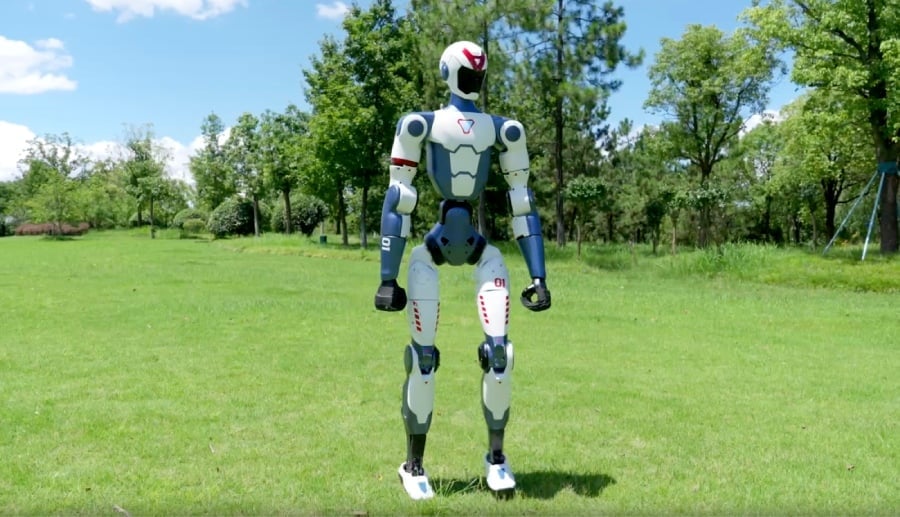


Chinese robotics firm Unitree Robotics is set to introduce its most affordable humanoid robot, the R1, to international markets next week.
According to reporting by the South China Morning Post (SCMP), the company plans to launch the robot via Alibaba Group’s AliExpress platform, targeting regions including North America, Europe, Japan, and Singapore. Sources familiar with the matter told SCMP the rollout will begin on the platform before expanding to additional sales channels.
The R1 is already available in China, where it starts at 29,900 yuan (about $4,300–$4,400), making it one of the lowest-cost humanoid robots currently on the market.
UPDATE: The Unitree R1 is now officially available for preorder on AliExpress with a shipping date of June 30, though the global listing is more expensive than its domestic counterpart at just over $6,800.
A new era of humanoid robots
Despite its relatively low cost, the robot is designed with agility in mind. Standing about 123 cm tall and weighing roughly 25–27 kg, the R1 is marketed by Unitree as “born for sport,” according to SCMP.
The robot can perform dynamic movements, including cartwheels, standing up from the ground, and running downhill, as highlighted across multiple reports. Its lightweight build and flexible joints enable a wide range of motion, making it suitable for experimentation and development work.
The international debut comes as Unitree accelerates efforts to scale production and expand its global footprint. The company is also preparing for a potential initial public offering on Shanghai’s STAR Market, aiming to raise about 4.2 billion yuan.
International demand has been a key part of Unitree’s growth strategy. The company reported that overseas sales exceeded domestic revenue between 2022 and 2024, though that share dropped to 39% in the first three quarters of 2025, according to SCMP.
Outpacing global competitors
Unitree has rapidly scaled its production compared to Western rivals. The company shipped more than 5,500 humanoid robots in 2025, far surpassing competitors such as Tesla, Figure AI, and Agility Robotics, which each delivered around 150 units last year, according to market research firm Omdia, as cited by SCMP.
Founder and CEO Wang Xingxing has set an ambitious target of shipping between 10,000 and 20,000 robots this year.
The R1’s international debut could test whether lower-cost humanoid robots can gain traction beyond industrial and research environments.
While the robot’s capabilities are impressive for its price, analysts note that practical everyday uses remain limited for now. Still, broader availability at a lower price point could open the door for developers, researchers, and early adopters to experiment more widely.
Also read: IHMC’s humanoid robot “Alex” shows how the global robotics race is no longer just about lower prices, but about building machines that move more naturally in real-world environments.