






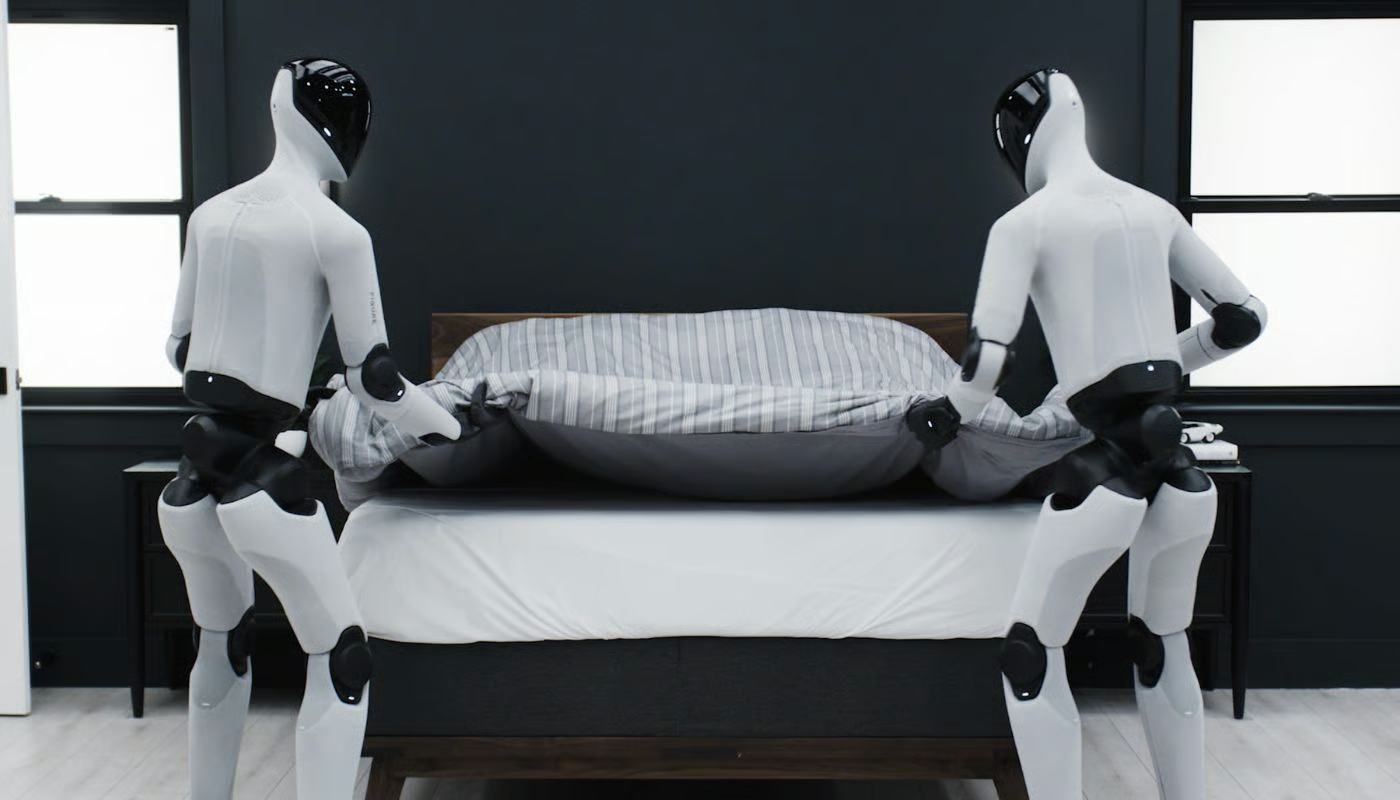


Figure AI has released a new demonstration of its F.03 humanoid robots autonomously tidying a bedroom in under two minutes.
While robots picking up objects isn’t new, this latest milestone shows two machines working in tandem to handle complex, everyday chores, most notably, making a bed together, without a single line of shared code telling them how to coordinate.
In a video released by the company, a pair of humanoids equipped with the Helix-02 Vision-Language-Action (VLA) system performs a “bedroom reset.” The sequence involves a variety of domestic tasks that require a mix of balance and fine motor skills. The robots are seen opening doors by depressing lever handles, hanging garments on a coat tree, and even using a foot pedal to open a trash can while balancing on one leg.
The demonstration also highlights the robots’ ability to handle smaller, more delicate items. One robot picks up a pair of headphones, reorients them mid-air, and places them onto a narrow stand, while another closes an open book, managing the shifting weight of the pages as the cover shuts.
Thinking, not talking
The most significant technical achievement isn’t just the chores themselves, but how the robots communicate, or rather, how they don’t. Traditional robotics often relies on a central brain or explicit messaging to keep two machines from bumping into each other. Figure AI claims these robots operate independently, reading each other’s body language rather than swapping data.
According to the Figure AI blog, there is “no shared planner between them, no message passing, no central coordinator.” Instead, each robot uses its own cameras to infer what its partner is doing.
The bed-making challenge
The centerpiece of the demo is the collaborative making of a bed, a task that has long frustrated roboticists due to the unpredictable nature of blankets. Because a comforter is “deformable,” meaning it has no fixed shape, the robots must constantly adjust their grip and tension.
As the robots lift and smooth the duvet, they make thousands of consecutive decisions based on the fabric’s movement and their partner’s position. This type of “multi-humanoid collaborative locomanipulation” represents a shift toward robots that can operate in shared human spaces, such as homes and warehouses.
The company seems confident in the robots’ precision, with one social media post from Figure AI CEO Brett Adcock stating, “Honestly, they’re better at it than most humans.”
Scaling autonomy
This bedroom tidy is not a standalone programmed trick.
It is powered by Helix-02, the same underlying neural network that Figure AI has previously used to teach its robots how to fold laundry, clean kitchens, and sort toys. The system is designed to scale as more data is added, so the core algorithm doesn’t change even as tasks become more difficult.
Related reading: China is already testing robots beyond the home, including a Hangzhou “robot police” squad deployed to manage holiday traffic.