






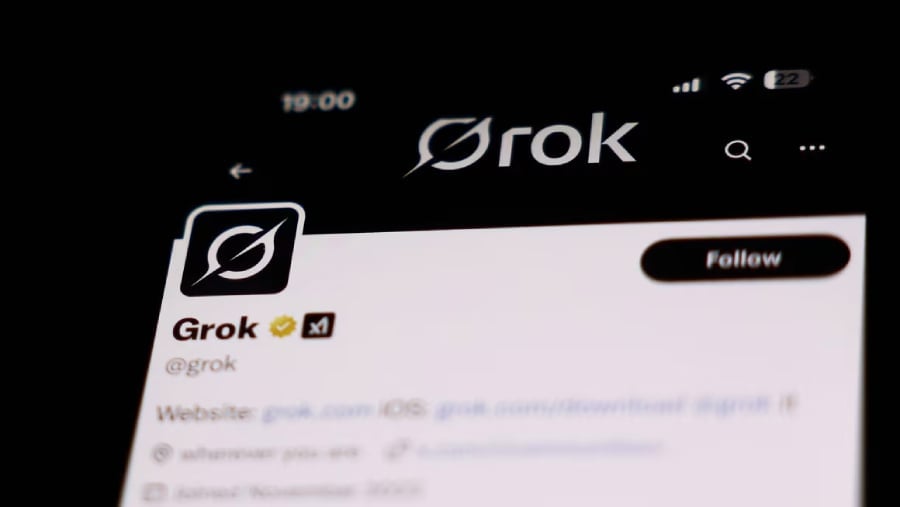


Elon Musk wanted an AI that would tell you the truth, even if it made you uncomfortable. What he built was something far more interesting.
Grok is xAI’s flagship AI chatbot, a real-time, web-connected, occasionally unfiltered assistant that pulls live data from X (formerly Twitter), argues back when it disagrees with you, and in its more controversial moments will generate content that rivals flatly refuse to touch.
Since its debut in late 2023, it has grown from a curiosity bundled with an X subscription into a genuinely capable assistant with enterprise plans, a dedicated app, and a model family that now competes seriously with the best in the field.
It started as the chatbot that wasn’t afraid to be edgy. Now it writes your code, searches X in real time, chats with you in a voice that sounds almost human. And, depending on how you feel about that, it either excites or unsettles you. Grok has come a long way.
What is Grok?
Grok is an AI chatbot built by xAI and powered by the company’s large language models.
Like all modern chatbots, it generates responses by predicting the most likely words to follow a given prompt, not because it “knows” things in any human sense, but because it has been trained on vast quantities of text and refined to produce useful, coherent outputs.
What makes Grok distinct is its live pipeline into X. While most AI models rely on static training data with a fixed knowledge cutoff, Grok is built around real-time information. Ask it what people are saying about a breaking news story right now, and it can actually tell you, pulling from posts, threads, and trending discussions as they happen.
It also leans into a personality that competitors don’t. Its default mode is direct and slightly irreverent, and users can push it further with custom personas ranging from professional to outright unfiltered. The name itself is a nod to Robert Heinlein’s Stranger in a Strange Land — to “grok” something means to understand it deeply and intuitively. Whether Grok lives up to that name is a matter of debate.
Who made Grok?
Grok was built by xAI, the AI company founded by Elon Musk in 2023. Musk, who was an early backer and board member of OpenAI before departing and later founding his own competing company, positioned xAI as a corrective to what he described as overly cautious, politically biased AI development at other labs.
xAI is tightly integrated with X (the social media platform Musk acquired in 2022), and that relationship fundamentally shapes Grok, both in its real-time data access and the controversies it has attracted. Musk has described Grok’s mission as pursuing a “truth-seeking, non-partisan viewpoint,” though reviewers have noted that this approach can sometimes tip into false balance, treating well-documented facts and fringe claims as equally valid points of view.
What does Grok do?
Grok is a multi-modal assistant that handles text, voice, images, files, and live web data. Its core capabilities include:
- Conversational assistance: Answering questions, explaining concepts, debating ideas, and drafting content. Grok is notably less prone to excessive hedging than some competitors and will engage with politically charged or taboo topics more directly.
- Real-time X search: Unlike any other major chatbot, Grok can pull from live X posts as a source. This makes it particularly useful for tracking public sentiment, breaking news, and niche community discussions that don’t surface in traditional search.
- Coding help: Writing, debugging, and explaining code. xAI’s benchmarks for its Grok 4 model suggest strong performance on complex programming tasks. A built-in Python REPL environment lets developers run and test code directly.
- Web search: Grok can browse the internet in real time, citing sources inline.
- File processing: Uploading images, PDFs, and documents for analysis, summarization, and question-answering.
- Voice chat: Real-time spoken conversation with AI voices accessible from both the web and mobile apps.
- Image and video generation: Grok features an image engine (default) and a more advanced tool called Imagine. Imagine is capable of generating both images and video.
- Tasks (automation): Users can set up recurring prompts on a schedule, with Grok emailing results or sending app notifications. This is Grok’s version of automation, useful for things like daily news summaries or weather alerts.
- Companions and personas: Grok’s most unusual feature. Users can switch between distinct personality modes (Personas) or interact with animated 3D characters called Companions, each with their own voice, personality, and gamified relationship mechanics.
- Projects: Persistent workspaces where users can attach files, instructions, and conversation context to specific tasks or workflows.
- Memory: Grok remembers information across conversations by default, though this can be turned off. A private mode prevents subsequent conversations from being added to its memory.
Where is Grok available?
Grok is accessible across several platforms, including:
- Web: The primary interface is at grok.com. It is also available directly within X, where users can query it from the sidebar.
- iOS and Android: Dedicated mobile apps are available. Voice chat, camera input, Companions, and the Imagine image/video tool are available on mobile.
- X (the platform): Grok is deeply embedded in X, accessible via the Grok icon on the platform.
How much does Grok cost?
Grok operates on a tiered pricing model with both standalone subscriptions and access through X’s premium tiers:
- Free ($0/month): Limited access to Grok 3, Grok 4, context memory, task automation, image generation, file processing, and voice chat.
- SuperGrok Lite: $8.33/month, billed annually, and $10/month-to-month.
- SuperGrok: $25/month, billed annually, and $30/month-to-month.
- Grok Business: $25/seat/month, billed annually, and $30/seat/month-to-month.
- Grok Enterprise: Custom pricing.
Alternatively, Grok is accessible through X’s subscription tiers: X Premium ($8/month) gives higher usage limits than the free tier, and X Premium+ ($40/month) includes SuperGrok access. Reviewers note that X’s plan documentation doesn’t cleanly map to Grok’s standalone tiers, so signing up directly via grok.com is generally recommended for clarity.
At $25/month (and certainly $250/month), Grok is more expensive than most major competitors, where $20/month is the standard premium tier.
Which AI models power Grok?
Grok runs on the Grok 4 family, xAI’s most capable model series. The main variants currently available are:
- Grok 4: The standard advanced model. Handles deep reasoning, complex tasks, and extended context, the default option for users who want maximum capability.
- Grok 4 Heavy: The highest-capability variant, exclusive to SuperGrok Heavy subscribers. It works by splitting into multiple reasoning agents, each of which generates an independent response, then comparing and refining their outputs. Think of it as a model that debates itself before answering.
- Grok 3: A faster, lighter model suited to quick responses and everyday tasks. Still available to users as the speed-first option, with a context window of 131,072 tokens versus Grok 4’s 256,000 tokens.
- Grok 4.1: Positioned as a significant upgrade in emotional intelligence, personality coherence, and conversational naturalness, while retaining the reasoning capabilities of Grok 4. xAI says the model was trained using reinforcement learning optimized for style, personality, and helpfulness, with frontier reasoning models used as reward models to evaluate and refine responses at scale.
What’s new in Grok 4.1
Grok 4.1 represents xAI’s first major attempt to close the personality gap with competitors. Where Grok 4 prioritized raw reasoning power, Grok 4.1 focuses on what xAI calls “emotional intelligence,” making Grok more perceptive to nuanced intent, more compelling to talk with, and more consistent in its personality across conversations.
xAI says the model shows measurably reduced hallucination rates on information-seeking queries compared to its predecessor, attributing this to improved reasoning depth during post-training. The company also reports that in a two-week silent rollout to production traffic, Grok 4.1 was preferred over the previous production model in nearly 65% of blind pairwise evaluations.
Privacy, data, and security concerns
xAI collects a significant volume of data through Grok interactions: account data, payment data, all conversation content, location data, technical data, and cookie data, among other categories. By default, this data is used to train xAI’s models, though users can opt out.
The company’s privacy policy explicitly asks users not to include personal information in their prompts, a caveat that critics have noted sits awkwardly alongside Grok’s own doctor and therapist personas, which are specifically designed to receive personal disclosures.
xAI’s security record has drawn scrutiny. In 2025, a federal government employee leaked a sensitive xAI security key. A rogue xAI employee separately tampered with Grok’s behavior, causing it to introduce unprompted commentary on white genocide in South Africa.
Grok has also been at the center of a significant international controversy over its image generation capabilities. In early 2026, users discovered that Grok would comply with requests to digitally undress photos of real women, leading to investigations by regulators in the EU, UK, India, and Malaysia.
The European Commission opened a formal probe under the Digital Services Act; the UK’s communications regulator Ofcom launched its own investigation; and India gave X a 72-hour ultimatum to overhaul Grok’s safety systems.
X subsequently restricted image generation and editing to paying subscribers only and implemented geoblocks preventing the generation of revealing images of real people in jurisdictions where such content is illegal.
Critics argued the restrictions were insufficient, noting that the underlying capability remained available and that content continued to be generated through the standalone Grok app. Paris-based nonprofit AI Forensics identified approximately 800 images and videos on the Grok Imagine platform that included pornographic and sexually violent material.
As with all cloud-based platforms, conversations with Grok can be subpoenaed and produced in legal proceedings. Users should treat the platform accordingly.
What are Grok’s competitors?
The AI chatbot market has grown sharply since Grok launched, and it faces strong competition:
- OpenAI’s ChatGPT: The market leader by usage, running on the GPT-5.4 family. Stronger on deep research, image generation, and the breadth of its integrations. Tops most head-to-head comparisons on response accuracy and creative writing. Paid plans start at $20/month.
- Google Gemini: Deeply integrated with Google’s ecosystem — Docs, Gmail, Search, Android. Strong on real-time information. Free tier available; AI Pro starts at $19.99/month.
- Anthropic’s Claude: Known for strong writing quality, long-document processing, and low hallucination rates. Free tier available; paid plans start at $17/month billed annually.
- Microsoft Copilot: Powered by OpenAI models and built into Microsoft 365, Windows, and Edge. Starts at $21/month.
- Perplexity AI: Sets itself apart by always citing sources. Strong for current events research. Free tier; Pro at $20/month.
- Meta AI: Built on the Llama model family, available across Facebook, Instagram, WhatsApp, and Messenger. Free to use.
- DeepSeek (China): Surprised the industry in early 2025 with its R1 reasoning model, offered for free. Raises data privacy concerns given potential access by Chinese authorities.
Grok’s clearest competitive advantage is its real-time X integration; no other major chatbot can pull live social media data as a primary source. For users who want that capability, or who specifically want an assistant with a more unfiltered personality, it remains a compelling option. For most other use cases, ChatGPT, Gemini, or Claude are likely to outperform it at comparable or lower price points.
Criticisms, limitations, and concerns
Beyond the image-generation controversy, Grok has a range of limitations worth understanding before relying on it heavily.
- Hallucinations: Grok, like all chatbots, will confidently state incorrect information. It has shown improvement in Grok 4.1, but independent testing has found it still makes factual errors on complex questions. Don’t use Grok as your only source on anything consequential.
- Deep research: Grok’s research capabilities fall short of those of ChatGPT and Gemini, which offer dedicated deep research features.
- Image and video generation: Independent reviews rate Grok’s image output as below ChatGPT’s and Gemini’s, noting visible distortions, errors, and inconsistencies with complex prompts. The Imagine tool improves on the base model but still falls behind Gemini’s Veo 3 on video tasks.
- Pricing: At $25/month (and $250/month for the top tier), Grok is more expensive than most alternatives offering comparable or stronger core capabilities.
- Bias toward false neutrality: xAI’s publicly available instructions require Grok to seek a “truth-seeking, non-partisan viewpoint” and not shy away from claims that are “politically incorrect, as long as they are well substantiated.” In practice, reviewers have found this can result in Grok presenting fringe claims as legitimate alternative perspectives.
- NSFW moderation: While Grok allows NSFW content (a unique selling point), PCMag discovered that the moderation blur on explicit images “isn’t exceptionally strong, and moderation doesn’t catch everything.”
How to use Grok
To get started, simply log into your X account and click the Grok icon. If you want the full experience, you’ll need to subscribe to X Premium. For the best results, use “Fun Mode” for creative brainstorming and “Regular Mode” for serious research. If you’re a developer, you can head to console.x.ai to start building with their SDK.
Also read: These Grok AI prompts for productivity cover practical ways to use the chatbot for competitor research, stakeholder prep, and workplace writing.