






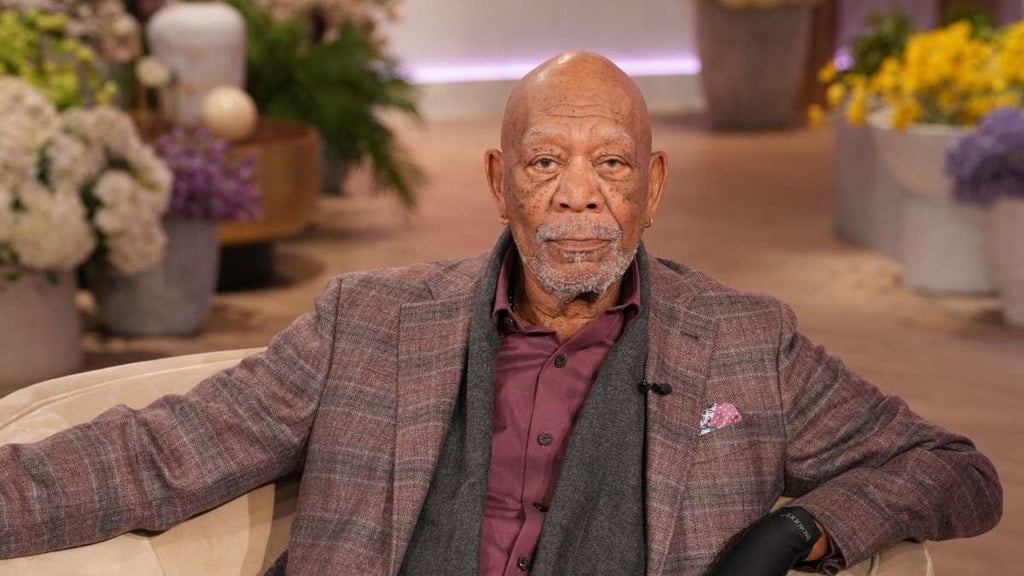


Morgan Freeman didn’t mince words: when artificial intelligence clones your iconic baritone without permission, you call it robbery.
The Oscar-winning actor, whose voice has served as narrator, deity, and reassuring presence for decades, publicly condemned the unauthorized use of AI to replicate his vocal signature. “If you’re gonna do it without me, you’re robbing me,” he said.
In a recent article in The Guardian, Freeman thanked fans for flagging a TikTok clip that used an AI-generated voice to impersonate him. The video claimed “Narrated by me, Morgan Freeman,” but the actor made clear he’d given no such endorsement… and that his legal team is now active.
Concerns of consent and creative rights
Freeman’s frustration isn’t isolated. The entertainment industry is increasingly uneasy about AI that clones voices, likenesses, and performances without the performer’s consent.
Actors such as Tom Hanks, Keanu Reeves, and Stephen Fry have similarly spoken out about the “creepy” advancement of voice and image replication technologies. Just last month, Robin Williams’ daughter, Zelda, urged people on Instagram to stop sharing AI recreations of her late father.
Legal experts caution that this wave of AI impersonation is testing the limits of rights like publicity, voice likeness, and intellectual property. For example, Scarlett Johansson is reportedly in a strong position under right-of-publicity claims after alleging an AI voice mimicked her in a chatbot.
Freeman highlighted the stakes when he referred to the new AI-generated “actor” known as Tilly Norwood — a synthetic creation marketed as a performer despite being entirely digital. He joined the chorus of voices arguing that real actors and their unique instruments (voice, face, performance) are at risk of being replaced or devalued.
Why this matters for voices and viewers
When an artificial voice sounds nearly identical to Morgan Freeman’s, it can blur the line between admiration and appropriation. At the same time, some argue that AI offers creative opportunities for storytelling, accessibility, and the preservation of iconic performances. Used thoughtfully, it could complement rather than replace human talent.
Freeman’s stance highlights the importance of consent and credit in this evolving landscape. Artists want to control how their likeness and voice are used, while innovators see AI as a tool to expand creative possibilities. The challenge is finding the right balance: protecting human artistry without stifling technological progress.
As Freeman and others push for clearer guardrails, one thing remains certain. This conversation about AI and authenticity isn’t about halting innovation, but about guiding it responsibly.
For another take on how AI impersonations are shaking up public trust, check out our coverage of the Warren Buffett deepfake controversy on eWEEK.