






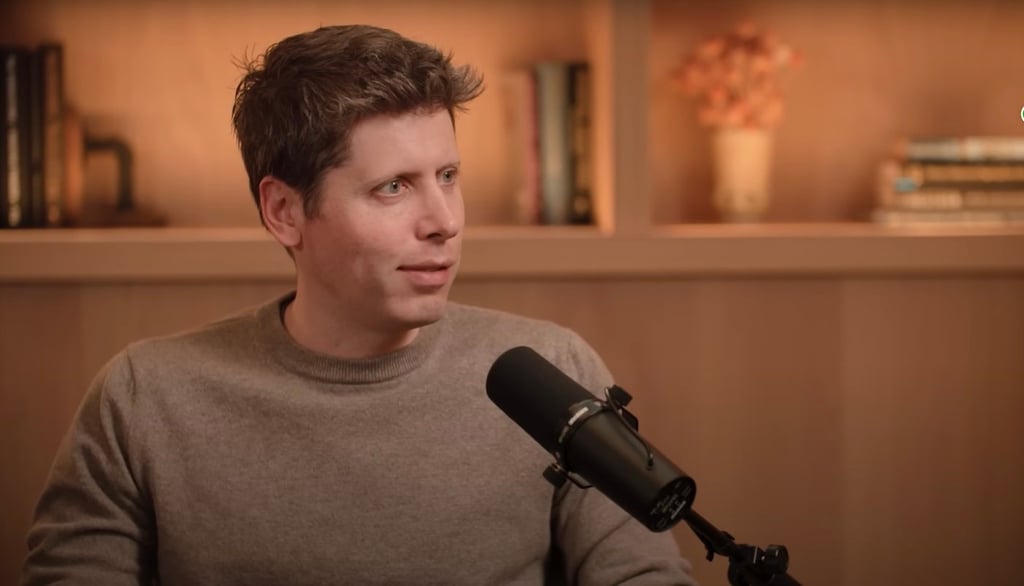


OpenAI earned $1 billion in revenue in July, marking the first time the company achieved that milestone in a month. However, the AI darling still struggles with finding enough GPUs and compute to fulfill “voracious” demand, CFO Sarah Friar said in an interview on CNBC’s “Squawk Box” television show on Wednesday.
OpenAI’s greatest challenge
The ChatGPT maker has received sky-high valuations, with $12.7 billion in revenue expected this year. According to CNBC, OpenAI was in talks in early August to sell approximately $6 billion in stock at about a $500 billion valuation.
Friar said OpenAI is seeing more Plus and Pro subscriptions, some of whom might have signed on to keep the older models GPT-5 replaced.
Keeping up with the demand for computing power is OpenAI’s greatest challenge, Friar said. OpenAI works with Oracle, CoreWeave, and Microsoft, but even more infrastructure is needed. (Microsoft owns a minority economic interest in OpenAI Global, LLC, the capped profit company portion of the AI giant’s complex corporate structure.)
“That’s why we launched Stargate. That’s why we’re doing the bigger builds,” Friar said.
Stargate is a $100 billion project funded by SoftBank and MGX to build out Oracle data centers to run OpenAI workloads. Construction is underway for Stargate’s first site in Abalene, Texas.
AI is also getting more powerful, with long-term memory, longer context windows, and deep reasoning.
Altman forges ahead despite believing the AI industry is in a bubble
CEO Sam Altman is taking advantage of the growth, predicting demand will increase and that “we will spend maybe more aggressively than any company who’s ever spent on anything ahead of progress,” as he told CNBC.
Around the same time, Altman said AI is in a “bubble,” although he downplayed the potential economic crash that could come after.
“Are we in a phase where investors as a whole are overexcited about AI? My opinion is yes,” Altman said.
OpenAI released its much-anticipated new model, GPT-5, on Aug. 7. The model is capable of deeper reasoning and more naturalistic writing styles than the previous GPT-4, though some users found it less personable.
Elsewhere in the world of AI, Microsoft AI chief Mustafa Suleyman warns that seeing AI models as possessing consciousness leads to delusions and could risk damaging human rights struggles.