






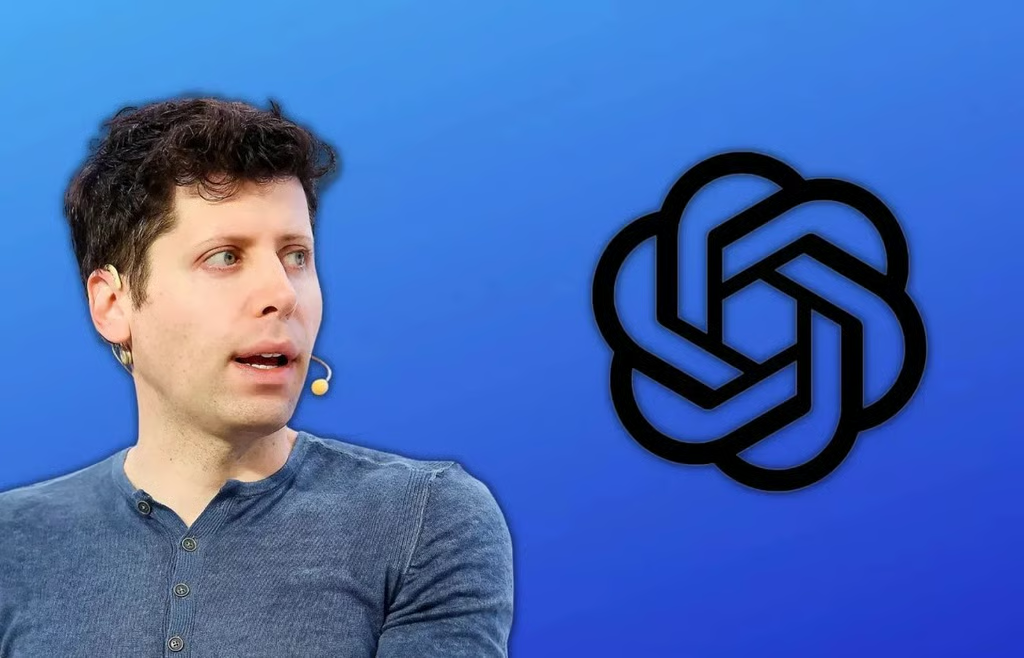


OpenAI has rolled back an update to GPT-4o in order to prevent sycophancy, the flowery language the generative AI may use to praise users. The “overly supportive but disingenuous” responses flourished because “we focused too much on short-term feedback, and did not fully account for how users’ interactions with ChatGPT evolve over time,” OpenAI said in an April 29 blog post.
ChatGPT’s eagerness to please could be ‘uncomfortable’
Users discussing GPT-4o’s eagerness to please reached a critical mass last week. The relentlessly positive tone was wasting tokens and getting in the way of actual answers, users said. ChatGPT using GPT-4o might praise the user for even nonsense queries.
The problem seemed to stem from the March 27 update to GPT-4o, which OpenAI said was intended to be “intuitive, creative, and collaborative, with enhanced instruction-following, smarter coding capabilities, and a clearer communication style.”
“Sycophantic interactions can be uncomfortable, unsettling, and cause distress,” OpenAI wrote. The sycophancy seemed less distressing and more wasteful: It does not solve problems like AI hallucinations, while cluttering the interaction with baseless flattery.
“Each of these desirable qualities like attempting to be useful or supportive can have unintended side effects,” OpenAI wrote.
OpenAI promises more personalization and different opportunities for feedback
To fix this AI sycophancy problem, OpenAI plans to change how the company collects and incorporates feedback into the models and allow greater personalization. One way OpenAI might do that is to allow users to choose from “multiple default personalities,” a functionality available with some individual GPT agents but not in the main ChatGPT interface at the moment.
OpenAI plans to directly steer the next iteration of GPT-4o away from flattery, emphasize honesty, change the ways users can give feedback before a model is deployed, and adjust the Model Spec and other in-house evaluations to try to catch other friction points before they arise.
“We hope the feedback will help us better reflect diverse cultural values around the world,” Open AI wrote.