






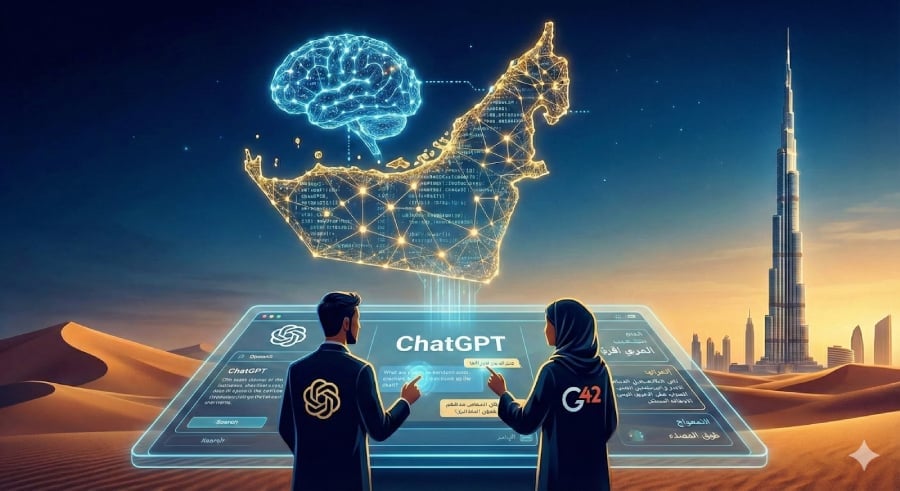


OpenAI is pivoting from one-size-fits-all AI toward region-specific versions of ChatGPT.
The tech giant is reportedly working closely with Abu Dhabi’s influential tech conglomerate, G42, to build a special version of its ChatGPT chatbot for the United Arab Emirates. This exclusive partnership aims to create a finely tuned AI that accommodates the UAE’s local dialect, cultural nuances, and legal landscape.
The UAE has spent years positioning itself as a leader in AI, with a strong focus on Arabic-language systems that align with national culture and values. But building cutting-edge AI models from scratch remains extremely costly.
The project isn’t about building a new AI from scratch. Instead, OpenAI is applying post-training techniques to tailor its existing model. The result would be a ChatGPT fluent in the local Arabic dialect and designed with content restrictions that align with Emirati law and societal values.
According to Semafor, one person involved stated a key goal is for the chatbot to “project a political line consistent with the monarchy’s.”
Despite the localized version, OpenAI plans to continue offering its standard global ChatGPT in the UAE, with adjustments made only where Emirati law restricts certain content. Semafor reports that in such cases, users would be notified when their request runs into legal limits, rather than receiving a silent refusal.
Why the UAE matters to OpenAI
The UAE has played an increasingly important role in OpenAI’s global strategy. The country has been a regular stop in CEO Sam Altman’s fundraising efforts since 2023.
MGX, a tech investment firm backed by G42, invested in OpenAI last October through a secondary share sale that valued the company at $500 billion, according to Semafor. Abu Dhabi’s AI university also awarded Altman an honorary doctorate last year.
The company is also involved in the AI infrastructure project known as Stargate and is expected to open the first phase of a massive 1-gigawatt data center campus in 2026.
A glimpse of AI’s future
The talks highlight a broader shift in how AI tools may be deployed worldwide — not as one-size-fits-all systems, but as regionally adapted products shaped by local laws, culture, and politics.
As Semafor notes, controlling AI models may prove far more difficult than moderating social media. And as AI tools spread deeper into daily life, the balance between global technology and local control is likely to become one of the industry’s defining challenges.
Also read: ChatGPT Translate shows how OpenAI is leaning into language-specific tooling.