







- 1987: Toshiba Launches NAND Flash
- 1988: Intel the First to Commercialize NOR Flash
- 1991: Toshiba Launches First NAND-Type EEPROM
- 2000: First USB Flash Drive Goes to Market
- 2007: Apple Launches Its First iPhone
- 2008: Toshiba Buys 30 Percent of SanDisks Co-Op Flash Production for $1 Billion
- 2008: EMC Adds Optional Flash Disks to Enterprise Storage Lineup
- 2009: Apple Signs Long-Term Pact With Toshiba for Flash Chips
- 2010: NAND Flash Memory Gets Smaller
- 2011: NAND Flash Drive Maker Fusion-io Goes Public, Gets $1.8B Valuation
- 2011: NAND Flash Moves Into Tier 1 Enterprise Storage
- 2011: Huge Demand to Continue Through 2015
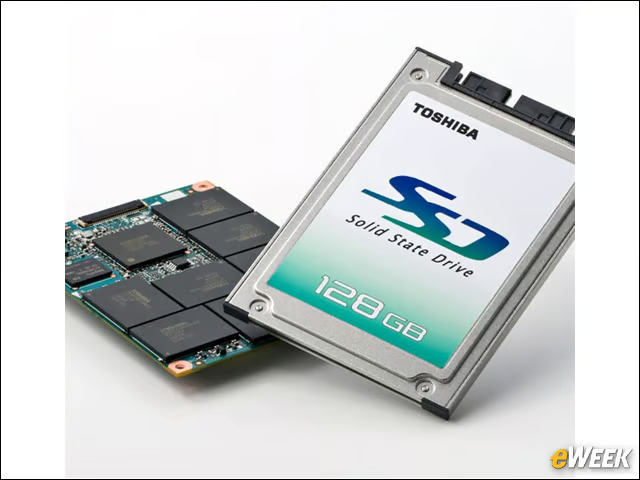
1987: Toshiba Launches NAND Flash
Toshiba launched NAND flash at the 1987 IEEE International Electron Devices Meeting in San Francisco. Flash memory (both NOR and NAND types) was invented by Dr. Fujio Masuoka while working for Toshiba around 1980. According to Toshiba, the name “flash” was suggested by Dr. Masuoka’s colleague, Mr. Sho-ji Ariizumi, because the erasure process of the memory contents reminded him of the flash of a camera.
1988: Intel the First to Commercialize NOR Flash
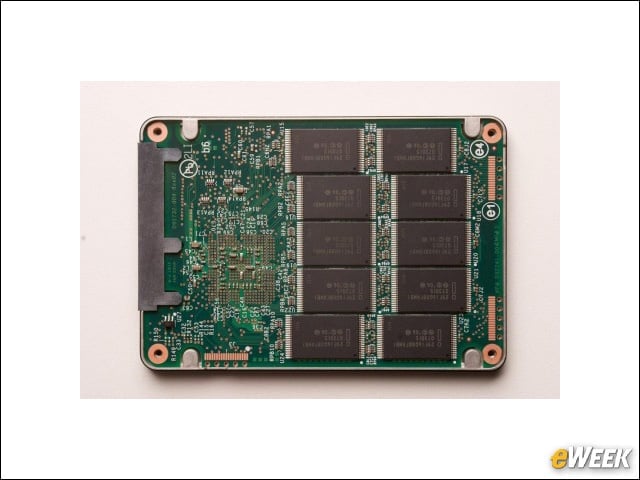
Intel saw the huge potential of the invention and introduced the first commercial NOR-type flash chip in 1988. NOR-based flash has long erase and write times but provides full address and data buses, allowing random access to any memory location. This makes it a suitable replacement for older read-only memory (ROM) chips, which are used to store program code that rarely needs to be updated, such as a computer’s BIOS or the firmware of set-top boxes.
1991: Toshiba Launches First NAND-Type EEPROM
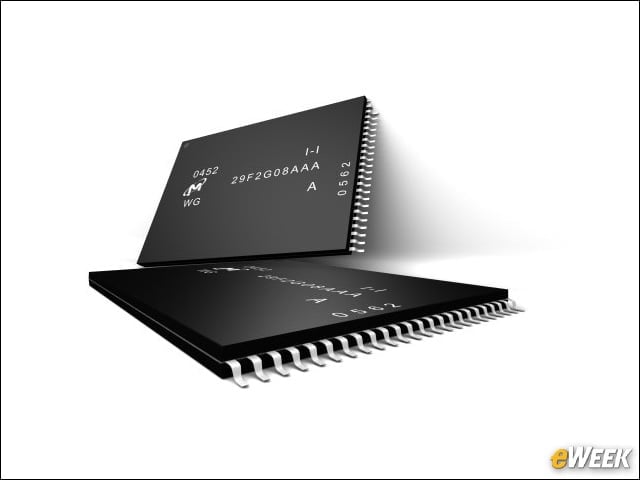
Toshiba announced in 1991 that it had developed the world’s first 4M bit NAND-type electrically erasable programmable read-only memory (EEPROM). This moves along the development of NAND flash substantially.
2000: First USB Flash Drive Goes to Market
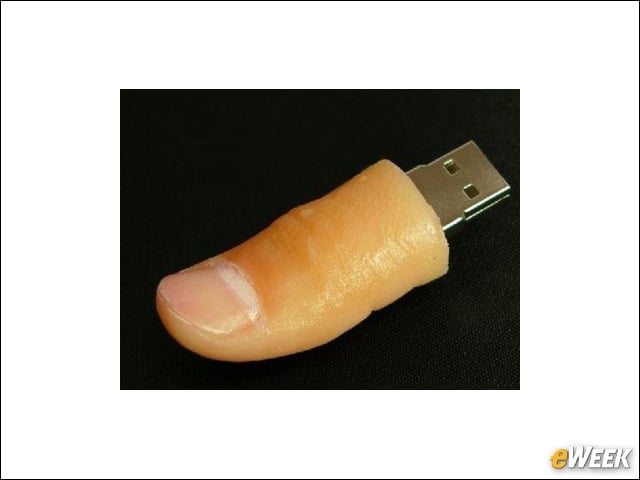
Trek Technology and IBM began selling the first USB flash drives commercially in 2000. A USB flash drive is a portable plug-and-play data storage device, small enough to be attached to a keychain that can be plugged into any USB port and is immediately recognized by the computer as an external drive. They are also called flash drives, jump drives, memory sticks and thumb drives. Most weigh less than 30 grams. As of January 2012, drives of 256GB were available, 512GB and 1TB drives were in planning; storage capacities as large as 2TB are planned.
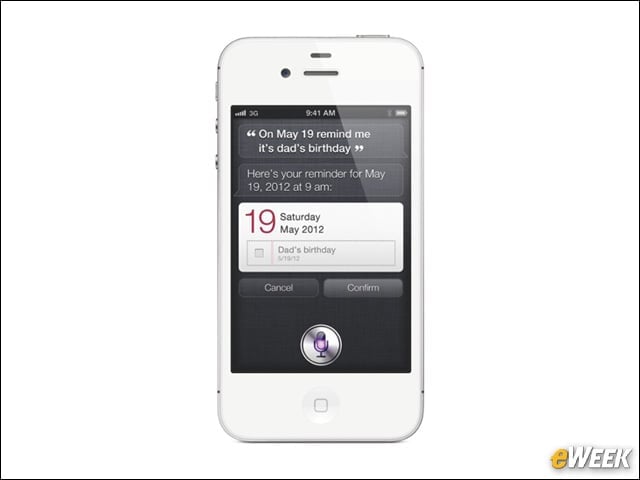
2007: Apple Launches Its First iPhone
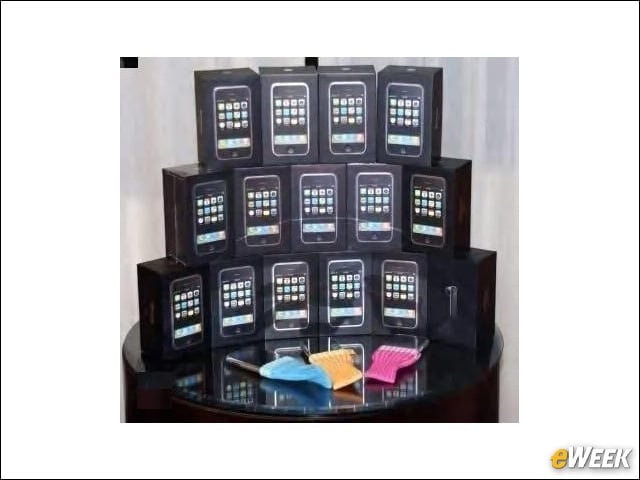
On Jan. 9, 2007, Jobs announced the iPhone at the Macworld convention, receiving substantial media attention. Of course, the iPhone runs on NAND flash. Since then, dozens of other NAND flash smartphones have come to market, running Android, BlackBerry and other operating systems. iPhones are expected to sell up to 60 million units in 2012 alone.
2008: Toshiba Buys 30 Percent of SanDisks Co-Op Flash Production for $1 Billion
Toshiba, the inventor of NAND flash and SanDisk, partners for several years, announced an agreement that turned over 30 percent of SanDisk’s share of current manufacturing capacity of the companies’ joint ventures to Toshiba. A billion dollars for less than one-third of SanDisk’s business; now, that’s a commitment to NAND flash.
2008: EMC Adds Optional Flash Disks to Enterprise Storage Lineup
EMC claimed to be the first enterprise storage vendor to integrate flash-based solid-state drives into its core product portfolio. EMC’s new 73GB and 146GB SSDs became available as an option in EMC’s high-end Symmetrix DMX-4 systems.
2009: Apple Signs Long-Term Pact With Toshiba for Flash Chips
Apple, maker of the iPods and iPhones that suck up large quantities of NAND flash chips practically by the minute, announced that it entered a long-term agreement for Toshiba to keep supplying even more of those chips.
2010: NAND Flash Memory Gets Smaller
Intel and Micron sampled 25nm NAND in early 2010. SanDisk also started to ship its 24nm product later that year. Samsung started shipping a 27nm process part in 2011.
2011: NAND Flash Drive Maker Fusion-io Goes Public, Gets $1.8B Valuation

Fusion-io, one of the more innovative users of NAND flash for enterprise data centers, staged its initial public offering and did very well in its first day on the New York Stock Exchange. Fusion-io is probably best known for hiring Apple co-founder Steve Wozniak as its chief scientist.
2011: NAND Flash Moves Into Tier 1 Enterprise Storage
Violin Memory and OCZ started marketing its scale-out flash arrays as replacements for spinning disks in Tier 1 storage, and both companies have made a lot of headway in the market since then.
2011: Huge Demand to Continue Through 2015
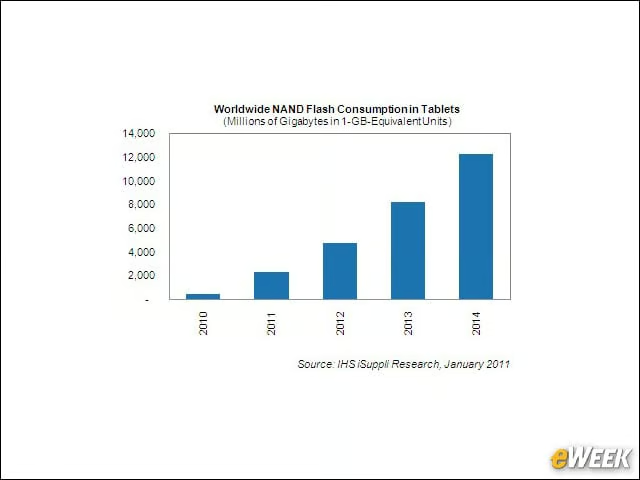
With Apple products—mainly iPhones, iPads, Air notebooks and iPod Touch devices—taking a whopping 30 percent of the world market, industry analyst IHS iSuppli projected that high demand for NAND flash would continue through 2015 and probably way beyond.