




Intel Labs Projects Aim for Better User Experience
by Jeffrey Burt
OASIS
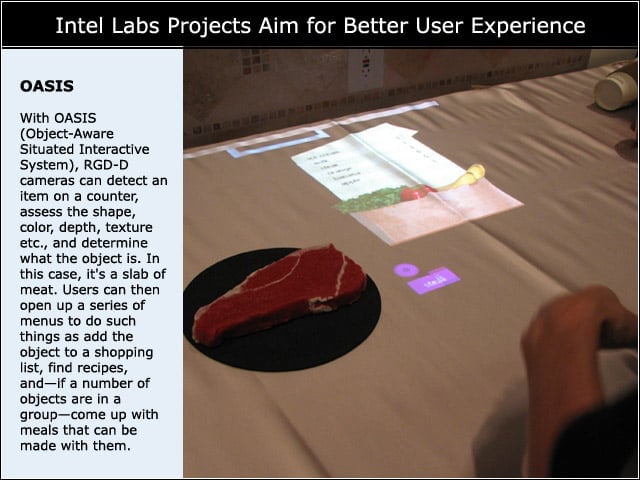
With OASIS (Object-Aware Situated Interactive System), RGD-D cameras can detect an item on a counter, assess the shape, color, depth, texture etc., and determine what the object is. In this case, it’s a slab of meat. Users can then open up a series of menus to do such things as add the object to a shopping list, find recipes, and—if a number of objects are in a group—come up with meals that can be made with them.
Facial Recognition
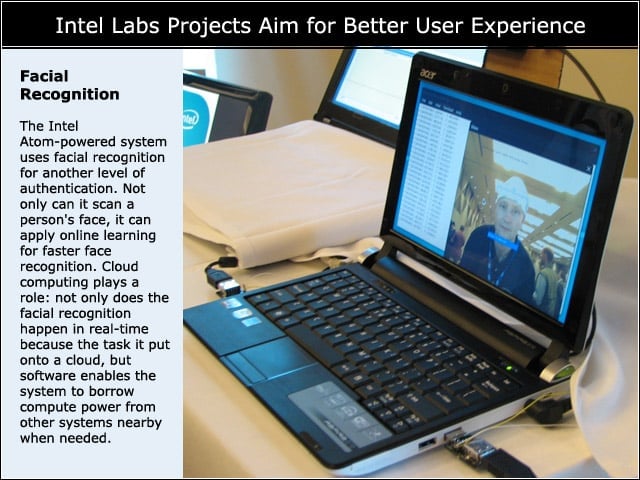
The Intel Atom-powered system uses facial recognition for another level of authentication. Not only can it scan a person’s face, it can apply online learning for faster face recognition. Cloud computing plays a role: not only does the facial recognition happen in real-time because the task it put onto a cloud, but software enables the system to borrow compute power from other systems nearby when needed.
Computing on the Road
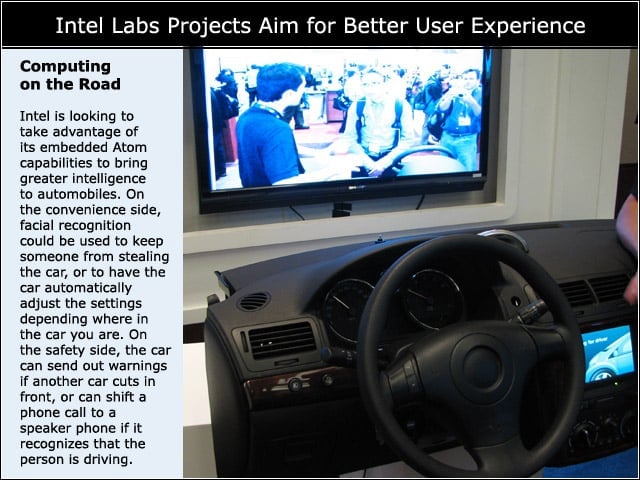
Intel is looking to take advantage of its embedded Atom capabilities to bring greater intelligence to automobiles. On the convenience side, facial recognition could be used to keep someone from stealing the car, or to have the car automatically adjust the settings depending where in the car you are. On the safety side, the car can send out warnings if another car cuts in front, or can shift a phone call to a speaker phone if it recognizes that the person is driving.
Augmented Reality
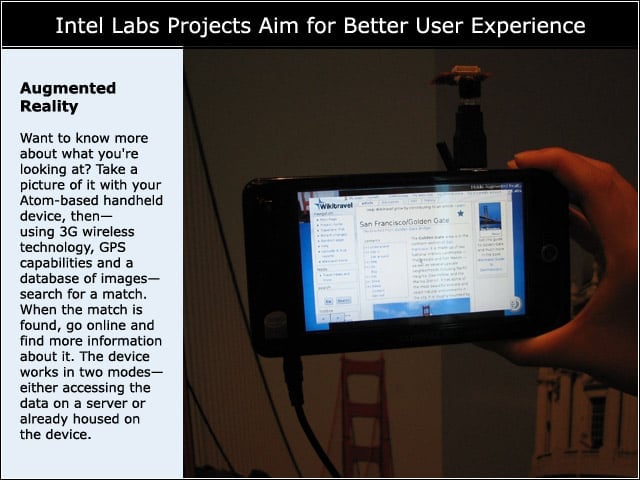
Want to know more about what you’re looking at? Take a picture of it with your Atom-based handheld device, then—using 3G wireless technology, GPS capabilities and a database of images—search for a match. When the match is found, go online and find more information about it. The device works in two modes—either accessing the data on a server or already housed on the device.
Cloud Games
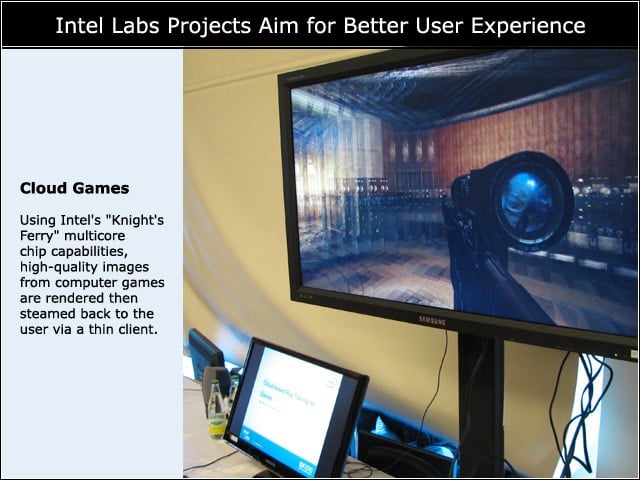
Using Intel’s “Knight’s Ferry” multicore chip capabilities, high-quality images from computer games are rendered then steamed back to the user via a thin client.
Internet TV
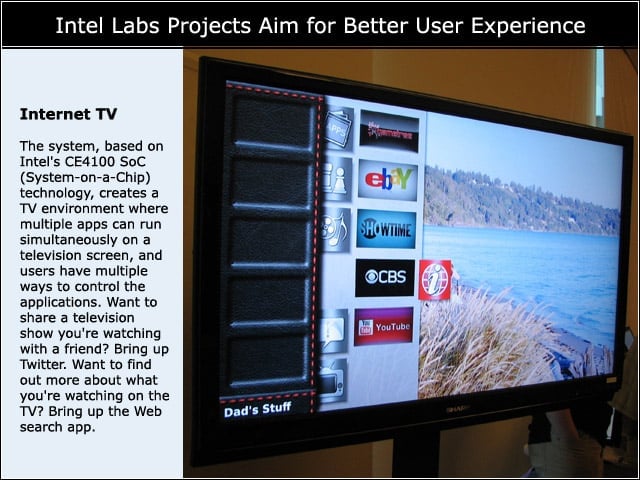
The system, based on Intel’s CE4100 SoC (System-on-a-Chip) technology, creates a TV environment where multiple apps can run simultaneously on a television screen, and users have multiple ways to control the applications. Want to share a television show you’re watching with a friend? Bring up Twitter. Want to find out more about what you’re watching on the TV? Bring up the Web search app.
ClassmateAssist
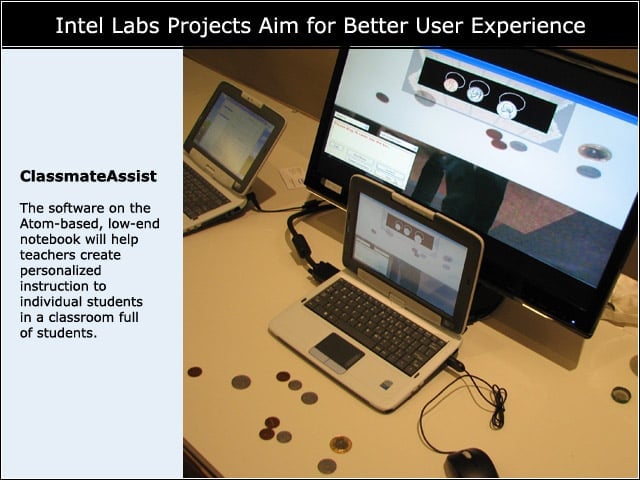
The software on the Atom-based, low-end notebook will help teachers create personalized instruction to individual students in a classroom full of students.