




China became the world’s leading smartphone market in early 2012, and last week IDC reported that smartphone shipments there have since grown by 117 percent year-over-year. By the end of 2013—thanks in part to Samsung, which also leads in device sales in China—the market share of smartphones with screens measuring 5 inches or larger is expected to exceed 20 percent.
The Asia-Pacific region on the whole is having a tremendous impact on the mobile industry. And the mobile industry, in return, is having profound social, economic and policy impacts on the region, the GSM Association (GSMA) said in a new report, released June 27 at the Mobile Asia Expo in Shanghai.
In 2012, 16 million jobs were created by the mobile industry and at points of sale, according to the report. By the end of 2012, 1.5 billion people were connected in the region, and by 2017, that figure is expected to reach 1.9 billion—which is nearly half the predicted global total of 3.9 billion.
In markets such as India and Bangladesh, mobile technology is connecting more people to the health care, education and financial resources they need, while in developed countries such as Japan and South Korea, the focus in on quality-of-life improvements like mobile banking, remote learning and remote health care.
Despite mobile’s already enormous impact, “We are now at the dawn of a far greater growth opportunity, and we urge regional governments and regulators to support mobile operators in meeting that full potential,” Anne Bouverot, director general at GSMA, said in a statement.
“Making the right decisions around regulatory frameworks and spectrum availability,” she added, “will encourage the mobile industry to continue investing in expanding and upgrading services across the region.”
By the end of 2012, the mobile industry had invested $80 billion in mobile infrastructure in the Asia-Pacific, generated $1 trillion in GDP for Asia-Pacific economies and contributed $100 billion to public funding, says the report.
Telecoms are expanding their business models and new players are joining the market, and the result is that connections are growing—3G and 4G connections are expected to grow 17 percent every year over the next five years—and prices are falling. The average monthly cost in 2005 was $28.80, while in 2012 it was $19.70.
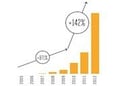
Further, while voice traffic is up 6 percent, data traffic has increased by 142 percent annually.
With so much fast growth, however, regulation is needed to ensure that citizens “reap the benefits,” the GSMA insists.
The organization is calling for “consistent and fair” regulatory frameworks and taxation policies that incentivize investment in mobile and spur economic growth.
Further, it advises that regional governments follow the example of International Telecommunication Union (ITU) standards on the amounts and types of spectrum bands being made available to carriers as they work to upgrade to 3G or 4G networks.
“Mobile is already a significant engine for growth and welfare improvement throughout the Asia-Pacific region. Now, there is a clear opportunity for mobile to further transform lives, create new businesses and drive additional economic growth,” said Bouverot.
“If regulators are focused on creating environments that encourage further investment, from both traditional and new mobile players,” she continued, “then this opportunity is well within the reach of all countries within the region, regardless of their level of economic development.”