




- NASA Outsourcing Space Station Transport to SpaceX
- The SpaceX Launch Vehicle
- The SpaceX Merlin Engine
- Test Firing of the Falcon 9
- Reigniting of the Second Stage Engine
- Dropping the Nose Cone
- The Dragon Capsule
- The Dragon Capsule in Cargo Mode
- The Dragon Capsule in Crew Configuration
- Approaching the International Space Station
- The Docked Dragon
- Dragons Return to Earth
NASA Outsourcing Space Station Transport to SpaceX
by Roy Mark
The SpaceX Launch Vehicle
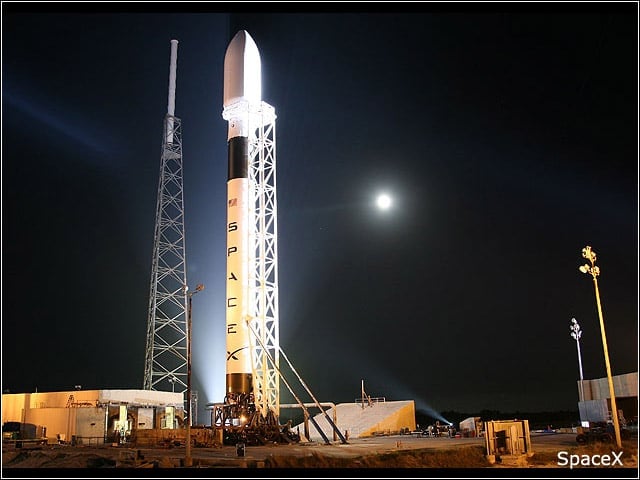
The Falcon is a two-stage, liquid oxygen and rocket-grade kerosene powered launch vehicle. The Falcon’s tank walls and domes are made from aluminum lithium alloy. The interstage, which connects the upper and lower stage for Falcon, is a carbon fiber aluminum core composite structure.
The SpaceX Merlin Engine
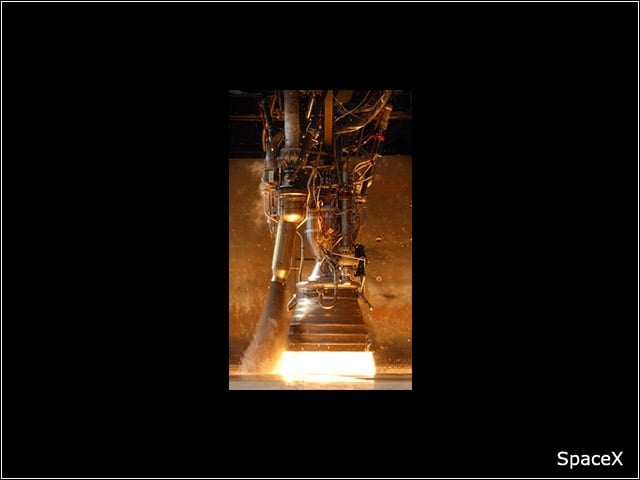
According to SpaceX, its Merlin engine is the highest performance gas generator cycle kerosene engine ever built, exceeding the Boeing Delta II main engine, the Lockheed Atlas II main engine and the Saturn V F-1.
Test Firing of the Falcon 9
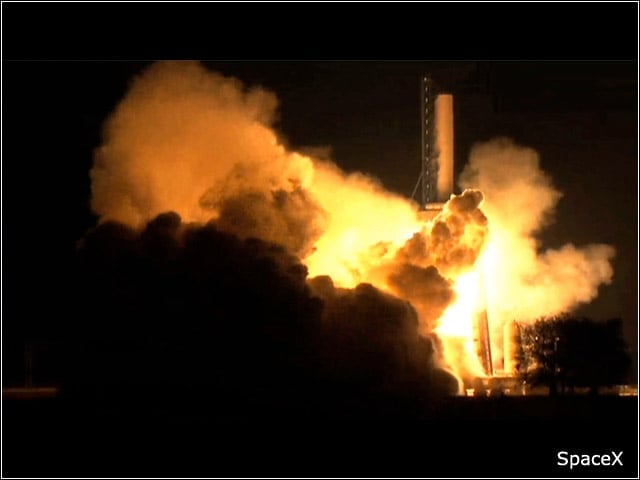
On Nov. 22, 2008, SpaceX successfully completed a full mission duration test firing of the Falcon 9 first stage lasting nearly three minutes. The nine Merlin engines produced 855,000 pounds of thrust and consumed more than a half-million pounds of liquid oxygen and rocket-grade kerosene during the test.
Reigniting of the Second Stage Engine
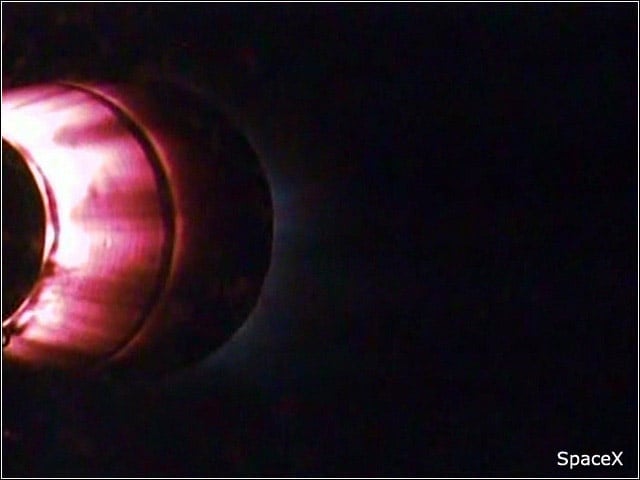
After traveling half way around the Earth, a Falcon 1 Flight 4 vehicle flies over the Atlantic Ocean on the night side of the Earth and reignites the Kestrel second-stage engine. Restarting the Kestrel engine raises and circularizes the orbit to an ellipse of 621 by 643 kilometers, where it will remain for 10 years or longer.
Dropping the Nose Cone
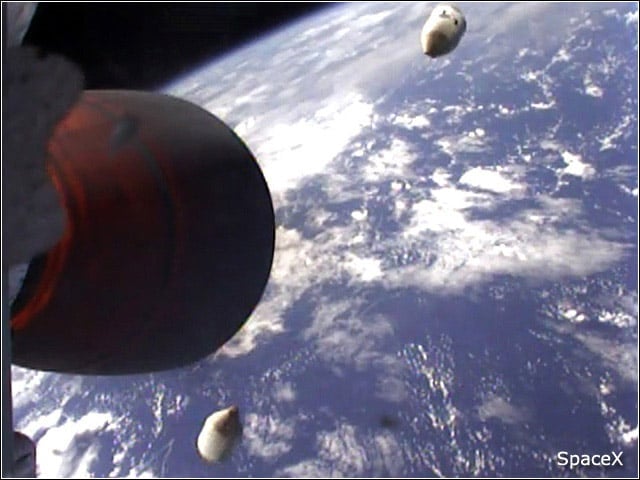
The two halves of the fairing (nose cone) of the SpaceX Falcon 1 Flight 4 vehicle fall back toward Earth. As the vehicle now travels in the vacuum of space, it no longer requires the streamlining provided by the fairings.
The Dragon Capsule
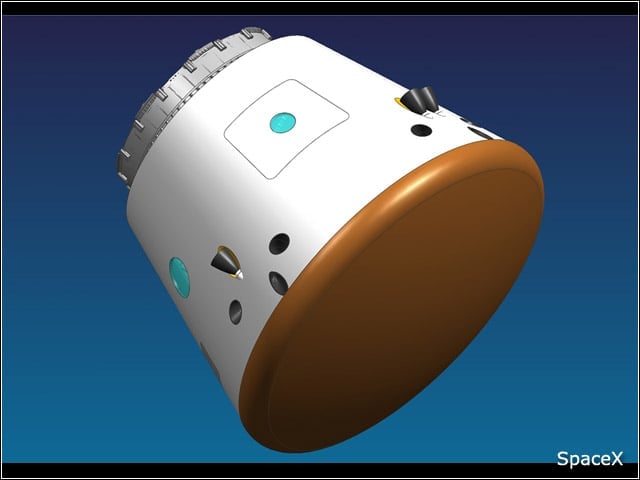
The Dragon capsule is comprised of three main elements: the nose cone, which protects the vessel and the docking adaptor during ascent; the Pressurized Section, which houses the crew and/or pressurized cargo; and the Service Section, which contains avionics, the RCS system, parachutes and other support infrastructure.
The Dragon Capsule in Cargo Mode
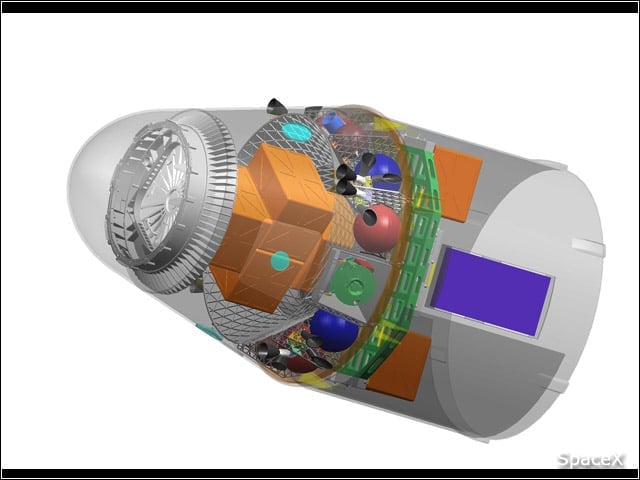
For cargo launches, the inside of the capsule is outfitted with a modular cargo rack system designed to accommodate pressurized cargo in standard sizes and form factors. For crewed launches, the interior is outfitted with crew couches, controls with manual override capability and upgraded life-support.
The Dragon Capsule in Crew Configuration
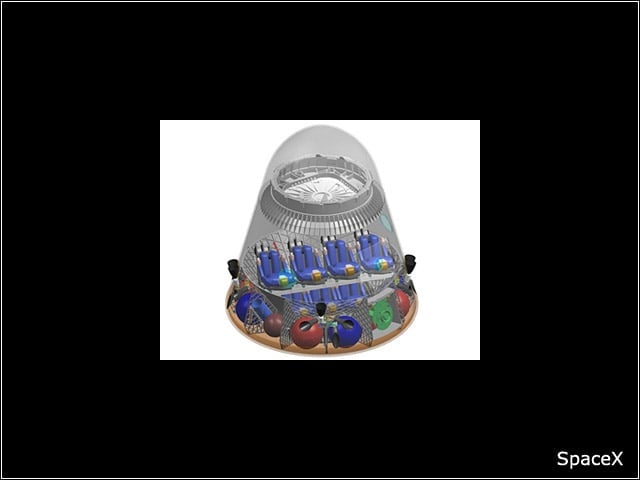
To ensure a rapid transition from cargo to crew capability, the cargo and crew configurations of Dragon are almost identical, with the exception of the crew escape system, the life-support system and onboard controls that allow the crew to take over control from the flight computer when needed.
Approaching the International Space Station
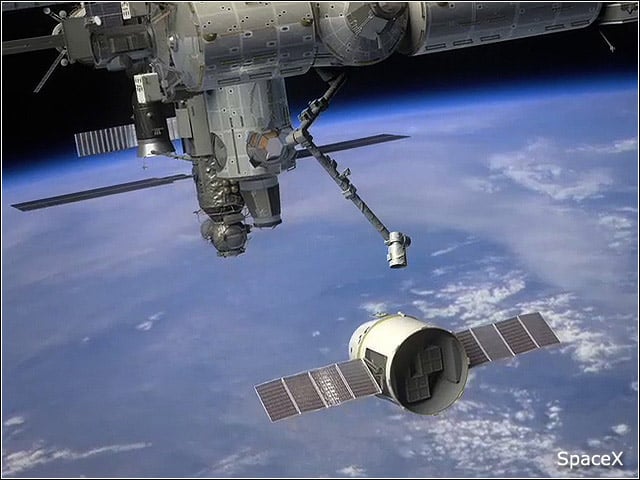
With solar wings deployed, the Dragon capsule approaches the International Space Station. The ISS mechanical arm will maneuver the Dragon into full docking.
The Docked Dragon
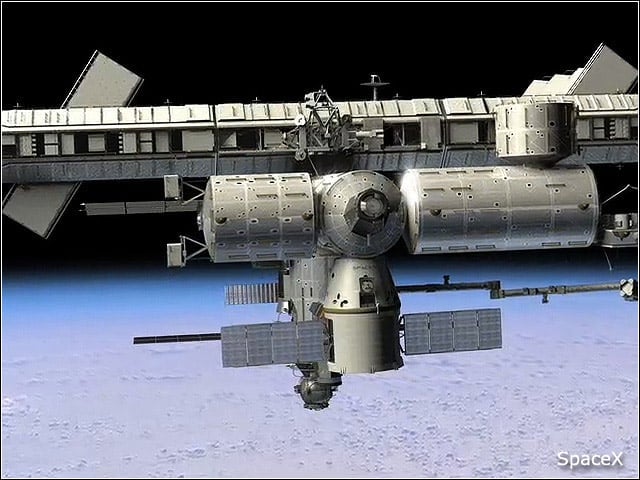
Dragon berthed at International Space Station.
Dragons Return to Earth
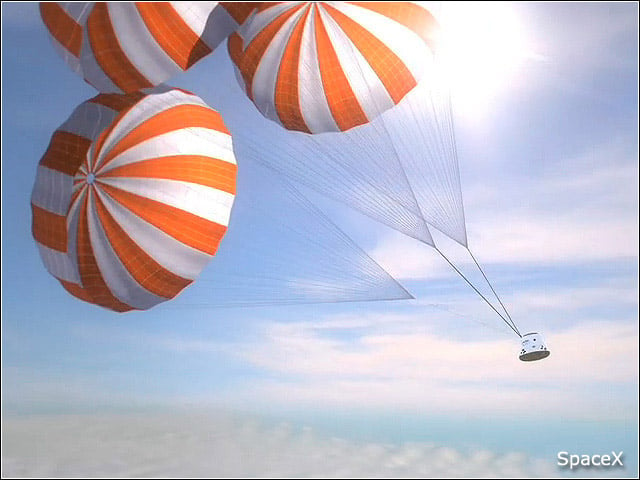
Water landing of Dragon Capsule.