




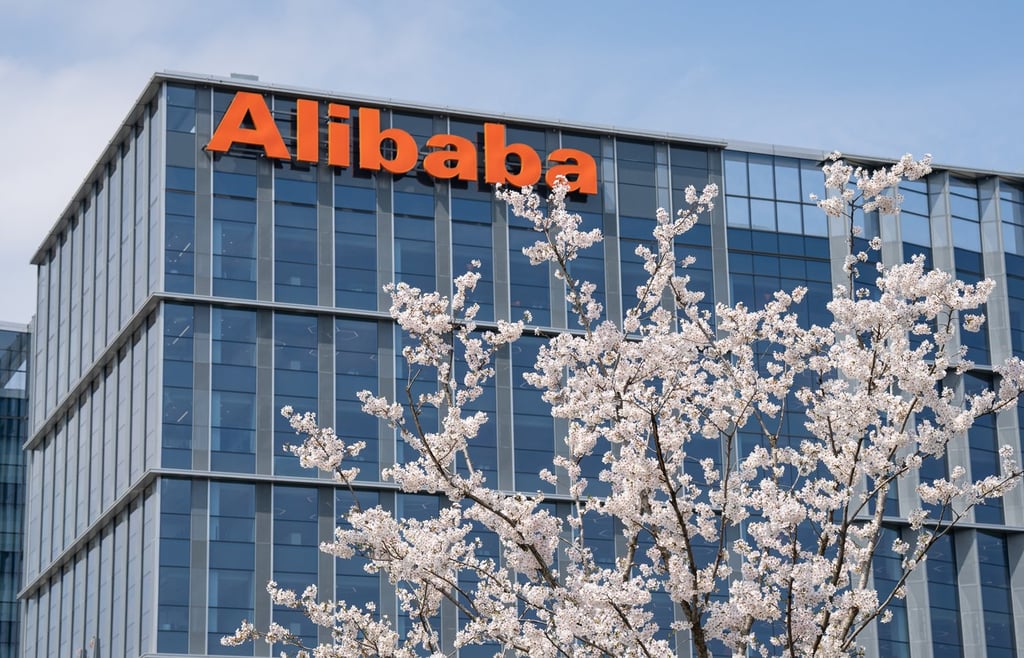
Chinese retail giant Alibaba Group Holding has seen its AI-related cloud product business grow so sharply that it declared hyper-advanced machine intelligence a top priority. On February 21, the company posted triple year-over-year growth with strong momentum going forward, and Alibaba stock increased by 12% in American markets.
“Looking ahead, revenue growth at Cloud Intelligence Group driven by AI will continue to accelerate,” Alibaba Group CEO Eddie Wu said in a press release. “We will continue to execute against our strategic priorities in e-commerce and cloud computing, including further investment to drive long-term growth.”
Where does AGI fit in?
According to Bloomberg, Wu told investors that AGI is Alibaba’s primary objective now. In a press release, he said he wants the company to prioritize AI, cloud infrastructure, research and development, and artificial general intelligence (AGI) distribution channels.
“If AGI is achieved,” he said, “the AI-relevant industry will very likely become the world’s largest industry.”
AGI’s definition is slightly murky. It can refer to hypothetical AI with human-like cognition and flexibility, a Star Trek “Computer” of the future, or AI companies may use it as shorthand for a breakthrough in more practical, capable artificial intelligence. OpenAI, which has as its mission statement the goal to develop AGI for the benefit of humanity, recently defined AGI in monetary terms, as a technology that can produce $100 billion in annual earnings for them. Wu did not specify the definition Alibaba uses.
Qwen model benefits from open-source proliferation
Alibaba’s premiere artificial intelligence model is Qwen, an open-source model that has performed well on generative AI leaderboards. Alibaba attributes its wide adoption in part to the fact that it is open source.
The company is a relatively established player in the rapidly developing Chinese generative artificial intelligence market. It was founded in 1999 as an e-commerce platform similar to eBay or Amazon. Now it is approaching generative AI alongside Chinese companies like DeepSeek.
Read about the other top AI companies defining the technology and developing new applications for it across industries.