




There is a security gap lurking within cloud-based Software-as-a-Service (SaaS) applications that could be exposing enterprises to risks that they don’t know about, according to AppOmni co-founder and CEO Brendan O’Connor.
AppOmni officially emerged from stealth on April 3, bringing with it a new model for securing Cloud SaaS applications from potential data losses and breaches. O’Connor is no stranger to the world of SaaS having spent nearly a decade as Salesforce’s CSO helping to maintain trust. AppOmni’s platform hooks into SaaS platforms at the API level, gaining a core understanding of who is asking for what data and how data is used.
“What I saw from my time at Salesforce and ServiceNow is that generally SaaS companies are selling to the line of business and the security team doesn’t quite understand how SaaS security works,” O’Connor told eWEEK. “And it is the line of business that tends to be managing all the security controls and configurations.”
O’Conner said that the SaaS platforms themselves are often properly secured, but the risk comes from users and how organizations configure their own services. Adding to the complexity of SaaS security is the fact that each application has its own way of accessing data, its own sets of API’s and schema, security controls and permissions. O’Connor noted that not of the SaaS security models really looks like the Linux, Windows or Mac security models that people are used to.
“We have identified thousands of sites that are unintentionally leaking data through cloud API’s and it’s not a failing of the SaaS provider,” O’Connor said. “It’s someone that overprivileged an API that’s publicly exposed.”
How AppOmni Works
To properly understand what’s going on with a SaaS application, there is a need to understand the cloud APIs that enable it. Application Programming Interfaces (APIs) are the core computing construct that enables applications to extend out to various services and interface with different capabilities.
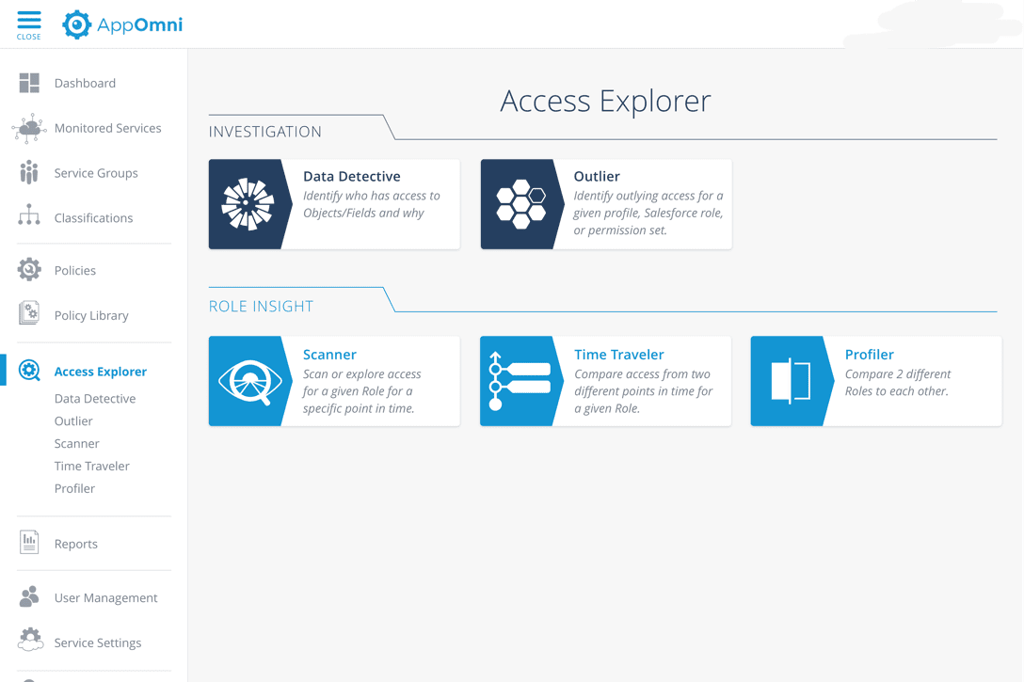
“We deeply understand cloud APIs, and the underlying configuration settings and schema of SaaS applications,” O’Connor said. “We build 360 degree access rights models, and we can conclusively and definitively answer, who has access to what piece of data and why do they have that access.”
With AppOmni, the SaaS provider’s API can be scanned either as an authenticated user or even just from the public internet, in order to gain insight into what data is available. O’Connor said that understanding API security is somewhat different that what organizations see through their own browser interfaces at the presentation layer of an application.
“Someone can confuse what they see at the presentation layer with what’s actually happening at the API or data access layer,” he said. “They may only see five fields on a screen, but really, that API has privilege to 50 fields and they’re all read and writeable.”
O’Connor explained that a traditional web application vulnerability scanner looks at the presentation layer, for flaws like SQL Injection and Cross Site Scripting (XSS), but that’s not what AppOmni looks at. In his view, most SaaS providers already do a good job of protecting against web application layer issue.
“We aren’t looking at vulnerabilities in the web or HTML or JavaScript layer,” he said. “We’re looking at identifying a misconfiguration at the API or data access layer.”
SaaS applications and their users are not static entities, which is why the AppOmni system employs a continuous monitoring approach. O’Conner said that AppOmni is always on, looking to identify deviations from policy and data leaks that have been exposed to the public internet. He explained that the system can be integrated with an existing workflow an organization has in place for security, including the use of a Security Information and Event Management (SIEM) platform. AppOmni also integrates a controls mapping capability to help organizations align their SaaS usage with the controls needed for different regulatory compliance efforts.
“We think that SaaS is the preferred delivery model of the present and future for enterprise software and we want to be there to help customers take full advantage of software as a service and still maintain the level of security that they expect,” O’Connor said.
Sean Michael Kerner is a senior editor at eWEEK and InternetNews.com. Follow him on Twitter @TechJournalist.