




- How App Install Advertising Fraud Has Become a Costly Problem
- Fraud Leads to $300M in Losses
- Fraudsters Prefer Android Over iOS
- Older OS Versions Have Much Higher Fraud Rate
- App Fraud Install Rates Vary by Country
- App Install Fraudsters Use the Cloud
- Fraudulent App Installs Are Persistent
- Fraudulent App Installs Are Engaged
How App Install Advertising Fraud Has Become a Costly Problem
An increasingly popular form of online advertising are ads whose goal is to get users to install apps. Fraud is a big problem in the app install advertising world, with losses as high as $300 million, according to a DataVisor report issued on Aug. 23 titled The Underworld of App Install Advertising. The report also found that fraudsters are more likely to use Android devices than Apple iOS to execute app install fraud. The age of the OS matters too: Versions of iOS and Android that were released more than three years ago have more than twice the fraud rate of more recent releases. The new report is based on data collected from the DataVisor Global Intelligence Network, which analyzed 140 million app installs and 11 billion user events between January and May 2017. In this slide show, eWEEK looks at some of the highlights from DataVisor’s The Underworld of App Install Advertising report.
Fraud Leads to $300M in Losses
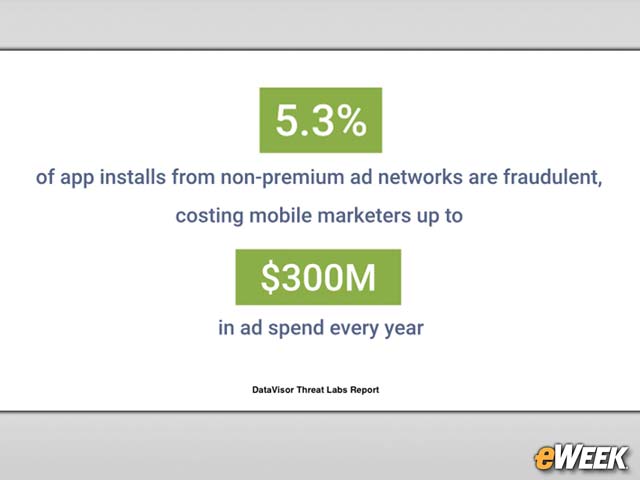
According to DataVisor’s analysis, 5.3 percent of app installs from non-premium ad networks are fraudulent. All that fraud has a cost, which DataVisor estimates at $300 million per year.
Fraudsters Prefer Android Over iOS
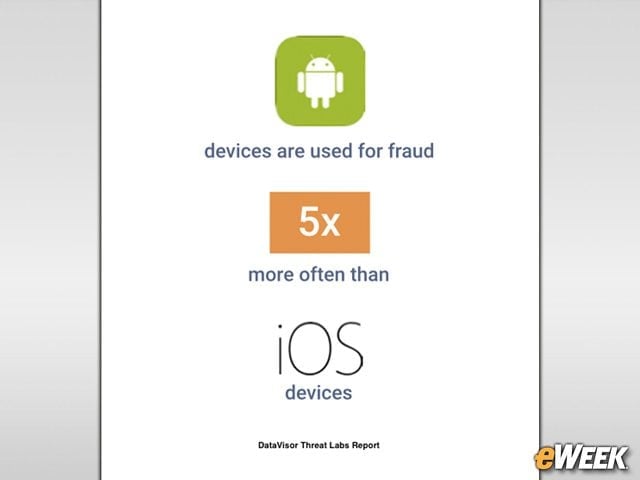
Fraudsters are five times more likely to use Android devices rather than iOS devices, according to DataVisor.
Older OS Versions Have Much Higher Fraud Rate
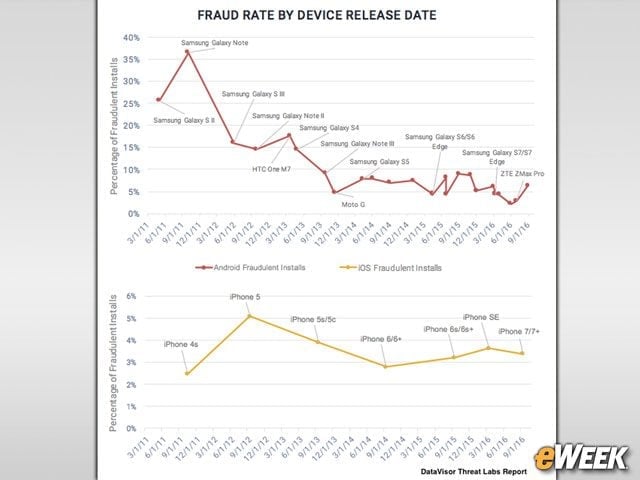
Devices running Android or iOS versions that were released more than three years ago have a 2.5x higher fraud rate than newer devices with updated operating systems.
App Fraud Install Rates Vary by Country
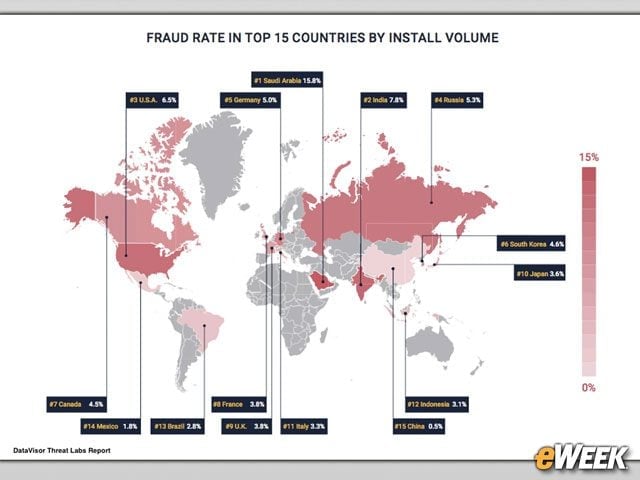
The top country in the world for app install fraud was Saudi Arabia at 15.8 percent. In contrast, the app install fraud rate in the U.S. was reported to be 6.5 percent.
App Install Fraudsters Use the Cloud
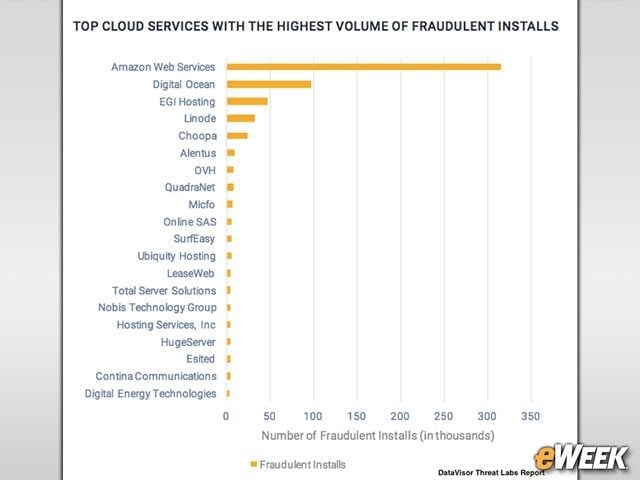
The cloud is commonly used by app install fraudsters, with Amazon Web Services topping the list of cloud services with the highest volume of fraudulent installs.
Fraudulent App Installs Are Persistent
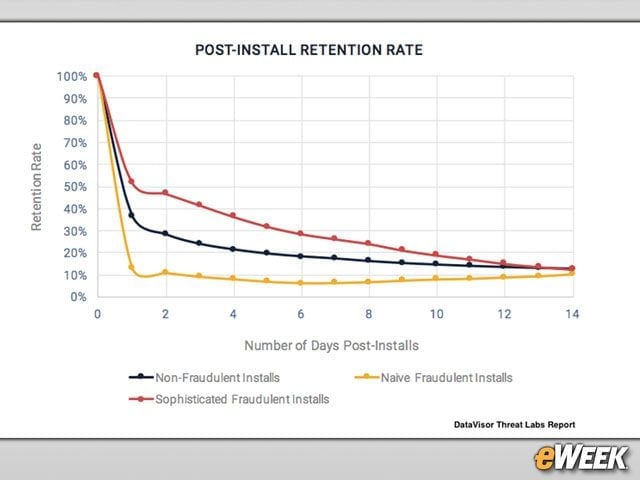
Rather than just simply install an app and then delete it, app install fraudsters are now increasingly using sophisticated techniques to appear more like regular, non-fraudulent users. Among the techniques measured by DataVisor is the post-install retention rate, which measures how long an app remains installed. DataVisor found that 29 percent of fraudulent installs have Day 2 retention events and 18 percent have Day 7 retention events.
Fraudulent App Installs Are Engaged
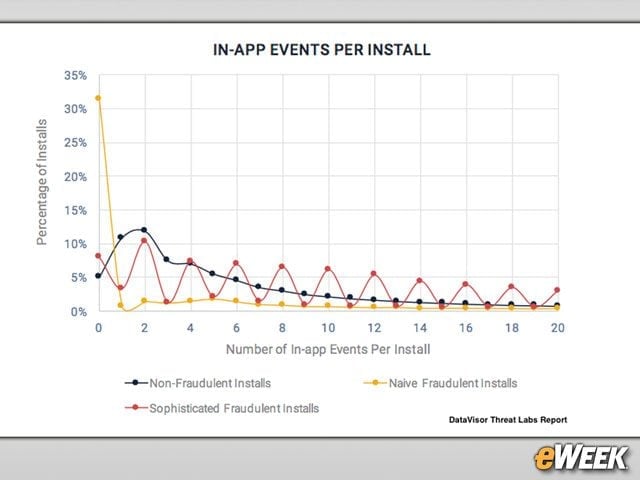
Looking beyond just post-install retention, DataVisor also discovered that fraudulent app installs appear to look genuine by generating in-app events. With the in-app events, it appears as though the fraudulent app is clicking, opening or performing other actions with the app.