




- Myth 1: I Will Know When I Am Infected (93 Percent)
- Myth 2: Free Security Software Is as Good as Paid (83 Percent)
- Myth 3: Malware Comes From Email Attachments (54 Percent)
- Myth 4: Just Going to a Website Cant Infect You (48 Percent)
- Myth 5: Malware Comes From Illegal File Sharing Sites (48 Percent)
- Myth 6: General Audience Sites Are Safer Than Adult Content (37 Percent)
- Myth 7: Firewalls Stop Drive-by Downloads (26 percent)
- Myth 8: Stay Safe by Not Visiting Risky Sites (13 Percent)
- Myth 9: Dont Open Files (22 Percent)
- Myth 10: Infected USB Sticks Are Most Prevalent (13 Percent)
- Myth 11: Consumers Are Safe (8 Percent)
Myth 1: I Will Know When I Am Infected (93 Percent)
Almost all Internet users around the world are convinced they will know when their computer is compromised, when in actuality, modern malware is stealthy and hard to detect.
Myth 2: Free Security Software Is as Good as Paid (83 Percent)
Most users feel there are no specific differences between paid security software and free antivirus applications, not realizing they don’t get Web filtering, anti-spam or behavior-based analysis with the free tools.
Myth 3: Malware Comes From Email Attachments (54 Percent)
A little over half of users still believe that email attachments are the primary distribution mechanism for malware. While it’s still a problem, the biggest problems nowadays are emails with links to malicious Websites.
Myth 4: Just Going to a Website Cant Infect You (48 Percent)
Almost half of Internet users believe it is necessary to actually do something on a rogue Website to be infected, when many attacks can trigger drive-by downloads just by loading the page.
Myth 5: Malware Comes From Illegal File Sharing Sites (48 Percent)
While a large volume of malware is distributed by torrent sites and other peer-to-peer networks, they aren’t the the only sites that contain malware. The majority of malware comes from normal-looking Websites.
Myth 6: General Audience Sites Are Safer Than Adult Content (37 Percent)
Users tend to think that adult content sites are rife with cyber-criminal activity even though they are usually better designed and much more secure than hobby and leisure sites. The industry tends to protect their customers better.
Myth 7: Firewalls Stop Drive-by Downloads (26 percent)
While firewalls are important for security, it can’t detect a drive-by download because it’s concealed among normal Web traffic. A firewall also can’t detect malware trying to phone home.
Myth 8: Stay Safe by Not Visiting Risky Sites (13 Percent)
Users often blame the victim for getting infected by going to “risky” sites. Cyber-criminals don’t limit their attacks to certain sites, but compromise whatever yields the most victims, even highly trusted sites.
Myth 9: Dont Open Files (22 Percent)
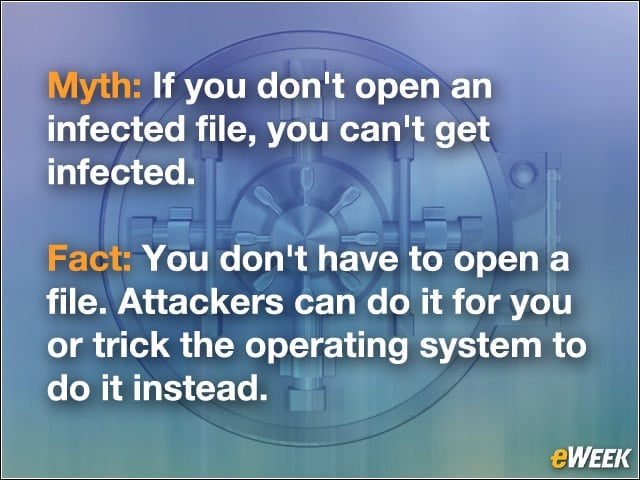
Many users think you have to open an infected file to be compromised. That’s true in most cases, but attackers can also exploit existing security holes to remotely execute a file without the user’s intervention.
Myth 10: Infected USB Sticks Are Most Prevalent (13 Percent)
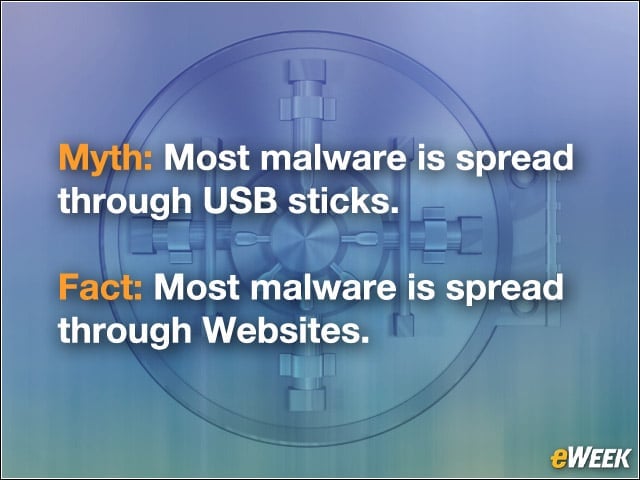
While it was true at one point, now that autorun is not the default setting on most modern systems, this is no longer the most common method of infection. Websites are.
Myth 11: Consumers Are Safe (8 Percent)
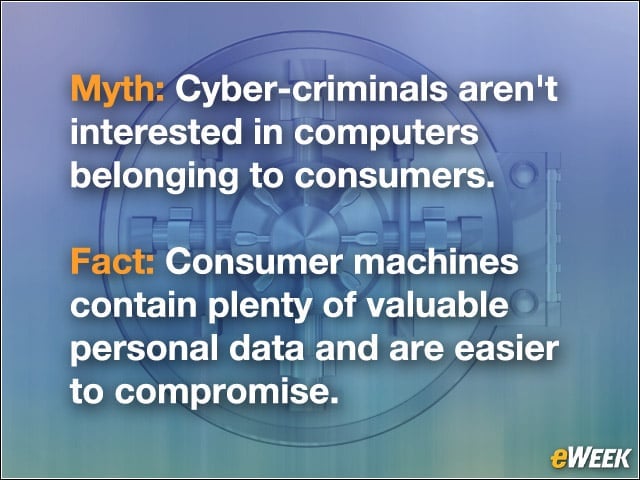
Thankfully not many users believe this myth. While criminals are interested in corporate networks, all users are fair game and consumer computers contain credit card numbers and make great zombies.