




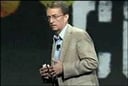
The VMware faithful gathered by the thousands today at San Francisco’s Moscone Center to hear CEO Pat Gelsinger detail the future of virtualization and their place in it, during the company’s 10th annual VMworld event. During his keynote, Gelsinger (pictured) announced new server, storage and networking virtualization solutions.
Gelsinger’s first appearance as the CEO of VMware at a VMworld event was in 2012 when he reversed course on his company’s ill-advised attempt to charge for virtual RAM on its flagship vSphere offering. As he walked on to the stage for VMworld 2013, Gelsinger told the audience that the computing world is now entering a new mobile cloud era.
“Every human on the planet is interacting with millions of applications, and it’s all about IT as a service,” Gelsinger said. “IT must operate at higher and higher velocity, and simply put, the fastest will win.”
Gelsinger sees four key trends shaping everything that is going on in IT today. Those trends are social, mobile, cloud and big data. All those trends affect both consumer and business IT.
“There are more people, more apps and more data, placing huge demands on the infrastructure that you deliver,” Gelsinger said. “These trends and the pressure on IT are requiring you to build the future, cloud mobile era, but it also demands that you liberate resources from the client server world.”
In Gelsinger’s view, it is virtualization that is the technology that is positioned to build the right architecture for tomorrow and today. The VMware vision started with server virtualization, but it’s now a broader vision for a software-defined data center (SDDC). Gelsinger said that the SDDC starts with compute, and includes storage and networking as well as management automation.
Gelsinger said that some people have said that virtualized data center workloads are already at the saturation point. He doesn’t agree.
“We’re not done until every app, every database, every big data application and every physical server becomes replaced by virtual infrastructure,” Gelsinger said. “That is our passion, and we will continue to drive compute virtualization until it is 100 percent virtualized for the data center.”
A key part of VMware’s strategy to completely virtualize the network is its new NSX network virtualization technology. Martin Casado, CTO for VMware’s networking division described NSX as the equivalent of VMware’s ESX. ESX is VMware’s cornerstone server virtualization technology. The goal with NSX is to be able to carve up virtual physical networking assets in a similar fashion.
“Increasingly, the barrier to flexibility in data centers is the network,” Gelsinger said.
He added that while an administrator can spin up a virtual machine in a minute, getting the required networking configurations across a network will take significantly more time.
“We have been bound to the physical infrastructure—today that changes,” Gelsinger said.
OpenStack
Gelsinger also used his keynote as a platform to set the record straight about his company’s position relative to the open-source OpenStack cloud platform. He explained that OpenStack is a framework for assembling clouds that VMware also supports as a matter of customer choice. Gelsinger noted that many VMware customers choose to have a complete VMware stack, but others including service providers, tend to built their own clouds.
VMware’s component strategy enables VMware technologies to plug into and participate in an OpenStack cloud deployment. Gelsinger also stressed that his company is a leading member of OpenStack, particularly when it comes to networking. Dan Wendlandt, current leader of the OpenStack Neutron networking project, is a VMware employee.
In the final analysis, Gelsinger sees three core imperatives that are required for IT infrastructure. First is that virtualization extends to all of IT, not just server compute. Secondly, there is a need for IT management to give way to automation. Lastly, he stressed that the hybrid cloud is a powerful tool to deliver services.
Gelsinger told the VMworld audience that they are the ones that have been able to re-wire IT with scalability, cost savings and agility.
“While you’ve done incredible things, we are just getting started, you are poised to disrupt, to transform and to re-wire IT, again and again,” Gelsinger said. “You are champions.”
Sean Michael Kerner is a senior editor at eWEEK and InternetNews.com. Follow him on Twitter @TechJournalist.