






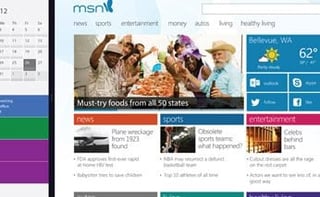

Two weeks after releasing the Windows 7 version of Internet Explorer 10 (IE10), Microsoft lifted a ban on Adobe Flash for IE10 on Windows 8 and Windows RT. Starting March 12, Flash content runs by default when users visit Websites that use it, with the exception of a small number of incompatible Websites.
In a March 11 IEBlog post, Rob Mauceri, group program manager for Internet Explorer, explained that most Flash-optimized sites now conform to the “Windows experience for touch, performance and battery life.” But some holdouts still exist, forcing the company to banish them to the “curated” Compatibility View (CV) list, which blocks Flash content on select sites. All sites will render in the Windows 8 desktop on IE regardless of whether they are on the CV list.
“Of the thousands of domains tested for Flash compatibility to date, we have found fewer than 4 percent [that] are still incompatible, in the most part because the core site experience requires other ActiveX controls in addition to Flash. With Windows 8 in the hands of customers and developers, we listened to feedback around the experience of Websites with Flash,” wrote Mauceri.
Taking a page from Apple’s playbook, Microsoft first opted to go “plug-in free” with IE10, the default browser on its tablet-friendly Windows 8 OS. In effect, Flash was out and HTML5 was in.
“Running Metro style IE plug-in-free improves battery life as well as security, reliability and privacy for consumers. Plug-ins were important early on in the Web’s history. But the Web has come a long way since then with HTML5,” explained Dean Hachamovitch, head of Microsoft’s Internet Explorer team, wrote in a 2011 blog post.
Since the iPad’s debut, several high-profile online properties have adopted HTML5 to deliver rich Web experiences. Early supporters include CNN; The New York Times; Technology, Entertainment and Design (TED); and the White House.
The Web standard arguably got its biggest boost courtesy of Google, when the search giant announced HTML5 video support for YouTube videos. Currently, users can view most videos on the site, effectively bypassing the Flash plug-in, if they opt in to the YouTube HTML5 trial.
Apparently pleased by Adobe’s efforts to optimize Flash for the touch-enabled computing era, Microsoft is now enabling Flash support in IE10.
“For Windows 8, we worked with Adobe to include a version of Flash that is optimized for touch, performance, security, reliability and battery life. Adobe made substantial changes to the Flash player to align with the Windows 8 experience goals,” Mauceri wrote.
Yet, Microsoft is signaling that it’s not quite ready to give up on its plug-in free ambitions for IE and that Flash’s days on the Web browser may be numbered.
“For the development community, platform continuity and technology choice are important. Flash in IE10 on Windows 8 and Windows RT provides a bridge for existing sites to transition to HTML5 technologies where it makes sense and at a pace that is right for the experiences they want to deliver to their customers,” Mauceri added.