








IBM is bringing its enterprise artificial intelligence assistant to IFTTT, paving the way for intelligent services that can do much more than tell users the weather or answer trivia questions, the companies announced on April 26.
Watson Assistant, formerly Watson Conversation, made its official debut on March 20 during IBM’s Think 2018 conference in Las Vegas. In addition to new analytics capabilities and features that allow developers to create more fluid and robust conversational interactions, the virtual assistant is now available in versions tailored to the automotive and hospitality industries.
IFTTT, short for “If This, Then That,” is a San Francisco technology firm whose web service enables users to automate tasks across various other services or cloud applications.
Using applets, each with a set of conditional commands, users can trigger a chain of actions like automatically adding new iOS contacts to one’s contact list on Google or use Google Assistant to post a note on Slack with one’s voice. So far, the platform has attracted 14 million consumers, 5,000 active developers and 75 million applets, according to IFTTT estimates.
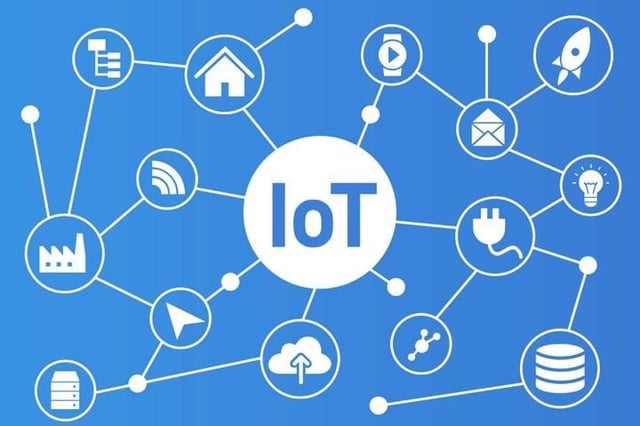
Now, the two companies are joining forces, helping their joint enterprise customers create new consumer experiences for the internet of things (IoT) era, Bret Greenstein, global vice president of IBM Watson IoT, told eWEEK.
The partnership was unveiled as part of a funding announcement made on April 26.
IFTTT raised $24 million in a round of financing led by Salesforce Ventures and backed by IBM, Chamberlain Group and Fenox Venture Capital. The fresh infusion of cash will be used to expand the IFTTT platform and add new hires. To date, the company has raised $63 million.
The new collaboration involves more than some surface-level integrations, Greenstein said. Reflecting the sophisticated use cases that IBM and IFTTT envision will someday emerge from the pairing, Greenstein said his company “deeply embedded the IFTTT platform in Watson Assistant.”
Although virtual assistants today are helpful in answering simple questions and completing basic tasks, IBM and IFTTT hope to usher in new intelligent services that can learn about their users over time and can deliver beneficial outcomes, often unasked.
“A true assistant needs context and automation,” Greenstein said, with Watson IoT providing the former and IFTTT supplying the latter. For example, a smart home solution built on the technology may alert a home owner if the front door has been unexpectedly unlocked based on the behavioral patterns and habits of the members of that household, all without having to set up an alert beforehand, he said.
Key to getting developers onboard is creating as open an ecosystem as possible, Greenstein said. The partnership is built on “the principles of openness, that every company can integrate with [Watson Assistant and IFTTT] without giving away their differentiation.”
Another major factor is data privacy. “All the data and interactions belong to our clients, not us,” Greenstein assured. Whereas other ecosystems may tap into the data they collect for marketing purposes, IBM is taking a completely hands-off approach in that regard, he said.