







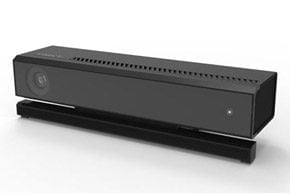
Windows users have only about a week to wait for the new Kinect to become available for Microsoft’s flagship operating system.
The company is currently taking preorders for the second-generation motion sensor at the official online Microsoft Store. According to the product listing, the device ships on July 15 and has a price tag of $199. By comparison, the original Kinect for Windows retails for $249.99, or $149.99 under the company’s student pricing plan.
Kinect for Windows v2 is being billed by Microsoft as a tool to help developers build natural interface apps. Instead of clicking a mouse, striking keys or tapping on a screen, users can interact with their devices using voice and gesture control, as is currently possible with Kinect-equipped Xbox One consoles.
Some developers already had a head start. In November, Microsoft announced that it had begun shipping Kinect for Windows v2 Developer Preview kits to “thousands” of select coders.
Kinect for Windows v2 is based on the sensor that was previously bundled with the Xbox One. The company began offering a version of the video game and digital media streaming device without Kinect on June 9, lowering its price to $399. Incidentally, it’s the same price as rival Sony’s best-selling PlayStation 4.
The new sensor hardware, a follow-up to the popular Kinect for the Xbox 360, looks nearly identical to the Xbox One version minus the branding. It sports 1080p video capture, improved skeletal tracking (25 joints versus 20 previously), an expanded field of view and active infrared (IR) capabilities for improved sensing in dark and challenging lighting conditions.
One major difference between the console and PC versions of the sensor is how they connect to the host device. Whereas the Xbox One version of the Kinect plugs into the console with a cable that provides both data connectivity and power, Kinect for Windows v2 requires a hub that links the device to a PC via a USB 3.0 connection. In addition, a power brick supplies the hub with power.
Kinect for Windows v2 “does not ship with any software,” noted Microsoft in its product description. “It is intended for use with the Kinect for Windows SDK 2.0 (licensed separately) and will operate only with applications developed for Kinect for Windows v2.”
Kinect requires some room, a few feet at least, between itself and a subject to work properly. Soon, Kinect developers may be able to leverage the hardware to get up close and personal.
Ben Lower, Kinect for Windows developer community manager, said in a statement that his group was “impressed by the tremendous interest in the experimental near-field firmware” they brought to a recent hackathon in New York City. “This firmware turns the Kinect for Windows v2 sensor into a near-field device that can be used at close range (from 10cm to 1m),” he said.