








What if the future of love is being engineered in China right now?
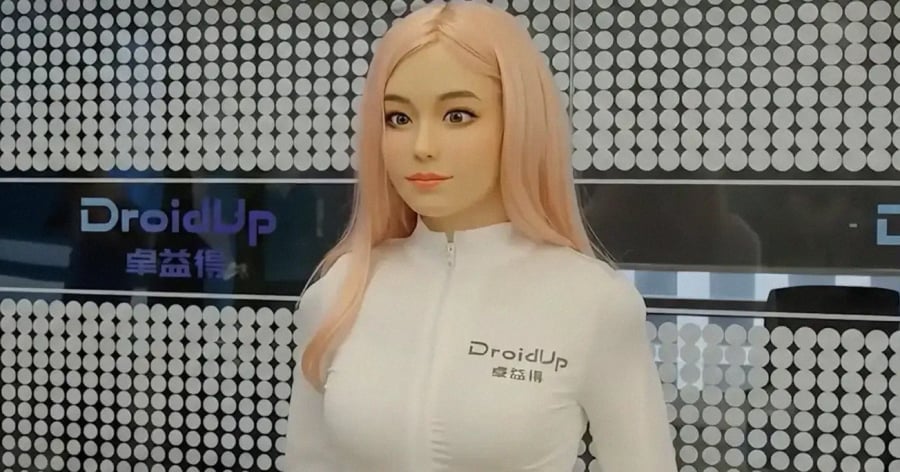
Things heated up this month in the rush to build the first humanoid robot with the debut of Moya, an approximately $170,000 AI-powered companion robot from Shanghai-based company DroidUp. Moya is not being positioned as a factory worker or logistics assistant, but as a lifelike social companion designed to interact, converse, and emotionally engage with humans.
Powered by a multimodal AI system, Moya the robot can process speech, facial expressions, and contextual cues in real time, enabling “her” to hold nuanced, extended conversations. Promotional videos showing these interactions quickly went viral across China, the US, and Japan.
Moya’s debut prompted both fascination and concern about what such machines could mean for the future of human relationships.
Build your own companion
DroidUp positions the “social companion robot” as aimed at reducing loneliness and assisting with daily life, but other reports paint a more provocative picture. A separate marketing narrative from DroidUp describes a highly customizable version of Moya as an AI “robot girlfriend,” complete with silicone skin, human-like warmth, and modular physical features.
The robot’s owners can reportedly tailor everything from hairstyle to body shape, while its surface temperature mimics that of a real human body, and its movements are claimed to be up to 90% similar to human motion.
This dual positioning in its advertising has amplified global debate and pushed Moya beyond a simple product launch into a whole new realm of cultural conversation.
The ethics of emotional machinery
People today are exhibiting many signs of loneliness and are already forming emotional attachments to AI through apps and chatbots. Moya takes that concept to the next level by giving those interactions a physical presence.
Of course, Moya’s release has sparked discourse. Policymakers and ethicists are increasingly questioning where the boundaries should be drawn regarding whether such technology supports well-being or encourages withdrawal from real human interaction, especially as robots become more convincing at simulating empathy and connection.
Breakthroughs in biomimetic robotics
Part of Moya’s convincing design is thanks to how much the underlying technology has improved, utilizing a completely different approach to building robots. Research from the Shanghai Engineering Research Center of Humanoid Robots highlights a shift toward biomimetic design that mimics the structure and movement of the human body.
Instead of rigid joints and motors, these robots use artificial muscles and flexible, spine-like structures that allow for smoother, more natural movement. The result is a more adaptive motion that looks more natural than mechanical, producing human-like movement previously unattainable.
A shift the industry can’t ignore
For many years, humanoid robots were primarily designed for industrial environments to perform repetitive or hazardous tasks. Moya suggests the industry is heading in a very different direction, where robots exist in personal spaces and daily life.
This change could open new market opportunities, with companies exploring how robots can provide support beyond physical labor.
However, this also introduces new risks, as regulatory frameworks for emotional AI are still in early stages, and public acceptance is far from guaranteed. This idea of machines designed to replicate human relationships not only challenges long-standing social norms but also raises complex legal and psychological questions.
The future of human-AI relationships
Right now, Moya’s high price tag keeps it inaccessible to the average consumer. Still, the significance lies in what Moya represents, as a convergence of advanced AI, lifelike materials, and human-inspired engineering that is pushing AI robotics into far more personal territory.
Whether Moya becomes a landmark success or a cautionary tale will depend on how consumers respond and how society chooses to regulate and integrate such technologies. What is already clear is that Moya has sparked a global conversation about the role of machines in our emotional lives.
Also read: China’s latest robotics push now stretches beyond factories, with Honor’s humanoid debut showing how fast embodied AI is moving into public view.