






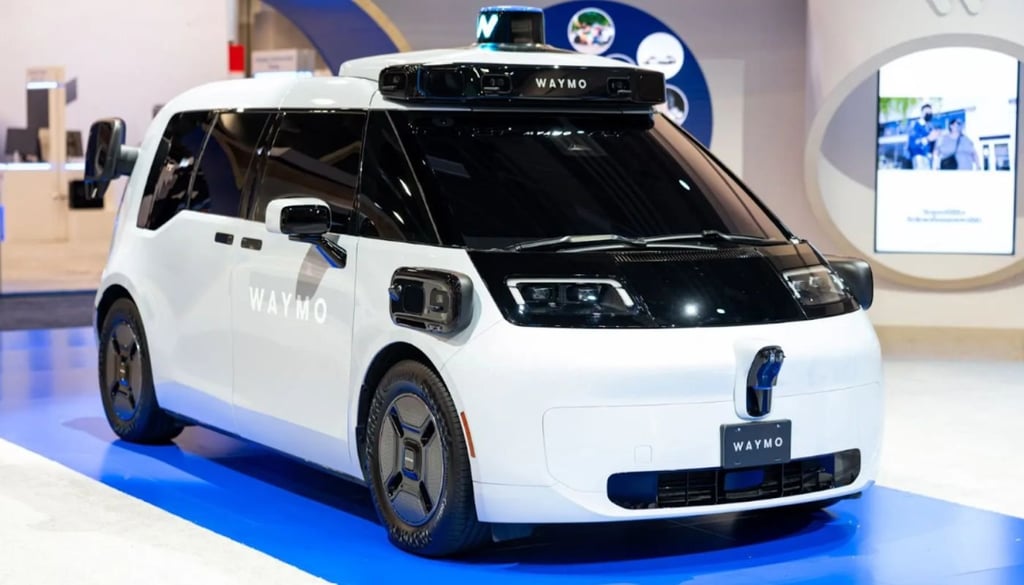


Waymo is putting its most advanced self-driving system yet on the road.
The Alphabet-owned company announced on Feb. 12 that it has begun fully autonomous operations with its sixth-generation Waymo Driver system. The new fleet, built on base vehicles from Chinese automaker Geely, represents the company’s most aggressive push yet to scale its technology while driving down costs.
“This latest system serves as the primary engine for our next era of expansion, with a streamlined configuration that drives down costs while maintaining our uncompromising safety standards,” Satish Jeyachandran, Waymo’s vice president of Engineering, said in a statement.
More eyes, fewer cameras
Waymo has actually managed to reduce the number of sensors on the Ojai while significantly increasing what the car can see.
The new system uses a “streamlined configuration” that cuts the sensor count by 42%. While the previous Jaguar I-PACE fleet used 29 cameras, the Ojai uses just 13. This is possible thanks to a new 17-megapixel imager that Waymo calls a “breakthrough in automotive vision technology.” These high-res cameras let the car see farther and more clearly with less hardware.
“While cameras on conventional cars can struggle with raindrops, road grime, and ice, our system features integrated cleaning systems to maintain visibility,” Jeyachandran explained. “These imagers allow the Waymo Driver to see around the vehicle with fewer cameras than if we used 5 or 8-megapixel sensors.”
The Ojai doesn’t just see better, it hears better, too. Waymo has long equipped its vehicles with External Audio Receivers, or EARs, strategically placed around the central perception dome. These help the Driver detect important sounds, such as approaching emergency vehicles and railroad crossings.
Thanks to these EARs, Jeyachandran explained, “the Waymo Driver can often hear and identify which direction a siren is traveling before it can even see it.”
The Geely factor and political headwinds
Waymo’s decision to use Chinese-built base vehicles has drawn scrutiny from some Republican lawmakers. At a Senate hearing last week, Sen. Bernie Moreno of Ohio pressed Waymo’s safety chief on the partnership.
“We’re locked in a race with China, but it seems like you’re getting in bed with China,” Moreno said, according to CNBC.
Waymo spokesperson Sandy Karp clarified to CNBC that the company will not provide “any access to its closely-held autonomous driving technology, sensor data, nor any rider information” to Zeekr, the Geely subsidiary supplying the base vehicles. Karp emphasized that Zeekr provides only the base vehicles, with Waymo installing its autonomous driving technology in the cars in the US.
From employee rides to public roads
The employee launch in San Francisco and Los Angeles follows Waymo’s established pattern of cautious, staged deployment. The company plans to gradually expand to new cities to open rides to the public later this year.
The sixth-generation system will also work with robotaxis built on the Hyundai Ioniq 5, and Waymo’s existing Jaguar I-PACE vehicles will continue running on fifth-generation technology.
Competitive pressure
Waymo’s next-generation rollout comes as rivals scramble to catch up.
Amazon-owned Zoox and Tesla are testing their systems but don’t yet offer widespread driverless ride-hailing. Meanwhile, Chinese companies like Baidu’s Apollo Go and WeRide have been expanding abroad, with Uber recently launching a robotaxi service in Abu Dhabi in partnership with WeRide.
Meanwhile, the company continues facing regulatory scrutiny. The National Highway Traffic Safety Administration recently opened an investigation into a January incident where a Waymo vehicle struck a child near a Santa Monica elementary school. The agency is examining whether Waymo “exercised appropriate caution” given the school zone location.
Plus, catch how Waymo just closed a massive funding round that more than doubled its valuation and supercharged plans to scale its autonomous robotaxi fleet globally.