






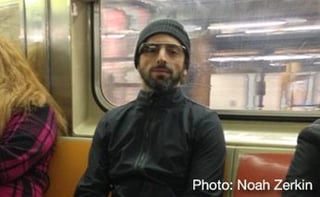

Google Glass has been making headlines since last June, but the search giant is continuing to give potential users a clearer vision into what they can actually do with the innovative, wearable computer by putting several potential third-party apps on display at the South by Southwest (SXSW) conference.
In a demonstration at SXSW, several cool Glass apps were unveiled, including a news app that delivered headlines and photos from The New York Times, an email app and a note-creation app for Evernote, according to a March 11 story from ABC News.
“It’s all about the ability to have it there when you want it and out of the way when you don’t,” Timothy Jordan, a Google Glass spokesman, said during the presentation, according to ABC News.
Jordan’s demonstration also included details on how users could have the information from the apps read to them by Glass, according to the report.
Using the nascent Evernote for Glass app, Jordan took a photo of the audience and then posted it to his Evernote account, ABC reported. Jordan also demonstrated the use of the Path social network as well as how a Gmail account could be used.
“Glass is in its early days,” he said as he completed his presentation, according to ABC. “We are just getting started.”
The basic components of Glass feature an Android-powered display, a tiny Webcam, a GPS locator and an Internet connection node built in to one side of a pair of glasses. The glasses are lightweight and may or may not have lenses.
So far, Glass has only been available to developers who attended the annual Google I/O conference in June 2012, when the device was unveiled officially. Those developers were given the first chances to buy the initial Explorer Edition of the product for $1,500 each when it was offered for sale at the June 2012 conference. The first consumer versions are not expected to hit the market until 2014, according to Google.
In a related report away from SXSW, Google has confirmed that prescription lenses will eventually be offered for users who need them to use Google Glass.
“One of the questions we hear the most is whether there will be a prescription solution for Glass,” the Glass team wrote in a March 12 post on the Project Glass Google+ page. “The short answer is: yes!”
For potential buyers and users of Glass, that is sure to be a huge boon.
“The Glass design is modular, so you will be able to add frames and lenses that match your prescription,” the post stated. “We understand how important this is, and we’ve been working hard on it.”
That development apparently is continuing. “We’re still perfecting the design for prescription frames,” the post explained. “Although the frames won’t be ready for the Explorer Edition’s release, hang in there—you can expect to see them later this year.”
Even before Google Glass has hit the market, rumors of the next generation of the product already started showing up in February. The initial reports, based on a purported patent application, call for version 2 to work with both of the wearer’s eyes using specialized lasers that would provide a dual-eye image, rather than the original version’s one-eye display.
In February, Google also announced that it would expand its Google Glass testing pool to get more testers and collect additional input for the still-evolving project. The company invited interested applicants to submit proposals for a chance to buy an early model and become a part of its continuing development.
As part of the expanded testing program, Google also unveiled some cool new details about Glass through a brief video that explores some of its early capabilities.
Google recently held two “hackathon” events in New York City and San Francisco as part of its “Glass Foundry” program to collect developer input for the devices with an emphasis on developing the Google Mirror API. Attendees were given access to a Glass device for use and testing.
Google also recently revealed that the Glass devices will transmit sound to its users via vibrations through human bones rather than relying on traditional speakers.