







Nvidia officials are getting ahead of what promises to be a very mobile-focused Consumer Electronics Show with the unveiling of the fourth generation of the company’s Tegra mobile processor.
During a pre-CES event Jan. 6, Nvidia CEO Jen-Hsun Huang introduced the Tegra 4—along with the vendor’s first-ever gaming console, code-named Shield—a quad-core chip that he said is the world’s fastest mobile processor and which offers improved graphics and Web browsing.
During his presentation, Huang said that the Tegra 4 system-on-a-chip (SoC) is “flooded with GPU cores.” The chip, which had been known by the code name Wayne, comes with 72 of Nvidia’s GeForce graphics cores and offers six times the GPU capabilities of Nvidia’s current Tegra 3 processors, which will bring greater screen resolution, which is important for gaming systems, notebooks, smartphones and tablets.
The CPU core is based on ARM Holding’s Cortex A-15 design, which Nvidia officials said offers 2.6 times faster Web browsing and improved app performance, and fits in with Nvidia’s 4-Plus-1 energy-efficient architecture. Introduced last year in the Tegra 3, the architecture enables a fifth core to run workloads that require less processing power than what is offered in the other four cores.
The chip uses up to 45 percent less power than the Tegra 3, and offers up to 14 hours of high-definition video playback on mobile phones.
“Tegra 4 provides enormous processing power and efficiency to power smartphones and tablets, gaming devices, auto systems and PCs,” Phil Carmack, senior vice president of the Tegra business at Nvidia, said in a statement. “Its new capabilities, particularly in the area of computational photography, will help improve a whole range of existing products and lead to the creation of exciting new ones.”
The chip’s Computational Photography Architecture fuses the processing capabilities of the GPU and CPU in the chip and a device’s image-signal processor in the camera to improve high dynamic range (HDR) images, which offer greater details in both bright and dark areas, according to Nvidia officials.
Nvidia officials did not go into great detail about the Tegra 4 during the pre-CES event, including when it would start appearing in devices, though they did say that the Shield console would be out sometime in the next few months.
The mobile chip space is becoming increasingly crowded, not only with various ARM partners—including Qualcomm and Samsung Electronics—who are churning out products, but also as Intel looks to push its x86-based Intel Architecture into the arena, through both its low-power Atom platform and Core chips.
Nvidia officials are looking to boost the profile of their SoCs with the Tegra 4, which includes the company’s 4G Long Term Evolution (LTE) Icera i500 modem in the chipset, which means consumers will not have to pay for a separate modem in their devices.
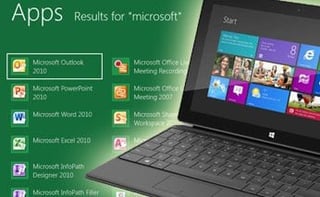
During the Jan. 6 presentation, Nvidia’s Huang reportedly showed a system running the Tegra 4 loading Web pages in about the half the time of a Google Nexus 10 tablet, a speed that could make the Nvidia chip attractive to system makers. Currently Nvidia SoCs can be found in a number of tablets, includes Google’s Nexus 7 and Microsoft’s Surface RT.