







Samsung Galaxy S III
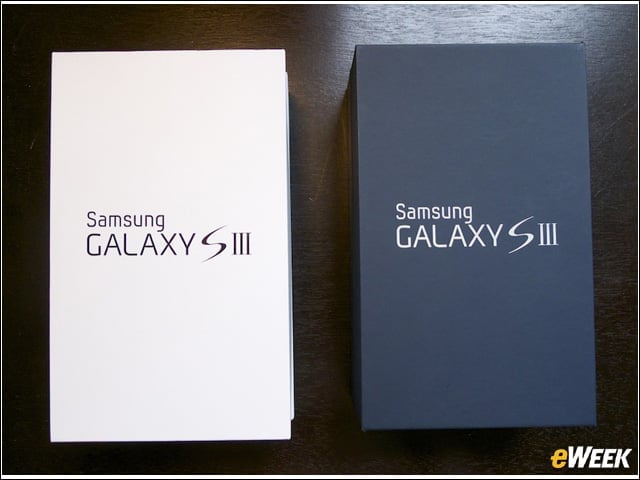
The Samsung Galaxy S III arrives in a rather involved box, whether it’s a Pebble Blue version from T-Mobile or a Marble White from AT&T.
AT&T, T-Mobile
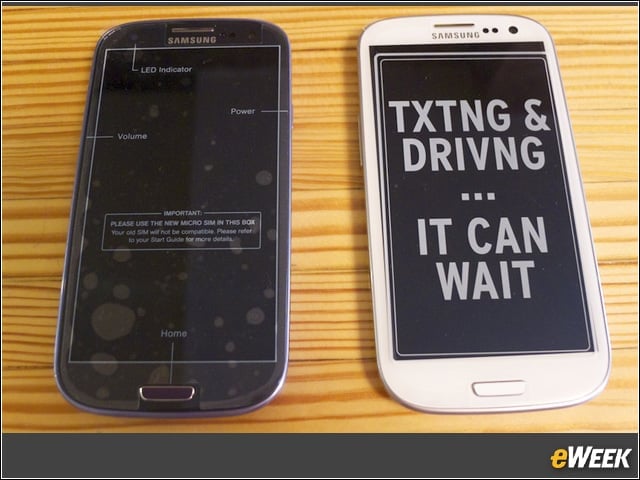
Out of the box, the touch of each carrier is lightly apparent. AT&T uses the protective sticker to further a safe driving campaign, while T-Mobile uses it to begin getting the user acquainted with the phone’s seemingly endless features.
Apps
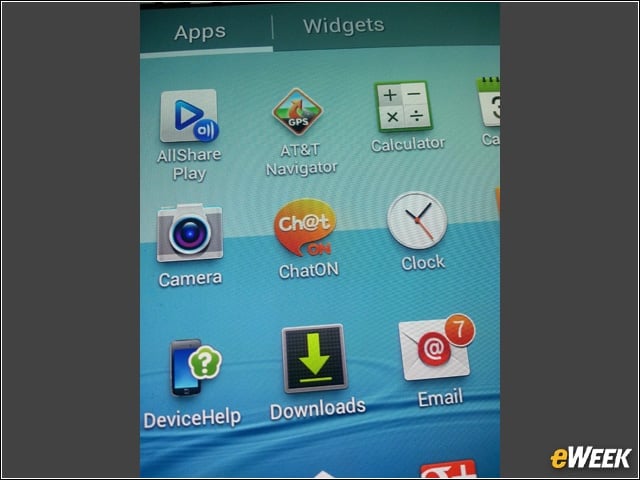
While Samsung tweaked the Galaxy S II for each carrier, the Galaxy S III phones are identical, save some tinier details. For example, each carrier was able to include five apps of their own.
Measuring the Galaxy S III
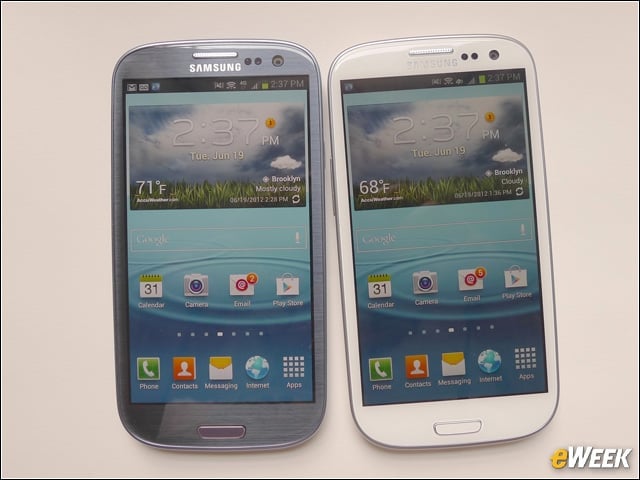
The GS III measures 136.6 by 70.6 by 8.6mm and weighs 133 grams. It is not for the small of hand nor pocket.
Galaxy S III and What It Means to Be Thick
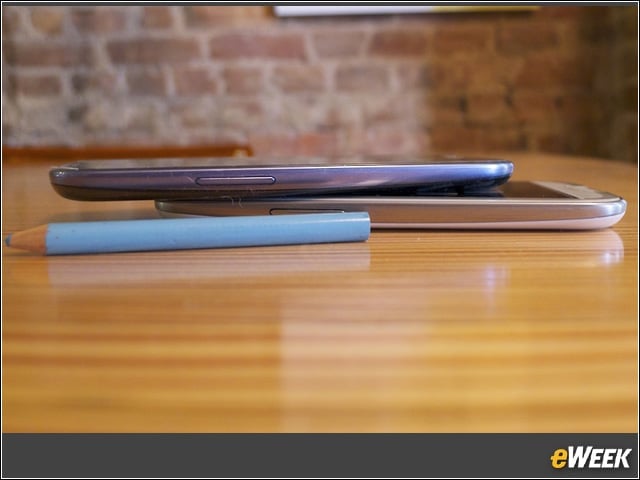
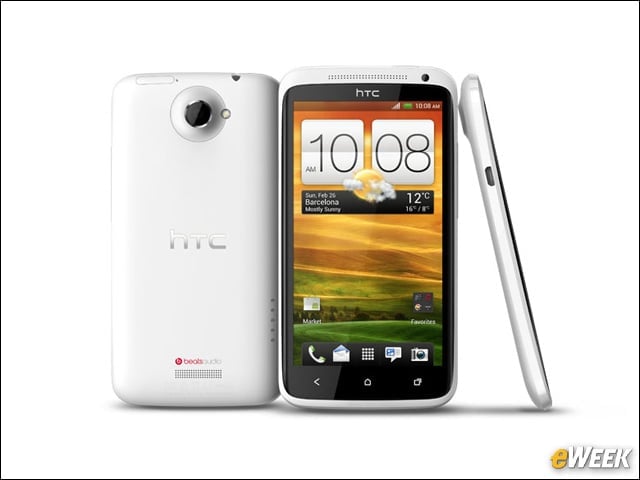
It is, nonetheless, a thin phone. The HTC Evo 4G LTE, which features a 4.7-inch display, measures 8.9mm thick, making Samsung’s feat that much more notable. (Both phones here are the GS III.)
GS III Versus the iPhone 4S
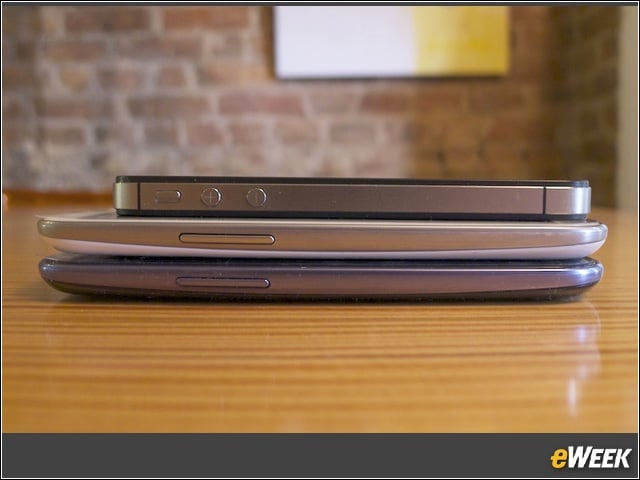
For more context on the Galaxy S III’s size, here two sit below Apple’s iPhone 4S.
View From the Back
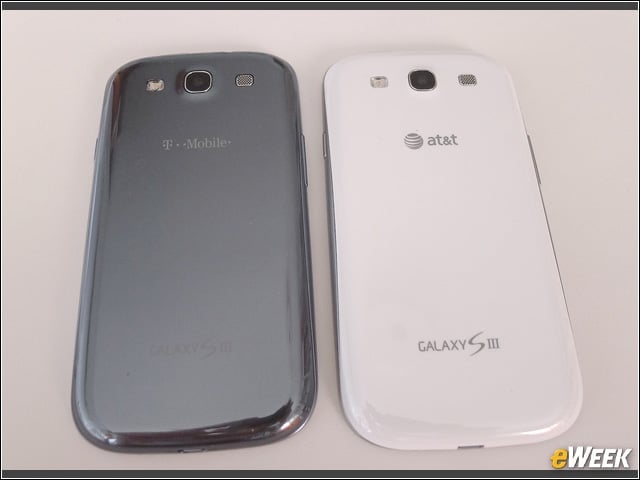
Samsung says it created a special process to come up with the Pebble Blue shade, which looks like what nail polish makers call “pearled.” The phone has an 8MP rear camera and a 1.9MP front-facing camera.
S Beam
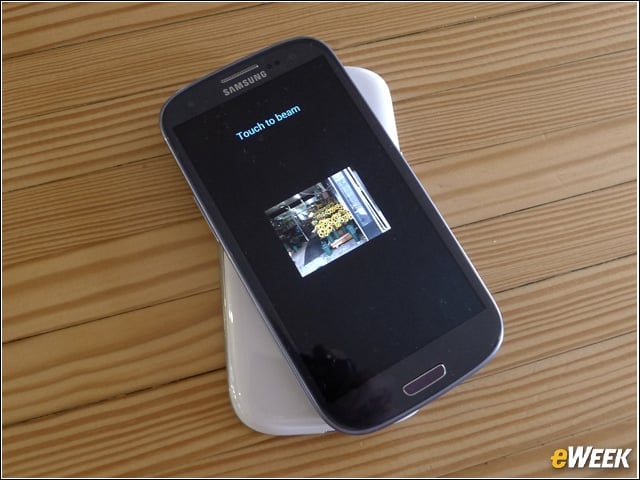
One of several NFC-based features is S Beam, which lets Samsung Galaxy S III owners touch their phones to pass content such as files, photos or even movies. When the phones touch, they vibrate in a jolt of recognition and then a user is prompted to touch the content to share it—in this instance, an image. Sharing a photo takes just a second or two. A short video doesn’t take much longer.
Share
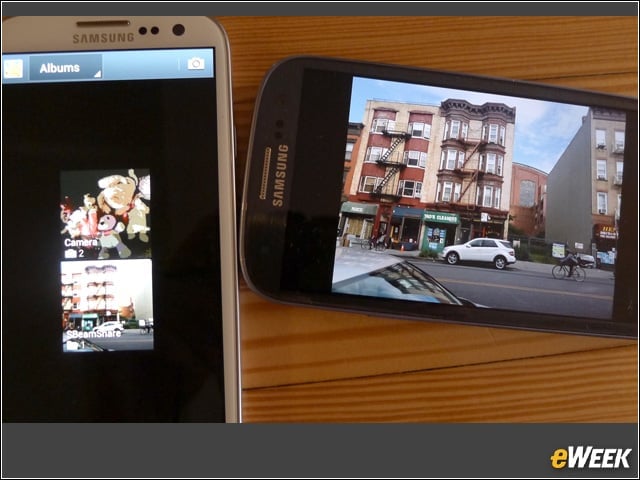
In the camera Gallery, images received through S Beam are sorted into their own album.
Tips
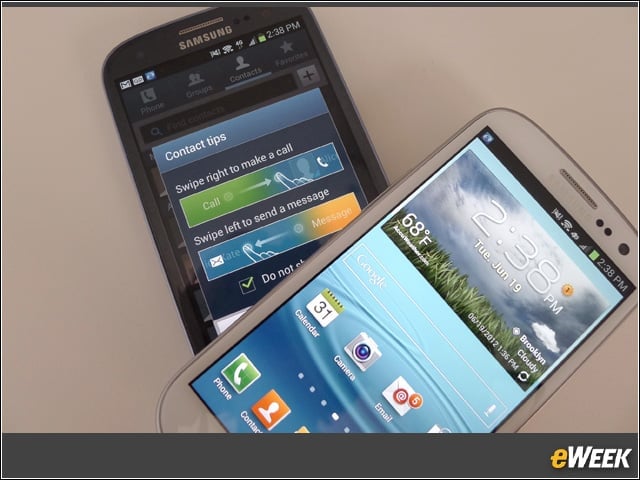
The GS III has more nifty shortcuts than Samsung trusts a user can intuitively figure out. Pop-up windows—which a user can select a box to never see again—are a constant presence as a user gets to know the phone. Sometimes they’re helpful, sometimes annoying, sometimes confusing.
Cheese
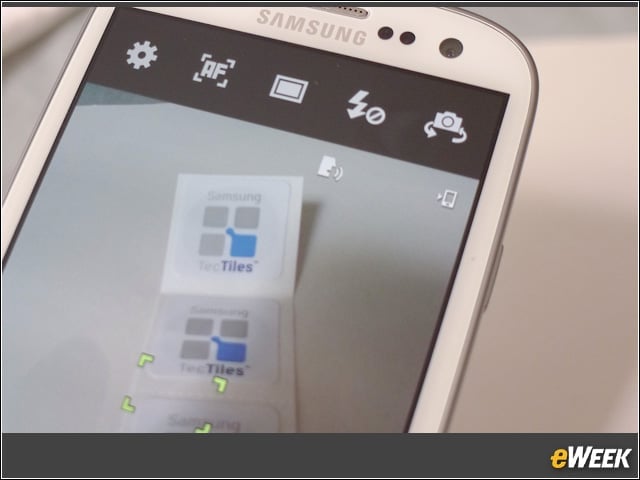
The phone can do a number of things when prompted by voice—not always well, but reportedly with increasing accuracy as it gets to know a user. In the camera mode, when the little “coughing person” icon is present, a user can say “cheese” or “shoot” to take a photo without pressing the on-screen shutter. This works perfectly. While potentially a little weird, it allows a person to take a photo while steadying the phone with both hands.
TecTiles
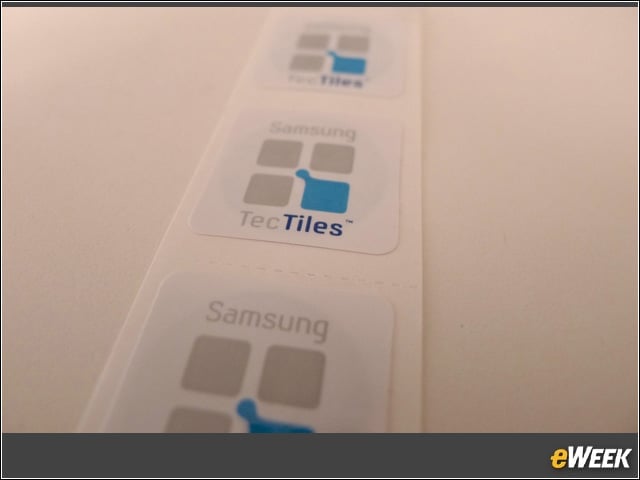
Separately, the carriers will also sell TecTiles in packs of five for $15. The NFC-equipped stickers are programmable and reprogrammable, and can, when swiped, be made to do things like check a user into FourSquare, turn on WiFi or send a particular text message. Users can program the TecTiles using a free app in the Google Play store.
Charger Stand
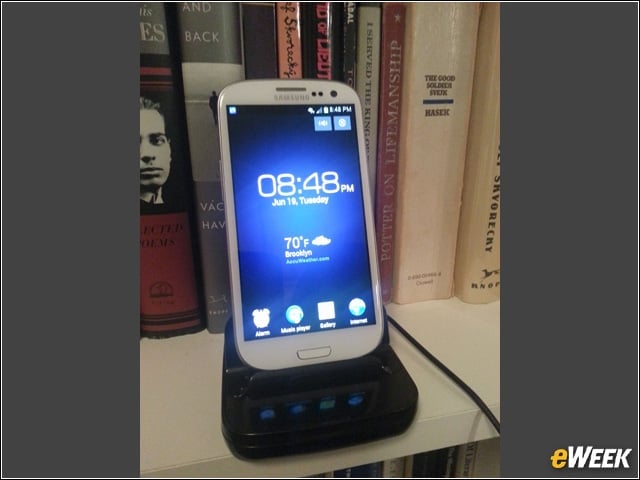
The Galaxy S III comes with a standard charger, but for an extra $40 or so, one can purchase a charger stand that turns the phone into a bedside clock/alarm/everything else. The stand is said to be also convenient for charging a spare battery for the phone. This photo was taken with a GS III in low light.
Camera

In this photo of a painting, it’s clear the camera performs far better in natural light. As with the rest of the phone, the features on the camera are extensive; it can be adjusted in more ways than most people will have the patience to figure out.